SEC536: Adversarial AI - Penetration Testing AI Systems
SEC536Offensive Operations, Artificial Intelligence


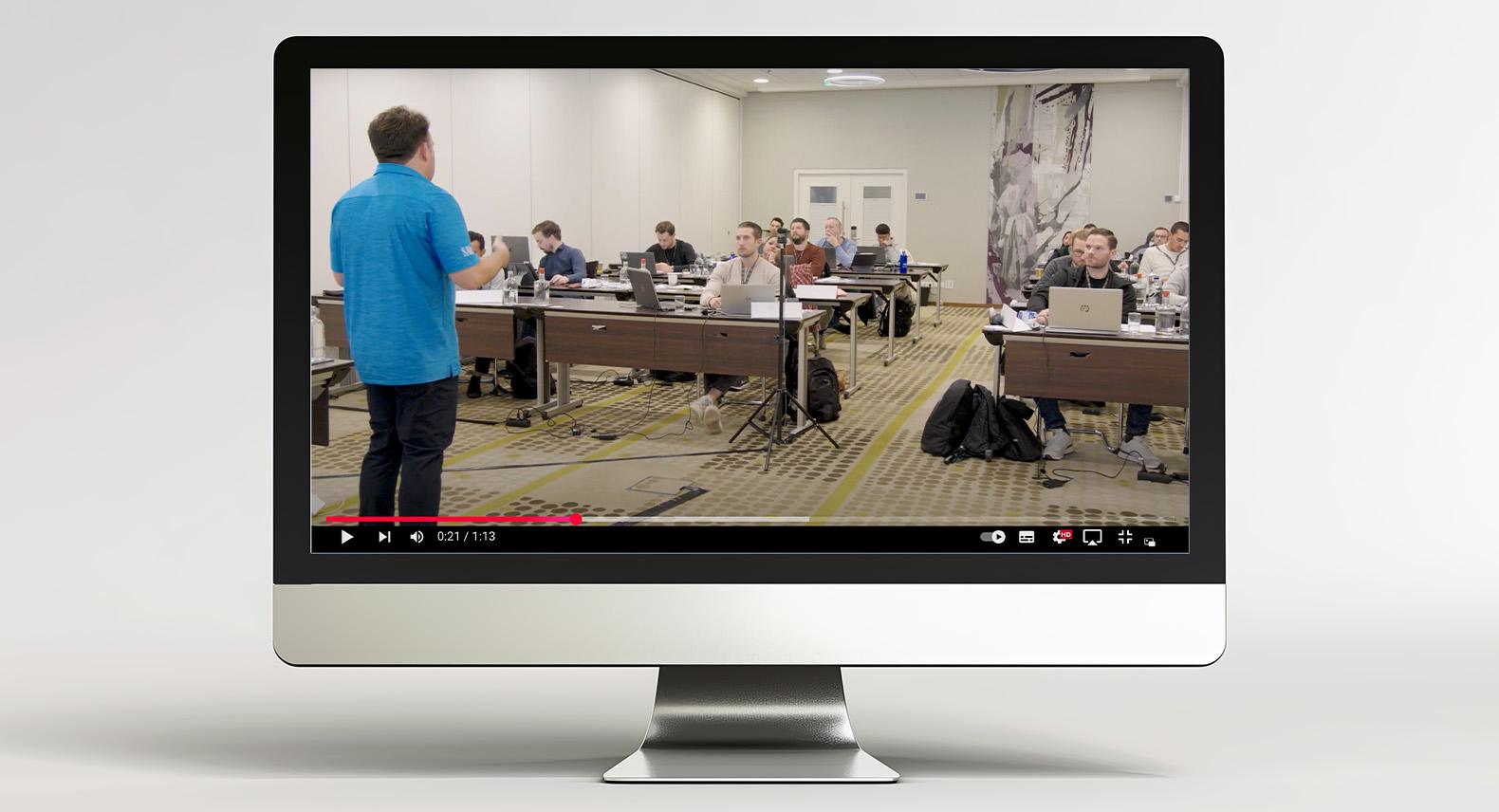
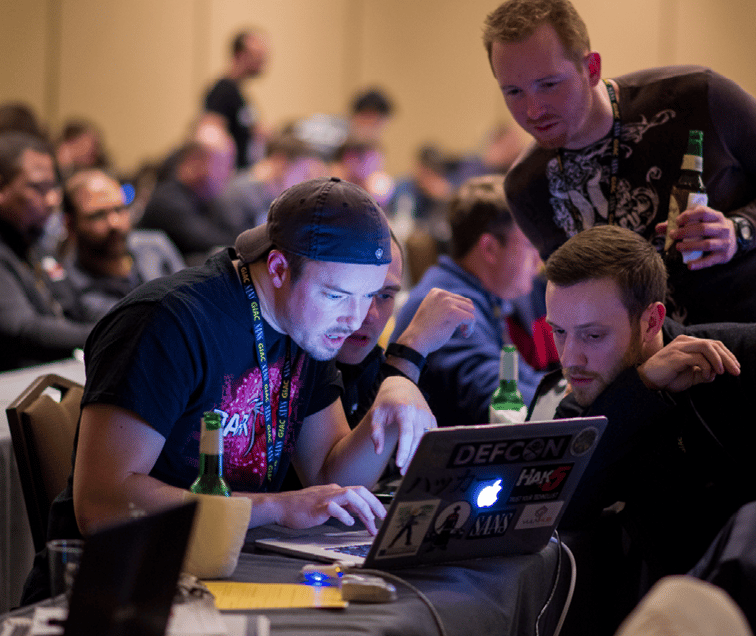
As part of your SANS training experience, you’ll receive complimentary access to a NetWars Tournament which is either available at the training event you are attending or will be made available through online access if you are attending a Live Online event. The NetWars Tournament is an interactive cyber range event designed to reinforce your learning through hands-on, gamified challenges.
Prague enchants visitors with its fairytale architecture, from the iconic Charles Bridge to the towering spires of Prague Castle. The city’s cobblestone streets and charming Old Town Square are steeped in centuries of history. You can enjoy world-class beer in cozy pubs and soak in the laid-back, artistic vibe. With its blend of Gothic, Baroque, and modern influences, Prague feels like stepping into a storybook.



In-Person
In-Person
Creating data for CTFs and course materials can be complex and time consuming and we’ve done a lot of it! We will walk you through some of the highs and lows of our experiences and give you practical tips and tricks to learn from our mistakes - like how to get accurate location data, what data is useful to generate, and how many devices do you really need?
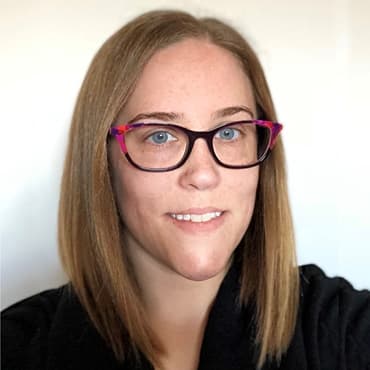
Kathryn Hedley, Director – Khyrenz Ltd
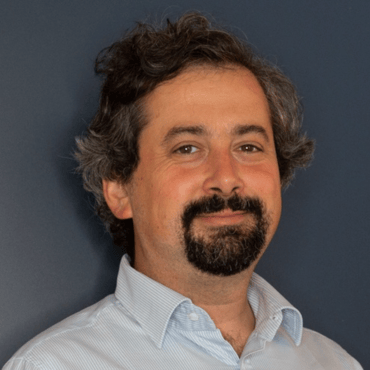
Sarah Edwards, Head of DFIR - iVerify
In-Person
This session will explore how advanced forensic techniques can uncover critical evidence in complex investigations, even when conventional forensic tools fail to identify usable artefacts. Through a real-world case study involving a homicide investigation, attendees will learn how investigators recovered and analysed data.
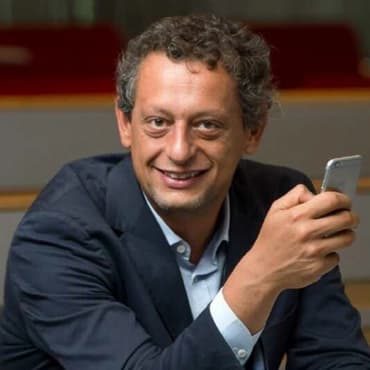
Jean-Philippe Noat, Senior Customer Engagement Manager - Cellebrite
In-Person
As DFIR teams have strengthened their capabilities for investigating encrypted messaging platforms such as Signal and WhatsApp, threat actors are increasingly exploring alternative communication channels that operate beyond traditional network visibility. Meshtastic, a LoRa-based off-grid mesh networking platform, represents one such emerging technology that security and forensic professionals should be prepared to encounter. Drawing on a real-world case study involving the use of Meshtastic devices for decentralized communications, this session will examine how investigators can identify, acquire, and analyse evidence from non-traditional communication technologies. Join us to gain practical insights into the challenges of reconstructing communication activity in environments where conventional network monitoring and forensic approaches offer limited visibility.
Lorenzo Dina, Innovation & R&D Manager – Bit4Law
In-Person
Smartphones continuously detect nearby Wi-Fi, Bluetooth, and cellular signals, leaving behind transient system artefacts that can reveal a device's movements, even when traditional location data is unavailable. How are forensic investigators able to extract and analyse these artefacts to reconstruct location history and establish device co-location? Through a practical case study, you will learn how wireless signal data stored in memory can be transformed into powerful investigative evidence, with significant implications for both digital forensics and privacy.
Alex Coley, Digital Forensics Specialist - MSAB
In-Person
As AI transforms offensive security, incident response teams face a different challenge: How to leverage AI without compromising forensic accuracy. In IR, hallucinations are not acceptable, yet the potential to accelerate investigations is significant. Oren explores how a skills-and-agents pipeline was developed to automate browser forensics, accelerating artefact triage and timeline reconstruction while maintaining evidential integrity. You will learn how the system was validated, where it failed, and the safeguards implemented to minimise hallucinations. Through real-world lessons learned you will gain a practical view of where AI-assisted incident response is ready for production, and where human expertise remains essential.
Oren Biderman, Head of Threat Detection – Daylight Security
Amnon Kushnir, VP Security Engineering – Daylight Security
In-Person
Salt Typhoon is widely tracked as a Chinese espionage actor, yet host-level visibility into its operations remains rare. In this session, Roey will take you inside a real intrusion at a scientific government organization, tracing the investigation from compromised Linux systems through to Windows-based collection and exfiltration activities. The investigation uncovered disguised backdoors, trojanized SSH utilities, proxy tooling, credential theft, remote execution, custom malware, and the staged collection of sensitive scientific data. Rather than examining individual malware samples in isolation, Roey will reconstruct the intrusion as it unfolded, showing how each forensic lead revealed the next phase of the operation.
You will gain practical insights into Salt Typhoon's tradecraft and how DFIR, malware analysis, and threat intelligence can be combined to uncover and understand sophisticated espionage activity.
Roey Gideon Shua, Security Researcher - Check Point Software Technologies
In-Person
Modern iOS devices generate and store a wealth of image-related artefacts behind the scenes, many of which can provide valuable investigative insights but are often overlooked during forensic examinations. Join us to explore how these artefacts can be identified, analysed, and correlated with other sources of device data to uncover their origin and significance. Through practical examples, the presentation will demonstrate how UUID-named images can be linked to App Intent and Biome data, and how complex data structures such as Protobuf, bplist, and Base64 can be decoded and interpreted. You will gain a deeper understanding of image provenance, the challenges of attributing images to specific user actions, and the techniques required to extract meaningful evidence from these often misunderstood artefacts. By the end of the session, you will have practical methodologies that can be applied directly to mobile forensic investigations and a clearer understanding of the evidential value—and limitations—of these iOS artefacts.
Elliot Glendye, Training Delivery Manager - Control-F Digital Forensics
In-Person
AI-generated evidence is already appearing in courtrooms, fraud investigations, and cyber incident response. Deepfake audio, synthetic videos, fabricated documents, and AI-hallucinated legal citations are no longer theoretical. They're becoming part of real investigations. The challenge isn't whether investigators will encounter AI-generated evidence. It's whether they'll recognise it before it influences critical decisions. In this session, Calum will examine how AI-fabricated artefacts stand up to forensic scrutiny, from metadata inconsistencies and container anomalies to linguistic and visual indicators. What happens when authenticity cannot be taken for granted? What current detection techniques succeed? Which ones don’t? Join us to understand how to apply that knowledge to your investigations.
Calum Baird, Senior DFIR Consultant and SOC Team Leader - Systal Technology Solutions
In-Person
In-Person
Host-level triage remains one of the most time-consuming aspects of incident response, creating significant challenges during large-scale investigations. In this session, I will share our ongoing work to automate end-to-end triage using agentic swarms capable of analysing systems, tagging evidence, and generating investigation-ready outputs. Drawing on real-world experience, I will explore the challenges, design considerations, and lessons learned from applying AI-driven automation to incident response, providing practical insights for those looking to build similar capabilities.
Matias Bevilacqua, Incident Response manager, EMEA Mandiant (Google)
In-Person
DFIR has changed dramatically over the past twenty years, shaped by evolving technologies, emerging threats, and lessons learned in the field. In this session, Heather will reflect on the experiences, challenges, and insights that have influenced my approach to investigations, incident response, and leadership throughout her career. Through practical observations and lessons learned, she will explore what it takes to adapt, improve, and remain effective in an ever-changing cybersecurity landscape.
In-Person
In-Person
Cybersecurity is constantly evolving, forcing defenders and responders to adapt. In this session we will look at lessons we can learn from recent incidents to see how we can improve our ability to detect attackers, respond to intrusions and hunt adversaries in an age of AI-generated attacks.
This bonus session is only available to in-person and virtual attendees of this event. Links to the virtual presentations will be shared on the event slack channels in advance of the presentations.
In-Person & Virtual
Your smartphone is always with you. It knows where you go, who you talk to, what you search, and how you behave, often in far greater detail than you realize. In this session, we will explore how modern mobile forensics turns raw data into a detailed reconstruction of a person’s life.
Going beyond classic extraction techniques, we will dive into application artifacts, system telemetry, usage tracking, and hidden data sources that persist even after deletion or uninstallation. We will also discuss the impact of encryption, device lock states (BFU vs AFU), acquisition limitations, and how investigators can still extract valuable insights under real-world constraints.
Through practical examples and forensic case building, you will see how fragmented data points become timelines, habits, and ultimately evidence.
Because in the end, your phone doesn’t just store data, it tells your story.
This bonus session is only available to in-person and virtual attendees of this event. Links to the virtual presentations will be shared on the event slack channels in advance of the presentations.
In-Person & Virtual
Registration:
About DFIR NetWars: Focused on digital forensics, incident response, threat hunting, and malware analysis, this tool-agnostic approach covers everything from low-level artifacts to high-level behavioral observations.
Computer Requirements: Laptop/desktop-based
Extra Requirements: Files downloads are required to participate.
Recommended For: Experienced Digital Forensic Analysts, Forensic Examiners, Media Exploitation Examiners, Malware Analysts, Incident Responders, Threat Hunters, Security Operations Center (SOC) Analysts, Law Enforcement Officers, Federal Agents, Detectives, and Cyber Crime Investigators.
Disciplines: Digital Forensics, Incident Response.
Example Topics:
Interactive Scenario: As a DFIR specialist, you are provided with evidence files from a series of mysterious compromised systems and conventional computing environments. Your mission? Use your DFIR skills to shed light on attack vectors, indicators of compromise, and other evidence needed to resolve the incident.
In-Person & Virtual
Registration:
About DFIR NetWars: Focused on digital forensics, incident response, threat hunting, and malware analysis, this tool-agnostic approach covers everything from low-level artifacts to high-level behavioral observations.
Computer Requirements: Laptop/desktop-based
Extra Requirements: Files downloads are required to participate.
Recommended For: Experienced Digital Forensic Analysts, Forensic Examiners, Media Exploitation Examiners, Malware Analysts, Incident Responders, Threat Hunters, Security Operations Center (SOC) Analysts, Law Enforcement Officers, Federal Agents, Detectives, and Cyber Crime Investigators.
Disciplines: Digital Forensics, Incident Response.
Example Topics:
Interactive Scenario: As a DFIR specialist, you are provided with evidence files from a series of mysterious compromised systems and conventional computing environments. Your mission? Use your DFIR skills to shed light on attack vectors, indicators of compromise, and other evidence needed to resolve the incident.
In-Person & Virtual