Group Purchasing
Group Purchasing

Quantum-Ready Security: A Phased Path Toward Key Distribution Resilience

Quantum-Ready Security: A Phased Path Toward Key Distribution Resilience (PDF, 1.14MB)Published: 03 Dec, 2025
Created by:

Thank You to Our Sponsors

The Quantum-Ready Security: A Phased Path Toward Key Distribution Resilience review, published by SANS Institute in November 2025, examines Phio TX and Phio TX-C, a quantum-safe key-distribution overlay from Quantum XChange. The review covers the platform's architecture, deployment models, hands-on test results, and use cases for organizations preparing for post-quantum migration.

Key findings:

  • US National Security Memoranda 8 and 10 (NSM-8 and NSM-10) require federal agencies to migrate to quantum-resistant encryption by a 2035 deadline
  • NIST FIPS 203 standardizes ML-KEM (Module-Lattice-Based Key-Encapsulation Mechanism) for quantum-safe key exchange
  • In testing, fresh symmetric keys were delivered to both sites every five minutes, with shorter rotation cadences available
  • The out-of-band key channel used ML-KEM-1024 during initial testing, making the key exchanges themselves quantum-safe
  • Mid-test, reviewers switched the out-of-band algorithm from ML-KEM-1024 to Classic McEliece and HQC via a YAML/CLI edit, with new keys using the updated algorithms within seconds and no VPN interruption
  • Measured throughput and latency matched baseline performance, with no added payload to the primary data channel despite continuous key rotation
  • Deployment added a quantum-resistant shield in under an hour, with no routing changes required
  • Phio TX's modules are FIPS 140-3 validated and align with CNSA 2.0 roadmaps
  • The platform combines PQC, quantum key distribution (QKD), classical methods, and QRNG under a single policy framework rather than relying on one algorithm
  • Tested integrations span Cisco, Juniper, Fortinet, Thales, Adva, and Ciena, with a Cisco IOS XE router using Secure Key Integration Protocol (SKIP) to request fresh keys at intervals during the demo

The review's overall pattern centers on separating key delivery from the data path itself: rather than treating post-quantum migration as a single algorithm swap, Phio TX addresses the "harvest now, decrypt later" risk by requiring an attacker to compromise two independent channels instead of one. This dual-channel, crypto-agile approach lets organizations meet near-term compliance deadlines with existing infrastructure while keeping a clear path to standardized PQC as algorithms mature. In testing, reviewers evaluated Phio TX-C in a site-to-site VPN configuration (HQ to branch), registering nodes to the cloud service and integrating with existing IPsec tunnels via SKIP, then measuring performance under forced key rotations and live algorithm switching.

Quantum-Ready Security: A Phased Path Toward Key Distribution Resilience

Related Webcast

In this webcast, we explore Quantum XChange’s Phio TX platform—a quantum-safe key distribution solution designed to provide crypto-agility, out-of-band key delivery, and future-proof protection for regulated industries and critical infrastructure.

Man talking into microphone

FAQ

Phio TX is a quantum-safe key-distribution overlay from Quantum XChange that delivers encryption keys on a separate channel from the data path, augmenting existing VPN and encryption systems rather than replacing them.

No. In SANS Institute's testing, measured throughput and latency matched baseline performance, with key rotations invisible to users and no added latency even during heavy transfers.

Yes. During testing, the out-of-band algorithm was switched from ML-KEM-1024 to Classic McEliece and HQC via a YAML/CLI edit, with new keys using the updated algorithms within seconds and the VPN continuing uninterrupted.

Phio TX's modules are FIPS 140-3 validated and align with CNSA 2.0 roadmaps, and the platform supports out-of-band pre-shared keys to help meet NSM-8 and NSM-10 mandates ahead of the 2035 deadline.

In SANS Institute's hands-on evaluation, Phio TX-C added a quantum-resistant shield to an existing VPN in under an hour, requiring no routing changes.


Meet Your Author

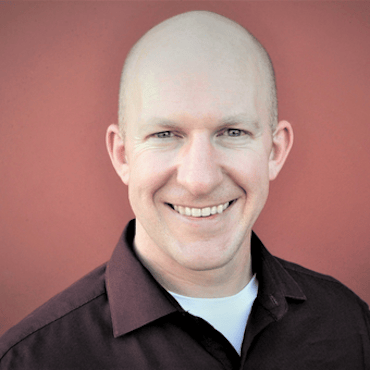
Charles Goldner
Charles Goldner

Charles Goldner

Charles “Charlie” Goldner is a Senior Technical Engineer at Counter Hack. With over two decades of experience working for SANS, the U.S. Army, and the Nevada National Guard, he brings a wealth of public and private sector expertise to the classroom.

Read more about Charles Goldner