Group Purchasing
Group Purchasing
AI-FOCUSEDNEW

SEC411: AI Security Principles and Practices: GenAI and LLM Defense

SEC411Cyber Defense, Artificial Intelligence
  • 24 Hours (Self-Paced)
Course authored by:
Seth Misenar
Seth Misenar
SEC411
Course authored by:
Seth Misenar
Seth Misenar
  • 24 CPEs

    Apply your credits to renew your certifications

  • Self-paced

    Train at your own pace from wherever you are

  • Intermediate Skill Level

    Course material is geared for cyber security professionals with hands-on experience

  • 5 Hands-On Lab(s)

    Apply what you learn with hands-on exercises and labs

Defend real-world GenAI and LLM systems with hands-on labs and practical AI security techniques. Always current. Always hands-on. Always relevant.

Course Overview

SEC411 is a living, practitioner-focused AI security course for cybersecurity professionals entering GenAI and LLM defense. No prior AI experience required.

How Does This Course Differ From Other OnDemand Courses?

The course includes 24+ hours of expert-led content and five hands-on labs with 125+ tasks, including expanded coverage of Model Context Protocol (MCP) security and emerging AI attack surfaces. Unlike other OnDemand courses, the curriculum will be dynamically updated during your 4-month access window. Depending on when you enroll, you will receive new videos and you might also get new modules and lab challenges, so your training keeps pace with the rapidly evolving AI threat landscape. To facilitate this approach, this course does not have a print coursebook or a traditional PDF coursebook.

What You’ll Learn

  • Master AI security fundamentals including tokenization, attack surface analysis, and OWASP Top 10 for LLMs.
  • Exploit and defend against prompt injection, jailbreaking, RAG manipulation, MCP security, and context hijacking across 125+ hands-on lab tasks.
  • Implement production-ready defenses for inference runtime, system prompts, and RAG applications.
  • Secure agentic workflows, autonomous systems, and reasoning models against manipulation and misuse.
  • Apply OWASP Top 10 for LLMs, MITRE ATLAS, and NIST AI RMF in real security operations scenarios.
  • Bridge traditional cybersecurity skills to AI-specific requirements and SOC integration.
  • Design defense-in-depth strategies that balance security and usability across the AI lifecycle.
  • Protect Model Context Protocol (MCP) environments by identifying attack surfaces and enforcing controls.
  • Master prompt-injection techniques from direct instruction attacks and encoding-based obfuscation to context-window manipulation and social-engineering.
  • Build a vendor-neutral detection and incident-response capability spanning prompt, retrieval, tool, and memory-based attacks, grounded in OWASP's Agentic Top 10 threat categories including Tool Misuse and Memory Poisoning.
  • Critically evaluate Anthropic's Fable 5 and Mythos 5 safety disclosures and government-driven access changes, translating a fast-moving capability and access-governance story into concrete defensive action.

Business Takeaways

  • Close critical skill gaps quickly with progressive learning paths building on existing expertise.
  • Maximize training ROI with a living curriculum that adds new modules and labs throughout 4-month access.
  • Apply learning immediately with Docker-based hands-on labs deployable in real production environments.
  • Accelerate team readiness with gamified labs and an integrated Learning Assistant for faster competency.
  • Reduce deployment risk with comprehensive OWASP Top 10 for LLMs and production security controls coverage.
  • Support compliance with NIST AI RMF, EU AI Act, and other standards connected to existing security ops.
  • Future-proof security capabilities spanning current and emerging AI threats with continuous curriculum updates.
  • Reduce response gaps with a unified monitoring and incident-response framework for the major ways untrusted content reaches AI systems.
  • Stay ahead of the frontier: SEC411's living curriculum keeps your team current on capability and access shifts like Anthropic's Fable 5/Mythos 5, not months after the fact.

Course Syllabus

Explore the course syllabus below to view the full range of topics covered in SEC411: AI Security Principles and Practices: GenAI and LLM Defense.

Section 1KNOW - Understanding the AI Threat Landscape

Build essential AI literacy for security professionals. Learn how LLMs operate, identify AI-specific attack surfaces, and develop intuition about GenAI and LLM applications. This foundation bridges traditional security experience to AI threats with hands-on exploration of tokenization security.

Full Lab Details

  • Lab 0: LLM Basics
    • Level 0: Mission Briefing: Orient to the lab interface, toolbox, and keyboard shortcuts
    • Level 1: Temperature & Creativity: Control output randomness from deterministic to creative
    • Level 2: Context Windows & Tokens: Explore how tokenization and window size constrain model behavior
    • Level 3: System Prompts & Roles: Shape model behavior through system prompts as a security boundary
    • Level 4: Boundaries & Blind Spots: Probe knowledge cutoff, confabulation, safety refusals, and prompt fragility
  • Lab 1: Tokenizer Security Explorer
    • Level 1: Discovery: Analyze basic tokenization and its security impact
    • Level 2: Model Comparison: Compare tokenization behaviors across multiple models
    • Level 3: Attack & Defense: Hands-on exploration of tokenization attack techniques and token-aware defense implementation
    • Level 4: Tokenizer Forensics: Fingerprint models and analyze tokenization patterns, including BPE vs. WordPiece comparison and multilingual filter bypass techniques
    • Level 5: Advanced Challenges: Comprehensive tokenization attack/defend scenarios

Full Topic Details

  • Security implications of LLM architecture, training processes, and inference mechanisms
  • AI system attack surface mapping and threat modeling using MITRE ATLAS
  • Tokenization vulnerabilities and exploitation techniques across different model families
  • AI supply chain security, training data poisoning, and model manipulation tactics

Section 2DEFEND – Securing the AI Lifecycle

Secure AI systems from training to runtime. Implement practical defenses for training pipelines, inference environments, and RAG systems. Master input and output filtering, guardrail implementation, and RAG-specific security controls through progressive attack and defense challenges.

Full Lab Details

  • Lab 2: Prompt Injection Attacks and Defenses
    • Level 1: System Prompt Attacks: Override weak system prompts to extract protected information
    • Level 2: Input Filtering: Bypass keyword blacklist filters using encoding and obfuscation
    • Level 3: Output Filtering: Extract sensitive data past post-LLM response pattern scanning
    • Level 4: Semantic Detection: Defeat LLM-based intent classification through social engineering and payload splitting
    • Level 5: Challenge Mode: Progressive defense challenges where each task isolates a single defense layer
  • Lab 3: RAG Security Attacks and Defenses
    • Level 1: Information Leakage: Exploit RAG knowledge bases through indirect queries
    • Level 2: Semantic Bypass: Circumvent input filters using semantic manipulation
    • Level 3: Document Poisoning: Inject malicious documents and craft trigger queries
    • Level 4: Access Control Bypass: Escalate privileges from guest to captain-level access
    • Level 5: Defense Implementation: Configure security controls for filtering, monitoring, and source citation

Full Topic Details

  • Training pipeline security with data validation, poisoning detection, and secure infrastructure
  • Inference runtime defenses using input sanitization, output validation, and semantic analysis
  • OWASP Top 10 for LLM Applications, from prompt injection to model theft
  • Advanced prompt attack techniques such as jailbreaking, system prompt extraction, and context manipulation
  • Advanced prompt-injection techniques, including instruction manipulation, encoding and obfuscation, conversational-window exploitation, and social-engineering tactics
  • RAG system security including vector database protection, retrieval poisoning, and access control
  • Production security controls that balance protection and usability

Section 3DEPLOY – Integration, Autonomy, and Advanced AI

Integrate AI security into enterprise architecture and protect autonomous systems. Deploy secure LLM applications, implement robust API security, connect AI monitoring with SOC operations, and address new threats in agentic systems and reasoning models using production-ready strategies.

Full Lab Details

  • Lab 4: MCP Protocol Security
    • Level 1: Reading the Fine Print: Discover hidden instructions in tool descriptions that poison LLM behavior
    • Level 2: The Switcheroo: Detect rug pull attacks where servers mutate descriptions between connections
    • Level 3: Cross-Fire: Observe cross-server contamination through shared context in multi-tool environments
    • Level 4: Lockdown Protocol: Configure defenses including human in-the-loop, description pinning, and context isolation

Full Topic Details

  • Secure AI deployment architectures and API protections for LLM services
  • Authentication, authorization, and monitoring integrated with existing security operations
  • Security for agentic systems, including permission models, tool validation, and agent control
  • Reasoning model security, focusing on chain-of-thought protection and defending against reasoning manipulation
  • Incident response for AI security events and development of enterprise AI security programs
  • MCP protocol security, including attack surface and defensive controls
  • Unified detection, monitoring, and incident-response practices for context-injection attacks, covering direct prompts, RAG/retrieval poisoning, tool and protocol abuse, and persistent agent-memory poisoning
  • Current-events case study examining Anthropic's Fable 5 and Mythos 5 safety disclosures alongside a real US government access suspension, translating a fast-moving capability and governance story into concrete organizational defenses

Things You Need To Know

Important! Bring your own system configured according to these instructions.

System Requirements

A properly configured system is required to fully participate in this course. If you do not carefully read and follow these instructions, you will not be able to fully participate in hands-on exercises in your course. Therefore, please arrive with a system meeting all the specified requirements.

Back up your system before class. Better yet, use a system without any sensitive/critical data. SANS is not responsible for your system or data.

Hardware/Software Requirements

  • RAM: Minimum 16 GB required; more is recommended for the best experience.
  • Operating System: Any modern 64-bit operating system such as Windows 10, Windows 11, MacOS, or Linux.
  • Processor: Both Intel (x86_64) and ARM processors (including Apple Silicon) are fully supported.
  • Disk Space: At least 20 GB of free disk space.
  • Virtualization: VMWare is not used in this class.
  • Containerization: You must have Docker Desktop (or Docker Engine for Linux) installed and functioning for the container-based lab systems

If you have additional questions about the laptop specifications, please contact customer service.

The course features 124+ hours of expert-led videos and five progressive hands-on labs. Unlike other OnDemand courses, the curriculum will be dynamically updated during your 4-month access window. Depending on when you enroll, you will receive new videos and you also might get new modules and lab challenges, so your training keeps pace with the rapidly evolving AI threat landscape. To facilitate this approach, this course does not have a print coursebook or a traditional PDF coursebook.

Cybersecurity professionals entering GenAI and LLM defense. No prior AI background needed. Intermediate skill level–geared for practitioners with hands-on security experience.

  • 24+ hours of expert-led videos
  • Five progressive hands-on labs
  • Continuous updates during 4-month access window
  • Access to a student Slack community for support and collaboration

There are no prerequisites for this course.

The SEC411 course is a part of the “Artificial Intelligence” Learning Path, designed to train cybersecurity professionals in AI security essentials.

Depending on your current or desired future role, one of these courses is a great next step in your cybersecurity journey:

AI Security Principles form the foundation of AI risk management and LLM security, helping cybersecurity professionals identify, assess, and defend against threats unique to Generative AI systems. These principles include AI threat modeling, input and output validation, data integrity protection, and AI governance controls that keep models secure, transparent, and compliant. As organizations integrate AI and LLM technologies into critical operations, applying strong AI security practices is essential to prevent model abuse, data leakage, and adversarial manipulation.

SEC411 provides a direct path for cybersecurity professionals to develop in-demand expertise in AI security. You’ll gain practical experience identifying and mitigating GenAI and LLM threats, bridging traditional cybersecurity operations with emerging AI defense strategies. Graduates will be prepared to lead AI risk assessments, advise on secure deployments, and contribute to building resilient, compliant AI ecosystems within their organizations.
Relevant Job Roles

Artificial Intelligence and Data Ethics (AIDE)

Skills Framework for the Information Age

Responsible design, development, and governance of AI and data-driven systems. Ethical principles are embedded into algorithms, models, and automated decision-making to ensure fairness, transparency, and accountability.

Explore learning path

Course Schedule and Pricing

Looking for Group Purchasing Options?Contact Us
  • Location & instructor

    Virtual (OnDemand)

    Instructed by
    Date & Time
    OnDemand (Anytime)Self-Paced, 4 months access
    Course price
    $2,999 USD*Prices exclude applicable local taxes
    Registration Options
Showing 1 of 1

Benefits of Learning with SANS

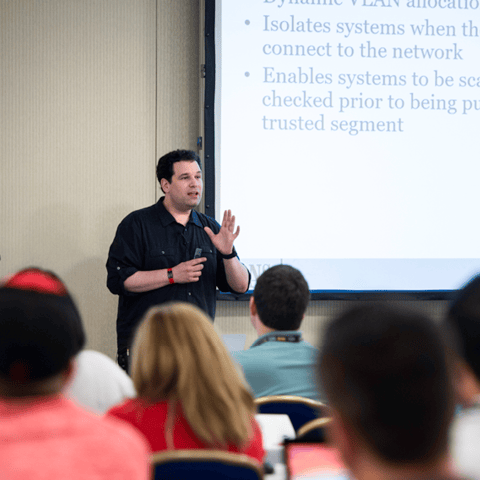
Bryan Simon: Teacher Standing Next to Smartboard and Explaining Concept

Get feedback from the world’s best cybersecurity experts and instructors
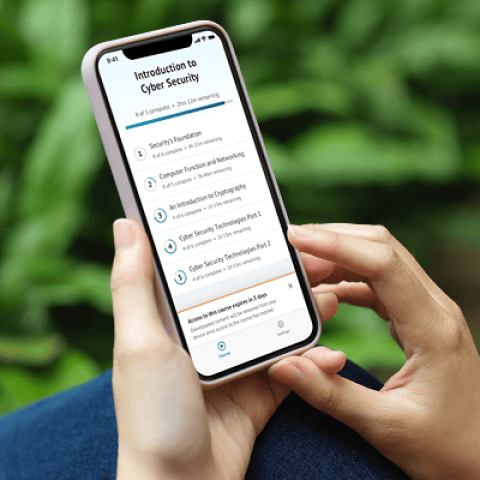
OnDemand Mobile App

Choose how you want to learn - online, on demand, or at our live in-person training events

Close Up of Woman Holding a Pen and Documents

Get access to our range of industry-leading courses and resources