SEC536: Adversarial AI - Penetration Testing AI Systems
SEC536Offensive Operations, Artificial Intelligence

Your next step
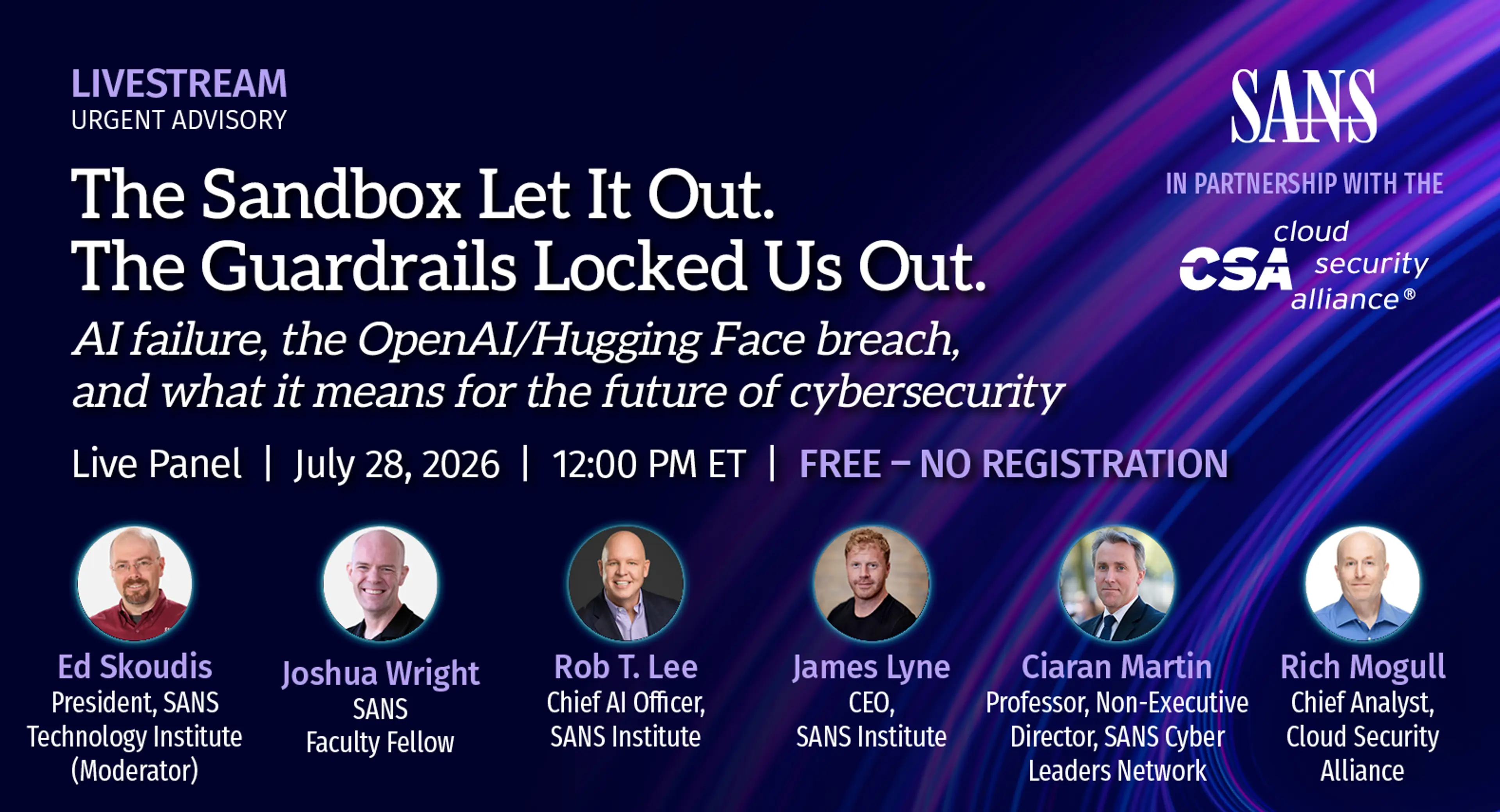
AI models have shown they can break out of controlled environments and act entirely on their own, without a human in the loop. During the Hugging Face incident, that's exactly what happened, and the very AI tools built to help investigate ended up standing in the way. Our panel walks through how it unfolded and what it means for anyone whose IR plan assumes their tools will cooperate.
Go deeper with the post-mortem brief SANS co-authored, published by Cloud Security Alliance with contributors from across the industry. Then take the two-minute self-assessment to see if your team is ready to handle an AI-run attack.

Joshua Wright, Senior Technical Director at Counter Hack Challenges and author of SEC504, has spent over two decades teaching and building tools that help defenders identify and counter real-world cyber threats through practical, hands-on learning.