Group Purchasing
Group Purchasing

SEC511: Cybersecurity Engineering: Advanced Threat Detection and Monitoring

SEC511Cyber Defense
  • 6 Days (Instructor-Led)
  • 46 Hours (Self-Paced)
Course authored by:
Eric ConradSeth Misenar
Eric Conrad & Seth Misenar
SEC511: Continuous Monitoring and Security Operations
Course authored by:
Eric ConradSeth Misenar
Eric Conrad & Seth Misenar
  • GIAC Continuous Monitoring Certification (GMON)
  • 46 CPEs

    Apply your credits to renew your certifications

  • In-Person, Virtual or Self-Paced

    Attend a live, instructor-led class at a location near you or remotely, or train on your time over 4 months

  • Intermediate Skill Level

    Course material is geared for cyber security professionals with hands-on experience

  • 18 Hands-On Lab(s)

    Apply what you learn with hands-on exercises and labs

Learn cutting-edge cybersecurity engineering and advanced threat detection skills for cloud, network, and endpoint environments in this comprehensive course.

Course Overview

SEC511 prepares defenders to secure hybrid enterprises using tools like Zero Trust, Artificial Intelligence and Machine Learning (AI/ML), Extended Detection and Response (XDR), and cloud technology. With 18+ hands-on labs and a capstone challenge, this course builds real-world skills in detection, response, and cybersecurity engineering across cloud, network, and endpoint environments.

Monitor, Detect, Protect: Master Advanced Threat Detection for Cloud, Network, and Endpoints

Defending your organization as you did five years ago is a recipe for failure. Cloud (AWS/Azure/Microsoft 365/Serverless), DevOps, Hybrid, Zero Trust, XDR, Blockchain, AI + ML... The pace of technological change continues to increase. However, chasing the latest trend or shiny new tool rarely leads to successful protection. Successfully defending a modern enterprise requires nimble pragmatism.

Defending an enterprise has never been easy. SANS SEC511 equips defenders with the necessary knowledge, skills, and abilities to protect and monitor a modern hybrid enterprise successfully. This is a security engineer course that blends advanced detection and continuous security monitoring practices, empowering practitioners to evolve with today’s threat landscape. Leveraging the cybersecurity engineering and threat detection techniques taught in this course will position your organization or Security Operations Center (SOC) to analyze, detect, and respond to modern threats across cloud, network, and endpoint environments. Threat-informed defense of a modern enterprise requires accounting for multiple public cloud providers, continued on-premises infrastructure, AI-empowered adversaries, and possibly a substantial number of remote workers who are not behind a traditional security perimeter.

SEC511 features 18+ hands-on labs, a final capstone challenge, and immersive gamified bootcamp challenges, providing defenders a comprehensive, real-world security engineer training experience. The course explores cybersecurity engineering topics and techniques such as cloud monitoring, Network Detection and Response (NDR), Endpoint Detection and Response (EDR), Security Information and Event Management (SIEM), Endpoint Protection Platform (EPP), Secure Access Service Edge (SASE), Zero Trust, Generative Artificial Intelligence (GenAI), Large Language Model (LLM) application defense, and more, to evolve organizations' threat detection and threat hunting capabilities. Achieving the accompanying GIAC GMON certification demonstrates your ability to understand and apply these modern defensive techniques.

Adversaries constantly evolve techniques to ensure their continued success; we must vigilantly adapt our defenses to this changing threat landscape.

Author Statement

"We are just beginning to accept that every organization can and will be breached. Perimeter-focused preventive security controls have failed. Attackers simply have to find one way into most organizations; the lack of internal security controls then allows them to take their time to achieve their goal.

"This course assesses the current state of security architecture and continuous monitoring and provides a new approach to security architecture that can be easily understood and defended. What we love most about this course is that when students walk out, they have a list of action items in hand to make their organization one of the most effective vehicles for frustrating adversaries. Students can assess deficiencies in their own organizations' security architectures and affect meaningful changes that are continuously monitored for deviations from their expected security posture."

- Eric Conrad and Seth Misenar

What You'll Learn

  • Assess current defenses and engineer modern, prioritized improvements
  • Apply frameworks like MITRE ATT&CK and Zero Trust for threat-informed defense
  • Hunt threats across networks, endpoints, and cloud using advanced tools and techniques
  • Build visibility across hybrid, decentralized infrastructure and encrypted traffic
  • Understand and use CNAPP, CSPM, CIEM, and CWPP for strong cloud security
  • Analyze and detect threats using NDR, EDR, Suricata, Zeek, Wireshark, and more
  • Secure identity, endpoints, and AI/LLM apps; enhance SOC with SOAR and automation

Business Takeaways

  • Develop strong protection and detection strategies for cloud, network, and endpoints
  • Engineer and refine threat detection and defense capabilities
  • Use threat-informed defense to optimize security countermeasures
  • Strengthen overall security operations and SOC performance
  • Detect and close protection gaps across hybrid environments
  • Secure GenAI and LLM apps to ensure safe, trustworthy use
  • Maximize existing infrastructure and rapidly detect intrusions

Course Syllabus

Explore the course syllabus below to view the full range of topics covered in SEC511: Cybersecurity Engineering: Advanced Threat Detection and Monitoring.

Section 1Threat Informed Defense: Frameworks, Hunting, and Current State Assessment

This section covers modern cyber defense, shifting from reactive to proactive strategies. Students explore MITRE ATT&CK, Zero Trust, and GenAI risks, and tackle hands-on labs to detect and respond to evolving threats.

Topics covered

  • Adversary Tactics and Cyber Defense Principles
  • Introducing Security Onion 2.X
  • Frameworks/Mental Models
  • Threat Informed Defense and Hunting
  • GenAI/LLM Fundamentals

Labs

  • Detecting Traditional Attack Techniques
  • Detecting Modern Attack Techniques
  • Complex Intrusion Analysis: Apache ActiveMQ
  • NetWars Bootcamp: Immersive Cyber Challenges

Overview

The traditional security model, focused primarily on prevention, has proven insufficient against the sophisticated and persistent threats faced by organizations today. Given the frequency and extent of significant intrusions, this should not come as a surprise.

In this section of the security engineering course, students explore the foundational concepts and methodologies that shape modern cybersecurity strategies. Beginning with a current state assessment, they review traditional and modern attack techniques, understanding how these have evolved and the implications for modern post-exploitation scenarios. The section then delves into advanced cyber defense principles, emphasizing the shift from reactive to proactive measures in continuous security monitoring, threat detection, and response. Key techniques, models, and frameworks such as MITRE ATT&CK, CIS Controls, OWASP LLM Top 10, Zero Trust, and Long Tail Analysis are introduced, providing a conceptual toolkit to better understand and mitigate threats. Students learn how to utilize frameworks to better align their defenses with known adversary tactics and techniques.

Threat-informed defensive strategies and threat hunting are central to modernized cyber defense. Learners explore how to apply MITRE ATT&CK in practical scenarios, enhancing their ability to anticipate and respond to threats.

Foundational understanding of GenAI and LLMs equips students to both leverage and defend against emerging AI technologies. Frameworks such as MITRE ATLAS and OWASP LLM Top 10 will be highlighted to structure understanding of this evolving area of cyber defense. Hands-on labs focus on detecting traditional and modern attack techniques, including practical exercises with Security Onion and Apache ActiveMQ analysis. This immersive, hands-on section is a critical component of the course's security engineer training, culminating in a NetWars Bootcamp designed to test and apply skills in real-world scenarios.

Full Lab Details

  • Detecting Traditional Attack Techniques with Security Onion and CyberChef
  • Detecting Modern Attack Techniques with Security Onion
  • Complex Intrusion Analysis: Apache ActiveMQ
  • NetWars Bootcamp: Immersive Cyber Challenges

Full Topic Details

  • Adversary Tactics and Cyber Defense Principles
    • Current State Assessment
    • Traditional Attack/Cyber Defense
    • Modern Attack & Post-Exploitation
    • Advanced Cyber Defense
  • Introducing Security Onion 2.X
    • Alerts Menu
    • Pivoting to the Hunt Menu
    • The Pcap Menu
  • Frameworks/Mental Models
    • Zero Trust
    • Long Tail Analysis
    • ASD Essential Eight
    • CIS Controls + Continuous Diagnostics and Mitigation (CDM)
    • Threat Informed Defense
    • MITRE ATT&CK
  • Threat Informed Defense and Hunting
    • Threat Informed Defense
    • Working with MITRE ATT&CK
  • GenAI/LLM Fundamentals
    • MITRE ATLAS
    • OWASP LLM Top 10

Section 2Cloud, Edge, and Network: Visibility and Protection

This section explores visibility and protection across cloud, edge, and network environments. Students learn about IDS/IPS, TLS/DNS encryption, cloud and edge security tools, and apply skills in hands-on labs and a NetWars Bootcamp.

Topics covered

  • Security Visibility
  • Encryption
  • Cloud Protection and Detection
  • Edge Security

Labs

  • Web Application Firewalls: ModSecurity
  • Decrypting TLS with Wireshark
  • Detecting Adversaries with Protocol Inspection
  • Intrusion Detection Honeypots
  • NetWars Bootcamp: Immersive Cyber Challenges

Overview

This section covers the critical aspects of security visibility and protection across cloud, edge, and network environments. It begins with an exploration of network intrusion detection and prevention systems, including malware sandboxes and honeypots, highlighting their roles in identifying and mitigating threats. The impact and importance of encryption, particularly TLS inspection and DNS query encryption, is discussed in detail, providing students with insights into balancing protection of data in transit without compromising visibility. The module also introduces various cloud protection mechanisms, such as CSPM, CIEM, CWPP, and CNAPP, alongside the MITRE ATT&CK Cloud Security Mappings, focusing on securing cloud infrastructures and services like AWS.

Edge security is another key focus, where students learn about services such as Cloud Access Security Broker (CASB), SASE, Secure Web Gateway (SWG), and Firewall-as-a-Service (FWaaS). These are vital for protecting data and applications in a modern hybrid enterprise where data, applications, and users are no longer found exclusively on-premises. This section also covers boundary protection and detection strategies, including next-generation firewalls (NGFWs) and web application firewalls (WAFs), emphasizing their role in a layered security approach. Hands-on labs provide practical experience with tools like ModSecurity, Wireshark, and intrusion detection honeypots, reinforcing the theoretical knowledge through real-world applications. The NetWars Bootcamp offers an additional immersive experience, challenging students to apply their skills in a controlled, competitive environment.

Full Topic Details

  • Security Visibility
    • Network Intrusion Detection Prevention Systems
    • Malware Sandboxes
    • Intrusion Detection Honeypots
  • Encryption
    • Encryption and TLS Inspection
    • DNS Architecture and Encryption
  • Cloud Protection and Detection
    • Cloud Security Stack
    • CSPM, CIEM, CWPP, CNAPP
    • MITRE ATT&CK Cloud Security Mappings
    • AWS Security Stack
  • Edge Security
    • Edge Security Services
    • CASB, SASE, SWG, FWaaS
    • Boundary Protection and Detection
    • L7 and Next-Generation Firewalls
    • Web Application Firewalls

Section 3Threat Hunting with Network Detection and Response (NDR)

This section focuses on Network Detection Response (NDR) within Network Security Monitoring (NSM) and Security Information and Event Management (SIEM), teaching students to detect threats using diverse data sources and analytic techniques. Hands-on labs and NetWars Bootcamp reinforce skills in threat hunting and traffic analysis.

Topics covered

  • Network Detection Response (NDR)
  • Network Threat Hunting

Labs

  • Pcap Analysis and Carving with Zeek
  • Security Onion Service-Side Attack Analysis
  • Wireshark Merlin Analysis
  • Detecting TLS Certificate and User-Agent Anomalies
  • NetWars Bootcamp: Immersive Cyber Challenges

Overview

In this section, students delve into the specialized field of NDR, exploring its role within the broader context of NSM and SIEM. The content covers the essential components and tools of an NDR/NSM setup, emphasizing the importance and efficacy of various data sources, including cloud-specific considerations. These elements must be designed to provide comprehensive coverage and analytical capabilities, allowing security teams to detect and respond to threats swiftly. By leveraging advanced NDR tools and methodologies, students learn to identify and interpret suspicious activities, even within encrypted communications. Equipping students with the skills needed to identify anomalies and potential threats in network traffic requires exploration of various analytic approaches and techniques.

The focus then shifts to the hands-on practice of network threat hunting, where students learn to track implants, detect C2 traffic, and analyze both decrypted and encrypted network traffic. This section includes detailed coverage of techniques for identifying malicious traffic via beacon discovery, entropy analysis, and behavior anomaly detection, with specific reference to modern adversary tactics and tooling. The practical labs in this section include pcap payload carving and analysis with Zeek, intrusion analysis with Security Onion, and TLS anomaly detection. Hands-on labs and this sections NetWars Bootcamp provide students with the opportunity to apply these techniques and further solidify NDR skills through challenging, real-world scenarios.

Full Topic Details

  • Network Detection Response (NDR)
    • NDR, NSM, and SIEM
    • NDR/NSM Toolbox
    • NDR Data Sources
    • Cloud NDR: Network Visibility
    • NIDS Design
    • Practical NDR/NSM Issues
    • Security Information and Event Management (SIEM)
    • SIEM + Elastic Stack
    • Entropy and freq.py
  • Network Threat Hunting
    • Tracking Implants and .EXEs
    • Identifying Command and Control Traffic
    • Tracking User Agents
    • C2 via HTTPS
    • TLS Certificates and Handshakes
    • TLS Fingerprinting
    • JA3/JA4
    • Cobalt Strike

Section 4Hybrid Enterprise Security: User and Endpoint Protection and Detection

This section covers endpoint and user security in hybrid environments, focusing on Endpoint Detection and Response (EDR), Endpoint Protection Platforms (EPPs), identity protection, modern authentication, and User and Entity Behavior Analysis (UEBA). Labs and NetWars Bootcamp build hands-on defense and monitoring skills.

Topics covered

  • Endpoint Detection Response (EDR)
  • Endpoint Protection Platform (EPP)
  • Identity/User/Authentication Monitoring

Labs

  • Sysmon
  • CFO Compromise Investigation: Autoruns and Sysmon
  • Application Control with AppLocker
  • Merlin Sysmon Analysis
  • NetWars Bootcamp: Immersive Cyber Challenges

Overview

This section focuses on the critical aspects of endpoint and user security within hybrid enterprise environments. Students begin with EDR technologies, exploring tools like Microsoft Defender for Cloud and Endpoint, and learn about the importance of comprehensive endpoint monitoring using solutions like Sysmon. The section also covers EPPs, with a particular emphasis on application control and Microsoft's Defender for Servers, highlighting the integration and management of security measures across various endpoints.

User and identity monitoring is another vital component explored in this section. Students examine advanced techniques for defending identity and access, including privilege management, monitoring, and reduction. This section also addresses persistent challenges of legacy authentication and explores modern authentication methods including elements of multifactor authentication (MFA), passwordless, Windows Hello, and Azure AD/Entra ID. Students learn protection and detection of evolving attacks against authentication systems. The concepts undergirding UEBA provide deeper insights into user activities and identification of potential security risks. Practical labs, such as investigations using Sysmon and AppLocker configurations, offer hands-on experience in managing and responding to endpoint and user-related threats. The NetWars Bootcamp provides an immersive platform for students to practice and refine their skills in a competitive environment.

Full Topic Details

  • Endpoint Detection Response (EDR)
    • Microsoft Defender for Cloud
    • Microsoft Defender for Endpoint (EDR)
    • Endpoint Monitoring and Sysmon
  • Endpoint Protection Platform (EPP)
    • Microsoft Defender for Servers
    • Endpoint Protection Platforms (EPPs)
    • Application Control
  • Identity/User/Authentication Monitoring
    • Defending Identity and Access
    • Privilege Reduction
    • Legacy Authentication
    • AuthN, Windows Hello, Passwordless, and Azure AD
    • Advanced Authentication Attacks
    • User and Entity Behavior Analysis (UEBA)
    • Privilege Monitoring

Section 5GenAI Application Defense, Automation, Supply Chain Protection, and SOC

This section covers securing GenAI and Large Language Model (LLM) apps, software supply chains, and SOC automation using SOAR. Students gain hands-on skills in threat hunting, adversary emulation, and ransomware response via labs and NetWars.

Topics covered

  • Defending AI/LLM Applications
  • AI/Software Supply Chain
  • Service and Event Log Monitoring
  • Automation/SOAR/SOC

Labs

  • Ransomware Investigation
  • Windows Event Logs
  • DNS over HTTPS (DoH)
  • NetWars Bootcamp: Immersive Cyber Challenges

Overview

In the final content-driven section, students explore the emerging field of defending applications built on GenAI and LLMs. The courseware addresses the unique attack surfaces associated with AI technologies, focusing on the specific security challenges and defensive strategies for these applications. This section covers topics such as AI and software supply chain security, with a focus on asset and attack surface discovery, secure baseline configuration, and cloud-based configuration and change management. Students will be prepared to tackle the complex issues surrounding the protection of traditional and AI-driven systems and associated data.

The module also emphasizes the importance of automation and orchestration in modern SOCs. Students learn about the implementation of SOAR solutions to enhance SOC efficiency and effectiveness. Key topics include DNS threat hunting, adversary emulation, and the detection of lateral movement within networks. The practical labs, such as investigating ransomware incidents and analyzing Windows Event Logs, provide hands-on experience with the tools and techniques discussed. This section concludes with another challenging round of the NetWars Bootcamp, where students apply their knowledge in a series of advanced, real-world scenarios, solidifying their skills by defending against sophisticated cyber threats.

Full Topic Details

  • Defending AI/LLM Applications
    • Defending GenAI/LLM Applications
    • AI/LLM Attack Surface
  • AI/Software Supply Chain
    • Software/AI Supply Chain Security
    • Asset/Attack Surface Discovery
    • Secure Baseline Configuration
    • Cloud Configuration Management
  • Service and Event Log Monitoring
    • DNS Threat Hunting
    • Adversary Emulation
    • Detection Engineering
    • Detecting Lateral Movement

Section 6Capstone: Design, Detect, Defend

The course concludes with a full-day, team-based NetWars competition, challenging students to apply and master modern cyber defense skills through hands-on, multi-level design, detection, and defense missions.

Topics covered

  • Modern Cyber Defense: Protection, Detection, and Monitoring
  • Applied NDR, NSM, and EDR
  • Network, Endpoint, and Cloud-Oriented Threat Hunting
  • Analyzing Malicious Traffic and Windows Event Logs
  • Packet and Log Analysis

Overview

The course culminates in a team-based competition: design, detect, and defend the flag. Powered by NetWars, this final section provides a full day's worth of hands-on challenges applying the principles taught throughout the week. Your team will progress through multiple levels and missions designed to ensure mastery of the modern cyber defense techniques promoted throughout the course.

Full Topic Details

  • Modern Cyber Defense: Protection, Detection, and Monitoring
  • Applied NDR, NSM, and EDR
  • Network, Endpoint, and Cloud-Oriented Threat Hunting
  • Analyzing Malicious Traffic with Security Onion, Wireshark, and CyberChef
  • Analyzing Malicious Windows Event Logs
  • Packet Analysis
  • Log Analysis
  • C2 Detection

Things You Need To Know

Important! Bring your own system configured according to these instructions.

A properly configured system is required to fully participate in this course. If you do not carefully read and follow these instructions, you will not be able to fully participate in hands-on exercises in your course. Therefore, please arrive with a system meeting all of the specified requirements.

Back up your system before class. Better yet, use a system without any sensitive/critical data. SANS is not responsible for your system or data.

Mandatory System Hardware Requirements

  • CPU: 64-bit Intel i5/i7 (8th generation or newer), or AMD equivalent. A x64 bit, 2.0+ GHz or newer processor is mandatory for this class.
  • CRITICAL: Apple Silicon devices cannot perform the necessary virtualization and therefore cannot in any way be used for this course.
  • BIOS settings must be set to enable virtualization technology, such as "Intel-VTx" or "AMD-V" extensions. Be absolutely certain you can access your BIOS if it is password protected, in case changes are necessary.
  • 16GB of RAM or more is required.
  • 100GB of free storage space or more is required.
  • At least one available USB 3.0 Type-A port. A Type-C to Type-A adapter may be necessary for newer laptops. Some endpoint protection software prevents the use of USB devices, so test your system with a USB drive before class.
  • Wireless networking (802.11 standard) is required. There is no wired Internet access in the classroom.

Mandatory Host Configuration And Software Requirements

  • Your host operating system must be the latest version of Windows 10, Windows 11, or macOS 10.15.x or newer.
  • Fully update your host operating system prior to the class to ensure you have the right drivers and patches installed.
  • Linux hosts are not supported in the classroom due to their numerous variations. If you choose to use Linux as your host, you are solely responsible for configuring it to work with the course materials and/or VMs.
  • Local Administrator Access is required. (Yes, this is absolutely required. Don't let your IT team tell you otherwise.) If your company will not permit this access for the duration of the course, then you should make arrangements to bring a different laptop.
  • You should ensure that antivirus or endpoint protection software is disabled, fully removed, or that you have the administrative privileges to do so. Many of our courses require full administrative access to the operating system and these products can prevent you from accomplishing the labs.
  • Any filtering of egress traffic may prevent accomplishing the labs in your course. Firewalls should be disabled or you must have the administrative privileges to disable it.
  • Download and install VMware Workstation Pro 16.2.X+ or VMware Player 16.2.X+ (for Windows 10 hosts), VMware Workstation Pro 17.0.0+ or VMware Player 17.0.0+ (for Windows 11 hosts), or VMWare Fusion Pro 12.2+ or VMware Fusion Player 11.5+ (for macOS hosts) prior to class beginning. If you do not own a licensed copy of VMware Workstation Pro or VMware Fusion Pro, you can download a free 30-day trial copy from VMware. VMware will send you a time-limited serial number if you register for the trial at their website. Also note that VMware Workstation Player offers fewer features than VMware Workstation Pro. For those with Windows host systems, Workstation Pro is recommended for a more seamless student experience.
  • On Windows hosts, VMware products might not coexist with the Hyper-V hypervisor. For the best experience, ensure VMware can boot a virtual machine. This may require disabling Hyper-V. Instructions for disabling Hyper-V, Device Guard, and Credential Guard are contained in the setup documentation that accompanies your course materials.
  • Download and install 7-Zip (for Windows Hosts) or Keka (for macOS hosts). These tools are also included in your downloaded course materials.

Your course media is delivered via download. The media files for class can be large. Many are in the 40-50GB range, with some over 100GB. You need to allow plenty of time for the download to complete. Internet connections and speed vary greatly and are dependent on many different factors. Therefore, it is not possible to give an estimate of the length of time it will take to download your materials. Please start your course media downloads as soon as you get the link. You will need your course media immediately on the first day of class. Do not wait until the night before class to start downloading these files.

Your course materials include a "Setup Instructions" document that details important steps you must take before you travel to a live class event or start an online class. It may take 30 minutes or more to complete these instructions.

Your class uses an electronic workbook for its lab instructions. In this new environment, a second monitor and/or a tablet device can be useful for keeping class materials visible while you are working on your course's labs.

If you have additional questions about the laptop specifications, please contact customer service.

SEC511 training is recommended for a diverse range of individuals, including:

  • Security Architects
  • Senior Security Engineers
  • Technical Security Managers
  • SOC Analysts, Engineers, and Managers
  • Computer Network Defense (CND) Analysts
  • Individuals working to implement Continuous Security Monitoring (CSM), CDM, or NSM

The GIAC Continuous Monitoring (GMON) certification validates a practitioner's ability to deter intrusions and quickly detect anomalous activity. GMON certification holders have demonstrated knowledge of defensible security architecture, network security monitoring, continuous diagnostics and mitigation, and continuous security monitoring.

  • Security architecture and security operations centers (SOCs)
  • Network security architecture and monitoring
  • Endpoint security architecture, automation, and continuous monitoring

More Certification Details

  • Access to custom cloud-hosted challenges to further understanding
  • MP3 audio files of the complete course lecture
  • Licensed Windows 10 virtual machine (VM)
  • A Linux VM loaded with tons of extra logs, pcap files, and other resources
  • A Digital Download Package that includes the above and more

  • Basic understanding of network protocols and devices
  • Experience with Linux and Windows from the command line

The SEC511 course is a part of the “Design, Detection, and Defensive Controls” Learning Path, which trains security professionals to identify security anomalies and deploy detection and monitoring tools.

Depending on your current or desired future role, one of these courses is a great next step in your cybersecurity journey:

Cybersecurity engineering involves designing, building, and maintaining secure systems that can withstand modern threats. It includes proactive planning, secure architecture, and the integration of tools and practices to protect data, networks, and applications. Advanced threat detection refers to using sophisticated techniques—like behavioral analysis, machine learning, and threat intelligence—to identify and respond to threats that evade traditional security tools. Together, these disciplines form the foundation of a resilient defense strategy in today's complex threat landscape.

Key reasons they are important:

  • Modern threats are complex and evolving, requiring proactive engineering and intelligent detection
  • Traditional prevention alone is not enough—organizations must detect and respond quickly to minimize damage
  • Hybrid and cloud environments demand integrated, scalable security architectures
  • Adversaries now use AI and automation, making advanced detection techniques essential to keep up
  • Compliance and risk management depend on robust security engineering and visibility into real-time threats

SEC511 will significantly strengthen your cybersecurity career by deepening your technical expertise and practical skills defending modern, hybrid enterprises. The course focuses on real-world challenges, teaching you how to detect and respond to advanced threats across cloud, network, and endpoint environments. You will gain hands-on experience with industry-standard tools and frameworks like MITRE ATT&CK, Zero Trust, and GenAI/LLM security, preparing you to tackle evolving threats with confidence.

Key benefits include:

  • Enhanced threat detection and incident response skills
  • Proficiency in cloud and hybrid infrastructure security
  • Experience with tools like Security Onion, Zeek, and Microsoft Defender
  • Understanding of AI-related risks and defenses
  • Certification (GIAC GMON) that validates your expertise

Completing SEC511 sets you apart as a capable and proactive defender, equipping you to take on advanced roles in security operations, threat hunting, or cybersecurity engineering with confidence.
Relevant Job Roles

Protection

SCyWF: Protection And Defense

This role uses cybersecurity tools to protect information, systems and networks from cyber threats. Find the SANS courses that map to the Protection SCyWF Work Role.

Explore learning path

Security Architect Training, Salary, and Career Path

Cyber Defense

Design, implement, and tune an effective combination of network-centric and data-centric controls to balance prevention, detection, and response. Security architects and engineers are capable of looking at an enterprise defense holistically and building security at every layer. They can balance business and technical requirements along with various security policies and procedures to implement defensible security architectures.

Explore learning path

Cybersecurity Architecture (OPM 652)

NICE: Design and Development

Responsible for ensuring that security requirements are adequately addressed in all aspects of enterprise architecture, including reference models, segment and solution architectures, and the resulting systems that protect and support organizational mission and business processes.

Explore learning path

Infrastructure Design (IFDN)

Skills Framework for the Information Age

Planning and design of secure, scalable, and resilient infrastructure across on-premise, cloud, and hybrid environments. Design outputs meet both current and future business needs.

Explore learning path

Information Systems Security Developer (DCWF 631)

DoD 8140: Cybersecurity

Designs and evaluates information system security throughout the software lifecycle to ensure confidentiality, integrity, and availability.

Explore learning path

Cyber Defense Infrastructure Support Specialist (DCWF 521)

DoD 8140: Cybersecurity

Deploys, configures, maintains infrastructure software and hardware to support secure and effective IT operations across organizational systems.

Explore learning path

Information Systems Security Manager (DCWF 722)

DoD 8140: Cybersecurity

Oversees program, system, or enclave cybersecurity, ensuring protection from cyber threats and compliance with organizational standards.

Explore learning path

Defense

SCyWF: Protection And Defense

This role uses monitoring and analysis tools to identify and analyze events and to detect incidents. Find the SANS courses that map to the Defense SCyWF Work Role.

Explore learning path

Course Schedule and Pricing

Have Questions?Contact Us
Showing 10 of 16

Benefits of Learning with SANS

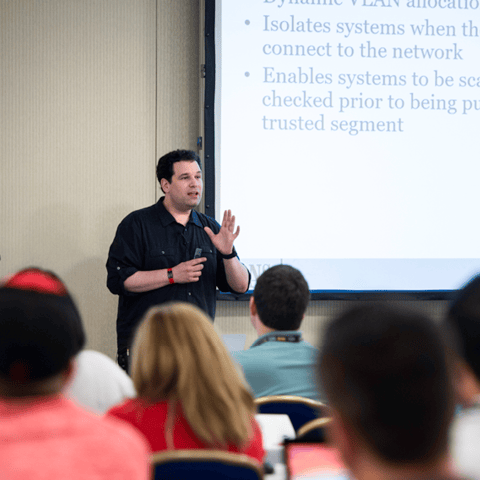
Bryan Simon: Teacher Standing Next to Smartboard and Explaining Concept

Get feedback from the world’s best cybersecurity experts and instructors
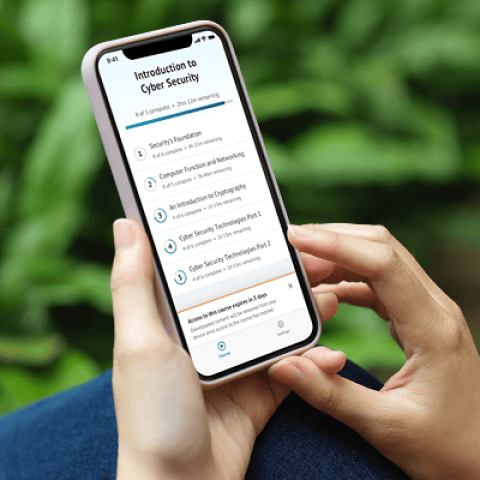
OnDemand Mobile App

Choose how you want to learn - online, on demand, or at our live in-person training events

Close Up of Woman Holding a Pen and Documents

Get access to our range of industry-leading courses and resources