SEC536: Adversarial AI - Penetration Testing AI Systems
SEC536Offensive Operations, Artificial Intelligence

We extend our sincere thanks to Carahsoft for partnering with us to bring this event to life. As a leading distributor of cybersecurity solutions, their support in providing a robust virtual platform ensures that experts can deliver critical insights to help safeguard your security programs now and in the future.

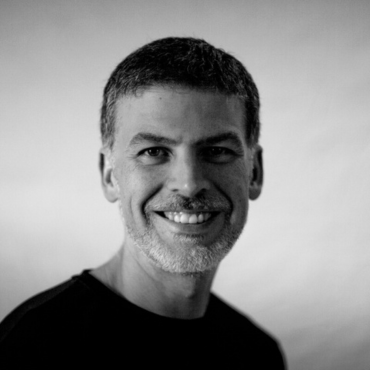
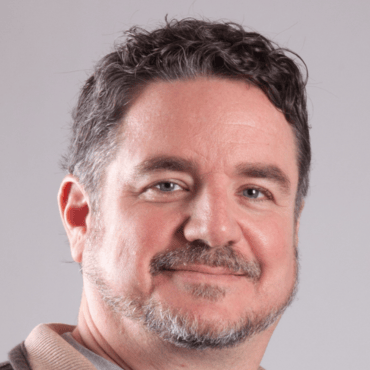
Nash Borges is Vice President of Engineering and Data Science at Sophos, where he leads the diverse teams of engineers, data scientists, and researchers that developed the Secureworks cloud-native, enterprise security platform—Taegis™— from the ground up.
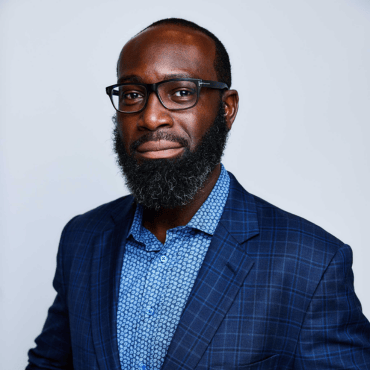
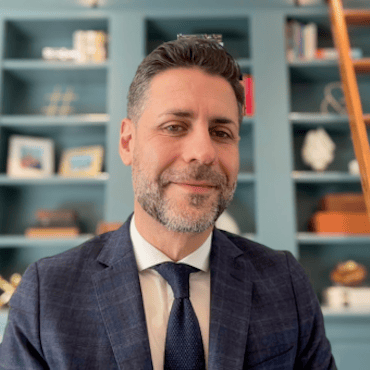
Joe Boye is the Solutions Consultant Manager for Palo Alto Networks Federal Systems Integrator IT Services District. Mr. Boye has over 20 years of broad-based experience in the development, security, and deployment of large and complex information systems.

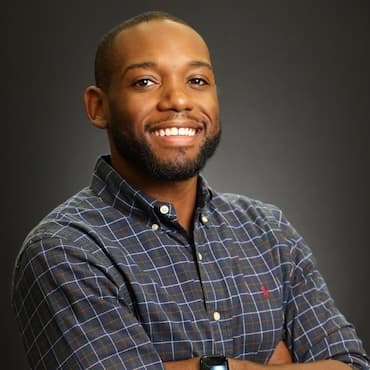
Jason D. Christopher, Energy Impact Partners SVP, teaches ICS456 and co-authors ICS418, turning regulation into safe, reliable OT-supporting programs and metrics to align practitioners and leaders on clear, defensible action.
In this pivotal discussion, Sounil Yu, Co-Founder and Chief AI Safety Officer at Knostic, leads an expert panel featuring top cybersecurity leaders: Vijay Bolina (CISO and Head of Cybersecurity Research at Google DeepMind), Jason Clinton (CISO at Anthropic), and Matt Knight (Head of Security at OpenAI).
They discussed the importance of domain expertise, carefully curated data, and nuanced permission management in developing effective AI models. Register today for SANS Government Forum 2025 so that you don't miss out on this year's expert learnings!

Let colleagues know that you're advancing your skillset by attending SANS 2025 Government Forum. Download & share the "I'm attending" image to post on your social channels!

The SANS Government Security Forum is a free, virtual event taking place on July 22, 2025, focused on the unique cybersecurity challenges faced by government agencies. Attendees will gain insights from government and industry leaders, explore case studies, and discover actionable strategies to strengthen cyber resilience across federal, state, and local agencies.
This event is designed for cybersecurity professionals working in or with government entities, including:
You earn 1 CPE credit for every hour you attend live or watch the recordings. For example, a 120-minute session earns you 2 CPE credits. This is a great opportunity to advance your professional development while learning from industry leaders.
Absolutely! Sessions are designed to be flexible, and recordings will be available after the event to those who are registered. You can attend live sessions whenever possible and catch up on the rest at your convenience.
During live sessions, you'll have access to a Q&A chat feature where you can submit questions directly to the speakers.
Yes! While the forum focuses on U.S. government use cases and regulations, international government professionals are welcome to attend and may find many sessions relevant.
You can contact our support team at support@sans.org for any technical difficulties before or during the event.
The rapid proliferation of Artificial Intelligence (AI) across the federal landscape presents both unprecedented opportunities and novel security challenges. As AI systems become increasingly integrated into critical infrastructure, decision-making processes, and citizen services, the traditional perimeter-based security model proves insufficient. This presentation will explore the imperative of adopting a Zero Trust architecture to effectively secure federal operations in this evolving AI-driven world. We will examine how the core principles of Zero Trust -- assume breach, explicit verification, and least privilege -- provide a robust framework for mitigating the unique risks introduced by AI, including sophisticated cyberattacks leveraging AI, data poisoning, and the potential for autonomous system compromise. By highlighting key considerations and practical strategies, this session aims to equip federal stakeholders with the knowledge necessary to implement Zero Trust principles and ensure the resilience and security of their AI-enabled environments.
Virtual
Confirmed Panelists:
Sean Frazier, Federal CSO, OKTA
Joe Boye, Solutions Consultant Manager, Palo Alto Networks
Virtual
Historically, Operational Technology (OT) has been treated as distinct from Information Technology (IT), which traditionally focused solely on business environments. However, with the rise of digitalization, artificial intelligence (AI), cloud adoption, and the growing presence of IT-like tools such as virtual servers, software-defined networking (SDN), SD-WAN, and virtual I/O, this distinction is rapidly fading from a technology standpoint. Today, most systems run on Windows, Linux, or variants thereof, requiring a new, integrated approach. IT and OT are no longer isolated; they are now joint stakeholders working toward a shared mission.
Despite this integration, fundamental differences in how IT and OT operate remain and must be acknowledged. IT teams need to understand the constraints and priorities of operational environments, while OT teams must learn to manage and secure IT-based tools now embedded in industrial systems. The era of saying "OT is airgapped" is over. Both teams must collaborate to harness emerging technologies like AI and cloud in ways that drive business outcomes and efficiency, while simultaneously preserving operational resilience and safety.
Virtual
Virtual
Panelists: Robert Mathieson, Sales Engineering Director, Public Sector, Extrahop
Virtual
For decades, critical infrastructure has relied on centralized systems designed for scale. But AI is enabling a shift toward intelligent, decentralized, and highly customized solutions - microgrids, autonomous care, adaptive logistics - that reduce dependence on monolithic systems. This talk explores how AI can enhance national resilience, lower infrastructure risk, and redefine what we consider "critical." It's a call to rethink our infrastructure strategy for an era where the economic driver towards scale may no longer be necessary.
Virtual
Confirmed Panelists:
Dr. Nash Borges, SVP Engineering, Sophos
Uriel Cohen, VP Products, VMRay
Virtual
100% of all missions depend on operational technology and control systems. Enter: CROCS – no, not the rubber shoe – the DAF Cyber Resilience Office for Control Systems. CROCS is the first dedicated organization that addresses the growing cyber threats to Air and Space Force installation infrastructure, ensuring cyber safety at every turn. Learn 3 actions to take and 3 pitfalls to avoid in advancing OT cyber resilience.
Virtual
Confirmed Panelists:
Jennifer Bisceglie, Founder and Executive Vice Chair, Interos
Andy Lewis, Technical Marketing Manager, ReversingLabs
Virtual