Group Purchasing
Group Purchasing

SEC530: Defensible Security Architecture and Engineering: Implementing Zero Trust for the Hybrid Enterprise

SEC530Cyber Defense
  • 6 Days (Instructor-Led)
  • 36 Hours (Self-Paced)
Course authored by:
Ismael Valenzuela
Ismael Valenzuela
SEC530: Defensible Security Architecture and Engineering: Implementing Zero Trust for the Hybrid Enterprise
Course authored by:
Ismael Valenzuela
Ismael Valenzuela
  • GIAC Defensible Security Architecture (GDSA)
  • 36 CPEs

    Apply your credits to renew your certifications

  • In-Person, Virtual or Self-Paced

    Attend a live, instructor-led class at a location near you or remotely, or train on your time over 4 months

  • Intermediate Skill Level

    Course material is geared for cyber security professionals with hands-on experience

  • 24 Hands-On Lab(s)

    Apply what you learn with hands-on exercises and labs

Achieve a holistic approach to defensible security architecture for the AI era. Engineer Zero Trust architectures across networks, applications, data, identity, and AI-assisted enforcement.

Course Overview

SEC530 teaches practical security architecture and engineering for the AI era, helping you design and build stronger prevention, detection, and response capabilities by leveraging your existing infrastructure like next-gen firewalls, SIEM, identity platforms, cloud controls, routers, switches, IDS/IPS, WAF, proxies, encryption, PKI, and Microsoft Entra ID, among others.

What You’ll Learn

  • Design defensible security architectures using the DARIOM, MITRE ATT&CK, and ZT principles
  • Harden routers, switches, IPv6, segmentation boundaries, NAC, and identity-based access
  • Engineer network visibility using NGFWs, NDR/NSM, Zeek, Suricata, flow data, and cloud telemetry
  • Design secure access strategies with ZTNA, SASE, TLS inspection, and encryption tradeoffs
  • Protect applications, APIs, and data with WAAP, WAF, DSPM, DLP, and workload identity
  • Defend against OAuth abuse, token theft, PRT abuse, MFA bypass, and cloud lateral movement
  • Connect ITDR risk signals to Conditional Access enforcement with OCSF-normalized telemetry

Business Takeaways

  • Identify security architecture gaps across networks, identity, and visibility pipelines
  • Use existing infrastructure more effectively while moving toward Zero Trust outcomes
  • Prioritize controls by business impact, adversary behavior, and implementation cost
  • Prepare security architecture for AI-driven business workflows and AI-enabled adversaries
  • Reduce attack surface with segmentation, ZTNA, least privilege, and context-aware access
  • Strengthen identity defense against OAuth abuse, MFA fatigue, and credential theft
  • Connect engineered security signals to enforcement through risk scoring and Conditional Access

Course Syllabus

Explore the course syllabus below to view the full range of topics covered in SEC530: Defensible Security Architecture and Engineering: Implementing Zero Trust for the Hybrid Enterprise.

Section 1A Journey Toward Zero Trust: Defensible Security Strategies for the AI Era

Section 1 establishes the architecture method used throughout SEC530. It introduces defensible security architecture, the DARIOM lifecycle, Time-Based Security, MITRE ATT&CK threat modeling, and the Zero Trust journey grounded in NSA ZIG. Hands-on work covers Layer 2 controls, flow data, OCSF normalization, & behavioral baselining for AI-era visibility.

Topics covered

  • Defensible security architecture, DARIOM, and Time-Based Security
  • Threat modeling with MITRE ATT&CK, ATT&CK Navigator, DeTT&CT, and MITRE ATLAS
  • Zero Trust strategy, NIST SP 800-207, CISA ZTMM, and NSA ZIG pillars
  • Physical, wireless, and Layer 2 security: VLANs, PVLANs, ARP spoofing, switch controls
  • Flow data with NetFlow, IPFIX, sFlow, Suricata, OCSF normalization, baselining

Labs

  • Practical Threat Modeling with MITRE ATT&CK
  • Egress Analysis
  • Layer 2 Attacks
  • Architecting for Flow Data

Section 2Network Architecture: Edge, Segmentation, and Identity-Based Access Control

Section 2 focuses on the network architecture layer: hardened edge devices, router and switch security, IPv6, segmentation, NAC, and identity-based access control. Drawing on Volt Typhoon & Salt Typhoon threat models, students engineer Zero Trust enforcement points and connect traditional network engineering to SD-WAN, SSE, ZTNA, SASE, and microsegmentation.

Topics covered

  • Router, switch, and SD-WAN hardening with AAA, TACACS+, RADIUS, and logging
  • SNMP security, NTP/NTS, bogon filtering, blackholes, darknets, and edge visibility
  • IPv6 security, rogue router advertisements, Neighbor Discovery attacks, and tunnels
  • Macro- and micro-segmentation, OT/ICS segmentation, data diodes, and zone design
  • NAC, 802.1X, OpenZiti, Software-Defined Perimeter, and identity-based segmentation

Labs

  • Router Security
  • IPv6
  • Identity-Based Segmentation with OpenZiti

Section 3Network Detection, Secure Access, and Encrypted Traffic

Section 3 builds network-centric visibility & secure access architecture. It covers NGFW design, NDR/NSM placement, Security Onion, Zeek, Suricata, proxies, email security, ZTNA, SASE, mTLS, PKI, TLS inspection, and post-quantum encryption. The section emphasizes control placement, signal collection, & visibility as traffic encrypts across AI-era workflows.

Topics covered

  • NGFW architecture, application control, DNS security, sinkholing, and GenAI exfiltration
  • Network visibility with NSM, NDR, Security Onion, Zeek, Suricata, and cloud telemetry
  • Web and SMTP proxies, SWG, remote browser isolation, SPF, DKIM, DMARC, sandboxing
  • Secure remote access with VPN, ZTNA, SASE, SSE, OpenZiti, and cloud-routed access
  • Encryption architecture: mTLS, PKI, IPsec, ZTDNS, TLS inspection, and PQC readiness

Labs

  • Architecting for NSM
  • Network Security Monitoring
  • Encryption Considerations

Section 4Data-Centric Security: Protecting Data, APIs, and Workloads

Section 4 shifts the architecture toward applications, APIs, data, and workloads. It covers WAAP, WAFs, API gateways, RASP, database security, data discovery, encryption, DLP, DSPM, MDM, and privileged access. The section connects data controls to Zero Trust enforcement and addresses AI data security and exfiltration challenges from generative AI.

Topics covered

  • WAAP, WAF, API gateways, OWASP API Security Top 10, ModSecurity, and RASP
  • Database security, data discovery, credential abuse, masking, and activity visibility
  • Data encryption at rest and in use, confidential computing, HSM/KMS, and PQC awareness
  • Data governance, Microsoft Purview, DSPM, CASB, DLP, and GenAI exfiltration controls
  • Privileged access, PAWs, JIT, PIM/PAM, MDM, Kubernetes, SBOM, and runtime visibility

Labs

  • Securing Web Applications
  • Discovering Sensitive Data
  • Secure Visualization

Section 5Zero Trust in Action: Identity, Deception, and Agentic Orchestration

Section 5 brings the architecture together through identity-centered design, telemetry, and enforcement. It covers NSA ZIG, OAuth and token abuse, Silk Typhoon-style identity attacks, ITDR, OCSF normalization, LangGraph agentic orchestration, and deception. Students learn to use AI responsibly while controlling agent identity and human-in-the-loop gates.

Topics covered

  • Variable trust, NSA ZIG activity levels, and identity enforcement
  • IAM, IdP federation, FIDO2, passkeys, OAuth 2.0, OIDC, and Entra ID controls
  • Silk Typhoon, token theft, PRT abuse, MFA fatigue, AiTM phishing, ITDR, and UEBA
  • Agentic AI security, NHI, OWASP LLM risks, MITRE ATLAS, LangGraph, and risk scoring
  • Log architecture, Sysmon, Sigma, deception, honeytokens, and AI-resilient defense

Labs

  • ITDR Part 1: Identity Attacks in the Cloud
  • ITDR Part 2: Agentic AI Orchestration, Risk Scoring, and Conditional Access Response
  • Sigma Generic Signatures
  • Advanced Defense Strategies

Section 6Hands-On Secure the Flag Challenge

Section 6 is the capstone challenge. Apply SEC530 architecture and engineering techniques in an immersive Secure the Flag environment. Assess, design, harden, validate, and defend Tyrell Corporation systems using controls and thinking patterns built throughout the course, including Zero Trust, visibility, identity, and enforcement concepts.

Topics covered

  • Defensible security architecture under pressure
  • Architecture assessment, attack-path analysis, and weakness identification
  • Tool- and script-based validation of the initial state
  • Defensive design changes, validation evidence, and challenge strategy
  • Practical application of Zero Trust, network, data, identity, and enforcement controls

Labs

  • Capstone - Design, Detect, Defend

Things You Need To Know

Relevant Job Roles

Protection

SCyWF: Protection And Defense

This role uses cybersecurity tools to protect information, systems and networks from cyber threats. Find the SANS courses that map to the Protection SCyWF Work Role.

Explore learning path

Cybersecurity Research & Development

SCyWF: Cybersecurity Architecture, Research And Development

This role conducts conducts cybersecurity research and development. Find the SANS courses that map to the Cybersecurity Research & Development SCyWF Work Role.

Explore learning path

Cybersecurity Architect

European Cybersecurity Skills Framework

Plans and designs security-by-design solutions (infrastructures, systems, assets, software, hardware and services) and cybersecurity controls.

Explore learning path

Security Architect Training, Salary, and Career Path

Cyber Defense

Design, implement, and tune an effective combination of network-centric and data-centric controls to balance prevention, detection, and response. Security architects and engineers are capable of looking at an enterprise defense holistically and building security at every layer. They can balance business and technical requirements along with various security policies and procedures to implement defensible security architectures.

Explore learning path

Cybersecurity Architecture (OPM 652)

NICE: Design and Development

Responsible for ensuring that security requirements are adequately addressed in all aspects of enterprise architecture, including reference models, segment and solution architectures, and the resulting systems that protect and support organizational mission and business processes.

Explore learning path

Infrastructure Design (IFDN)

Skills Framework for the Information Age

Planning and design of secure, scalable, and resilient infrastructure across on-premise, cloud, and hybrid environments. Design outputs meet both current and future business needs.

Explore learning path

Cyber Defense Infrastructure Support Specialist (DCWF 521)

DoD 8140: Cybersecurity

Deploys, configures, maintains infrastructure software and hardware to support secure and effective IT operations across organizational systems.

Explore learning path

Network Operations Specialist (DCWF 441)

DoD 8140: Cyber IT

Implements and maintains network services, including hardware and virtual systems, ensuring operational support for infrastructure platforms.

Explore learning path

Course Schedule and Pricing

Have Questions?Contact Us
Showing 10 of 20

Benefits of Learning with SANS

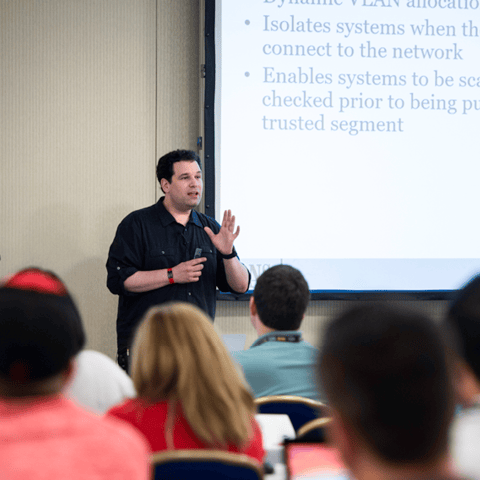
Bryan Simon: Teacher Standing Next to Smartboard and Explaining Concept

Get feedback from the world’s best cybersecurity experts and instructors
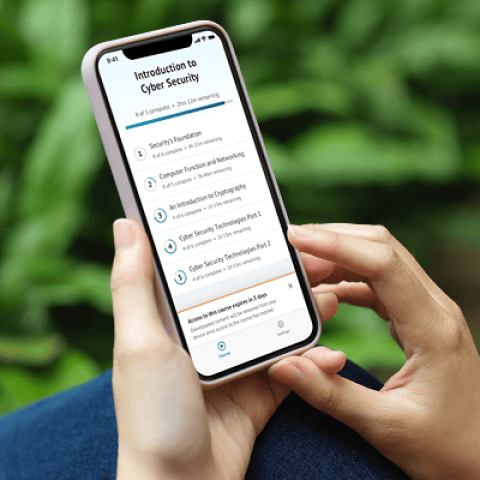
OnDemand Mobile App

Choose how you want to learn - online, on demand, or at our live in-person training events

Close Up of Woman Holding a Pen and Documents

Get access to our range of industry-leading courses and resources