Group Purchasing
Group Purchasing
UPDATED

FOR608: Enterprise-Class Incident Response & Threat Hunting

FOR608Digital Forensics and Incident Response
  • 6 Days (Instructor-Led)
  • 36 Hours (Self-Paced)
Course authored by:
Mathias FuchsMike PilkingtonTarot (Taz) WakeMarcus Guevara
Mathias Fuchs, Mike Pilkington, Tarot (Taz) Wake & Marcus Guevara
FOR608: Enterprise-Class Incident Response & Threat Hunting
Course authored by:
Mathias FuchsMike PilkingtonTarot (Taz) WakeMarcus Guevara
Mathias Fuchs, Mike Pilkington, Tarot (Taz) Wake & Marcus Guevara
  • GIAC Enterprise Incident Responder (GEIR)
  • 36 CPEs

    Apply your credits to renew your certifications

  • In-Person, Virtual or Self-Paced

    Attend a live, instructor-led class at a location near you or remotely, or train on your time over 4 months

  • Intermediate Skill Level

    Course material is geared for cyber security professionals with hands-on experience

  • 20 Hands-On Lab(s)

    Apply what you learn with hands-on exercises and labs

Learn to identify and respond to enterprise-class incidents. Deepen your threat hunting abilities using enterprise-class tools and digging into analysis methodologies to understand attacker movement.

Course Overview

When attackers breach an enterprise, they don't stop at one machine, and neither can you. FOR608 teaches you to hunt and respond at scale, across hundreds or thousands of systems spanning Windows, Linux, macOS, containers, and cloud platforms. You'll learn to collect the right data fast, automate where it matters, and begin leveraging AI-assisted workflows to accelerate investigations. From proactive deception and threat intelligence to cloud IR in Microsoft 365 and AWS, this course equips you to lead the response when the stakes are highest.

Enterprises today have thousands — maybe even hundreds of thousands — of systems ranging from desktops to servers, from on-site to the cloud. Although geographic location and network size have not deterred attackers in breaching their victims, these factors present unique challenges in how organizations can successfully detect and respond to security incidents. Our experience has shown that when sizeable organizations suffer a breach, the attackers seldom compromise one or two systems. Without the proper tools and methodologies, enterprise incident response security teams will always find themselves playing catch-up, and the attacker will continue to achieve success. This course also prepares students for the GEIR certification (GIAC Enterprise Incident Response), which validates advanced skills in large-scale, coordinated response operations.

FOR608 focuses on identifying and responding to incidents too large to focus on individual machines. The concepts are similar: gathering, analyzing, and making decisions based on information from hundreds of machines. This requires the ability to automate and the ability to quickly focus on the right information for analysis. By using example tools built to operate at enterprise-class scale, students will learn the techniques to collect focused data for incident response and threat hunting. Students will then dig into analysis methodologies, learning multiple approaches to understand attacker movement and activity across hosts of varying functions and operating systems by using timeline, graphing, structured, and unstructured analysis techniques.

FOR608: Enterprise-Class Incident Response & Threat Hunting Will Teach You To

  • Understand when incident response requires in-depth host interrogation or light-weight mass collection
  • Deploy collaboration and analysis platforms that allow teams to work across rooms, states, or countries simultaneously
  • Collect host- and cloud-based forensic data from large environments
  • Discuss best practices for responding to Azure, M365, and AWS cloud platforms
  • Learn analysis techniques for responding to Linux and Mac operating systems
  • Analyze containerized microservices such as Docker containers
  • Correlate and analyze data across multiple data types and machines using a myriad of analysis techniques
  • Conduct analysis of structured and unstructured data to identify attacker behavior.
  • Enrich collected data to identify additional indicators of compromise
  • Develop IOC signatures and analytics to expand searching capabilities and enable rapid detection of similar incidents in the future
  • Track incidents and indicators from beginning to end using built-for-purpose incident response engagement tooling.

By completing FOR608, students will build real-world, scalable response skills applicable across diverse environments—and be prepared to earn the GEIR certification, validating their ability to lead and execute enterprise incident response across complex infrastructures.

Author Statement

"Incident Response in large environments requires successful Incident Responders to master a multitude of different disciplines. Broad forensic knowledge forms the foundation. A good choice of the technical approach allows for scalability. Beyond the pure technical challenge of investigating a network with a 6-figure number of machines, there lies the management aspect of things. Successful Incident Response includes all measures to minimize the impact of the breach on the victim as much as possible and make sure that the attacker cannot come back as quickly as before.

“Successful Incident Response Leads need to manage their resources and the victim wisely, make sure no information gets lost along the way, provide knowledge for efficient and safe recovery and support appropriate internal and external communication during the breach. While we apply many well-known forensic and incident response principles and make them scale in FOR608, we will also go a step further and teach you how to run and control large-scale investigations. I believe the best Incident Response is the one that reduces the costs of a breach, including the loss of reputation as much as possible, while at the same time leaving the victims safer than they were before the beach."

- Mathias Fuchs, Senior Instructor

"FOR608 is designed to pick up where the FOR508 class leaves off. In FOR508, we take a deep look at the techniques attackers commonly use to breach Windows-based networks, and the resulting artifacts that help incident responders follow the trail from initial intrusion to data compromise. A lot is accomplished in the 6 days of training in FOR508, but there is still plenty more ground to cover in FOR608!

“We are excited to introduce FOR608 to continue the investigative journey. FOR608 covers important aspects of incident response in the enterprise, such as active defense and detection, case and team management, large-scale data analysis, and investigating attacks against Linux, Mac, and cloud environments operating systems. These are just some of the important subjects we believe are critical for effective response in the enterprise. Mastering these next-level techniques and supporting tools will provide students with the capabilities necessary to handle the scale and variety of threats facing most organizations today."

- Mike Pilkington, Senior Instructor

"Many years ago, Incident Response was very much focused on a single responder dealing with a single system. Times have changed dramatically, and we face advanced adversaries who spread across entire enterprises aggressively and effectively. Often by the time an attack is detected you might find hundreds of systems compromised. It is important that we responders scale up our processes, using the tools and techniques available, to meet this threat. This is what FOR608 will help you achieve.

“The course is built around a realistic scenario, working the students through the phases of IR at scale using tools which help drive a deep understanding. We cover a range of technologies and a lot of data, exactly as you might expect to see in your own enterprise. By learning how to target our response, share CTI and leverage our tools, we truly step up our IR capabilities to meet even the most dedicated adversary. For anyone charged with incident response in an enterprise, this course is for you."

- Taz Wake, Certified Instructor

What You’ll Learn

  • Know when to perform deep host analysis vs. quick data collection at scale
  • Use collaboration tools for seamless remote teamwork
  • Gather forensic data from on-prem and cloud sources (M365, AWS)
  • Analyze Linux, Mac, and containerized (e.g., Docker) environments
  • Correlate data (network, endpoint, etc.) to uncover attacker actions
  • Analyze structured and unstructured data to reveal attacker behavior
  • Enrich data to identify IOCs, create detection signatures, and track incidents

Business Takeaways

  • Limit financial and reputational impact through precise incident response
  • Maximize efficiency with effective IR resource management
  • Collaborate seamlessly across teams using dedicated platforms
  • Detect and counter EDR and app control evasion on Windows
  • Analyze and respond to compromised Linux and macOS systems
  • Handle incidents in Docker, M365, Entra ID, and AWS environments

Course Syllabus

Explore the course syllabus below to view the full range of topics covered in FOR608: Enterprise-Class Incident Response and Threat Hunting.

Section 1Proactive Detection and Response

Section one focuses on proactive cyber defense through early detection, rapid response, and managing incident response teams effectively. It covers active defense tactics like honeypots and canaries, as well as efficient incident response with tools like Aurora, Velociraptor, and Timesketch.

Topics covered

  • Enterprise Incident Response and Threat Hunting
  • Managing Large-Scale Response
  • Rapid Response Triage and Evidence Processing
  • Scalable and Collaborative Analysis with Timesketch

Labs

  • Development of honey tokens for active detection
  • Getting to know Stark Research Labs (the client)
  • Acquiring forensic triage images using Velociraptor
  • Using Timesketch to analyze a potential breach

Overview

The FOR608: Enterprise-Class Incident Response & Threat Hunting course begins with discussions on current cyber defense concerns, and how incident responders and threat hunters can take a more active role in detection and response. Collaboration within the team and the community are a focus, as we look to incorporate shared knowledge from sources like the MITRE ATT&CK(R) framework. Furthermore, we discuss taking an active defense approach to slow attackers and facilitate detection. Specific to active detection, the use of honeypots, honey tokens, and canaries are covered, along with ways to deploy them opportunistically. This type of tripwire in the network provides defenders and responders needed visibility to find and respond to intrusions quickly.

When a compromise does occur, which is an unfortunate but inevitable truth, we continue the discussion with a focus on the processes and techniques that allow for efficient handling of intrusions. Concepts such as leading the response, managing team members, evaluating resource constraints, documenting findings and communicating with stakeholders are covered in detail. The purpose-built Aurora documentation tool is presented as a means for tracking the investigation phases, from initial detection to scoping, containment, indicator development, and remediation.

We continue the discussion by examining an alert triggered in our example company (Stark Research Labs) as a pivot point into a potential attack. We present rapid response options for targeted data collections at scale for such situations. In particular, we discuss KAPE and Velociraptor as options for standalone triage imaging tools. In the case of Velociraptor, it can be installed on a persistent client-server basis, but also as a standalone collector. We demonstrate how to use it in either case to collect critical artifacts for tracking the adversary's progress. Rapidly post-processing the acquired data for analysis is another important piece of the puzzle. Solutions are presented to quickly take the collected artifact files and process them for analysis in Timesketch, Elasticsearch, or for individual artifact review.

Section one wraps up with a deeper-dive look at a possibly compromised host from Stark Research Labs. Triage data was collected by company personnel has been processed into a timeline and the data imported into Timesketch, a tool developed by the Google IR team. We utilize Timesketch as a powerful platform for scalable and collaborative analysis of forensic data.

Full Topic Details

  • Incident Response and Threat Hunting in the Enterprise
    • Taking an Active Defense approach to threat hunting and detection
    • Using Active Defense concepts of Deny, Disrupt, and Degrade for attacker containment
    • Using the Active Defense concept of Deception for detection
    • Pros and cons of using honeypots
    • Pros and cons of canary / honey tokens
    • Deploying canary tokens into an environment for intrusion detection
  • Managing Large-Scale Response
    • Fostering key principles of successful response within the team and organization
    • Structuring teams, roles, and responsibilities
    • Leading the response
    • Managing resources
    • Combining incident response and project management disciplines
    • Effective documentation and communication for tracking and reporting incidents
    • Introduction to IR documentation tools and techniques, including Aurora, an open-source incident response documentation utility
  • Rapid Response Triage
    • Learn about KAPE for Windows artifact acquisition and parsing
    • Execute Velociraptor to quickly acquire forensic artifacts from Windows, Linux, and Mac
    • Create custom acquisition packages for Velociraptor
    • Post-process results for timeline analysis using Timesketch, Elasticsearch, or CSV files
  • Scalable and Collaborative Analysis with Timesketch
    • Using Timesketch to perform deep-dive analysis across multiple hosts with multiple analysts
    • Annotate, label, bookmark events of interest to create custom timeline views
    • Apply analytics and visualizers to assist analysis
    • Create stories to convey findings

Section 2Scaling Response and Analysis

Section two covers threat intelligence concepts, EDR technology and EDR bypass techniques, deploying Velociraptor for IR and threat hunting, and tactical use of Elasticsearch fast forensics in ad-hoc scenarios. The section concludes with a discussion on AI integration in DFIR, including MCP servers, agentic AI, and AI attack vectors.

Topics covered

  • Intel-Driven Threat Hunting and Incident Response
  • EDR and EDR Bypass
  • Scaling Incident Response with Velociraptor
  • Scaling Analysis with the Elastic Stack
  • Integrating AI for DFIR and AI Attacks

Labs

  • Analyzing Sysmon telemetry and log events
  • Using a Velociraptor client-server installation to scope a network intrusion
  • Using the Elasticsearch SQL API and ES|QL for rapid log analysis

Overview

We begin Section two with an examination of key threat intelligence concepts, including developing and implementing threat intelligence internally. External projects such as the MITRE ATT&CK(R) Matrix are reviewed as a common source of shared threat intelligence. We also discuss both MISP and OpenCTI as two comprehensive threat intel platforms for ingesting, tracking, and sharing threat intelligence.

Section two then pivots into response mode. We begin collecting evidence at scale to scope a potential intrusion against our example company, Stark Research Labs (SRL). SRL has Endpoint Detection and Response (EDR) tooling in place, and we leverage that data to assist scoping. However, attackers sometimes bypass or otherwise subvert EDR technology, so a discussion of common bypass techniques is presented. This provides students with both awareness of EDR limitations, as well as training to look for anomalous activities within the EDR log data.

Moving beyond the analysis of commonly logged artifacts, we introduce the open-source Velociraptor tool as a powerful platform for incident response and threat hunting at scale. Velociraptor is adept at pulling forensic artifacts from across the enterprise, as well as providing analysts with a tool to deep-dive individual hosts of interest. We show Velociraptor to be a flexible tool useful for a number of situations, as well as for a number of operating systems and architectures.

One of many useful features of Velociraptor is its ability to push collected data into Elasticsearch. Elasticsearch is another powerful and flexible tool appropriate for any responder's toolkit. As such, we discuss how to ingest and process various data types, including data from Velociraptor, from the PowerShell IR framework "Kansa", and from the "Log2timeline" tool. We then use Elasticsearch's SQL API and newer ES|QL query language to run fast searches and aggregations against ingested data. A bonus lab guides students through the process to create dashboards and visualizations in Kibana for a more traditional approach to searching and analyzing forensic data using the Elastic Stack.

We conclude Section two with a discussion of how Artificial Intelligence (AI) intersects with digital forensics and incident response (DFIR), emphasizing effective techniques such as context control, retrieval-augmented generation (RAG), and customized AI solutions to support research and learning. We explore practical methods for integrating AI into DFIR tools through Model Context Protocol (MCP) servers and the emerging role of agentic AI in investigative workflows. We also compare cloud-based and local Large Language Model (LLM) deployments for DFIR operations and discuss strategies for safely and accurately incorporating them into enterprise DFIR practices. Finally, several attacks against AI are covered, including prompt-injection attacks and MCP server compromises. These attack vectors are important to understand as AI continues to permeate enterprise IT.

Full Topic Details

  • Intel-Driven Incident Response
    • Understand the importance of cyber threat intelligence in threat hunting and incident response, as well as to the organization’s overall security program
    • Review various sources of threat intelligence and integrating it with the IR process
    • Leverage cyber threat intelligence available from MITRE's ATT&CK(R) Matrix
    • Discuss developing and managing intelligence in your organization
  • EDR and EDR Bypass
    • Review the capabilities and challenges of endpoint detection and response (EDR)
    • Analyze Sysmon telemetry and log events for incident scoping/identification
    • Discuss attacker techniques for subverting and bypassing EDR tooling
  • Scaling Incident Response with Velociraptor
    • Describe the various use cases for Velociraptor
    • Learn to customize Velociraptor Query Language (VQL) analyzers ("artifacts")
    • Rapidly deploying Velociraptor in a client-server configuration
    • Performing hunts and acquiring forensic evidence
    • Use Velociraptor notebooks for effective post-processing and analysis
    • Export results to Elasticsearch, Splunk, or CSV flat-files for external analysis
  • Scaling Analysis with the Elastic Stack
    • Utilize the Elastic Stack (aka ELK) to ingest and analyze logs
    • Ingest structured and freeform data types into the Elastic Stack
    • Use dashboards, histograms, graphs, and saved searches to locate attacker TTPs quickly
    • Utilize the Elasticsearch SQL API and new ES|QL piped query language for fast data aggregation and filtering
  • Integrating AI into DFIR
    • Leveraging AI effectively for confident DFIR research and learning using context control, RAG, and customized AI solutions
    • Integrating AI into DFIR tools using MCP
    • Agentic AI in DFIR
    • Cloud vs Local AI for DFIR investigations
    • Introduction to AI attacks and Hunting for Prompt Injection and MCP Server infections

Section 3Modern Attacks against Windows and Linux DFIR

Section three focuses on host-based forensics, covering Windows modern attacks like "fileless" malware and "living of the land" techniques, with detection using Sigma rules, Elasticsearch, and Hayabusa. It then shifts to Linux DFIR, addressing exploits, file systems, logging, and hardening—building skills to investigate both Windows and Linux intrusions.

Topics covered

  • Modern Attacks Against Windows
  • Rapid Windows Event Log Analysis
  • Modern Attacks Against Linux
  • Linux DFIR Fundamentals and Log Analysis
  • Linux Triage Collection and Forensic Readiness

Labs

  • Detecting LOLBAS activity via Sigma
  • Rapid event log analysis with Hayabusa
  • Linux web log analysis
  • Triaging Linux hosts

Overview

Section three transitions to more traditional host-based forensic artifact analysis. The section starts with a look at some of the latest techniques for attacking Windows systems, including the all-too-common ransomware attack. As part of looking for precursors to ransomware attacks, as well as other targeted attacks, we spend time focusing on attackers' use of "living-off-the-land" techniques to avoid detection. There are many clever ways attackers leverage built-in binaries and scripts (aka "LOLBAS" "Living-Off-the-Land Binaries and Scripts") to accomplish their goals without bringing custom malware onto the host. Learning to proactively detect and retroactively analyze these techniques is critical to investigating many modern-day intrusions.

To facilitate more rapid detection and response, we focus on the use of actionable cyber threat intelligence using Sigma rules. We use Sigma rules to hunt for suspicious activity in logs ingested into Elasticsearch. Another exercise focuses on leveraging Sigma rules packaged into the Hayabusa tool for searching Windows event logs directly. These are powerful techniques which help responders solve cases more quickly at scale.

Following the discussion on Windows threats, the remaining part of Section 3 focuses on Linux incident response and analysis. Many organizations, large and small, have Linux systems present in their environment. Although intrusions against Linux do not make the headlines as often, it's no secret that attackers regularly exploit vulnerable Linux systems to establish and maintain footholds in victim organizations.

FOR608 discusses common vulnerabilities in Linux systems and configurations, then covers common attacker exploits targeting these systems. Privilege escalation, persistence, and lateral movement are techniques we frequently associate with attacks against Windows environments, but they apply equally to Linux as well.

Our Linux discussion continues with coverage of DFIR fundamentals when analyzing Linux systems. Topics that are critical, but often cause confusion, include differences among Linux distributions, Linux file systems, the Logical Volume Manager, key log file locations, and more. Strategies are presented to handle both initial triage and deeper forensic analysis of Linux systems. Searching for unexpected logins, suspicious new files or altered files, and outliers in application logs are just a few of the techniques used to locate malicious behavior. We conclude the section with best practices for hardening systems, enhancing logging configurations, and adding monitoring capabilities to aid future investigations. Providing students with the ability to investigate Linux intrusions is a key goal of FOR608. Upon completion of the course, students will leave with important new skills and techniques for responding to large-scale intrusions across diverse enterprise networks.

Full Topic Details

  • Modern Attacks Against Windows
    • Fileless malware in the wild
    • Common "LOLBAS" activity, including precursors to ransomware attacks
    • Hunting amongst the noise for suspicious "LOLBAS" usage
  • Detect and Respond to Modern Attacks
    • Leverage the Sigma Project for threat detection against log data
    • Build new Sigma rules for maintaining and sharing threat intelligence
    • Perform Sigma rule searches against centralized log servers
    • Perform Sigma rule searches directly against Windows event logs
  • Introduction to Linux
    • History of Linux
    • Ubiquitous nature of Linux
    • Challenges organizations face with managing, securing, and monitoring Linux systems
  • Modern Attacks Against Linux
    • Exploiting vulnerable applications or operating system services
    • Misconfigurations or unpatched services lead to successful attacks
    • Attacker techniques for accomplishing the attack lifecycle, including privilege escalation, persistence, lateral movement, and exfiltration
  • Linux DFIR Fundamentals
    • Understanding primary differences in file systems
    • EXT3, EXT4, XFS file system overviews
    • Understanding the Logical Volume Manager (LVM2)
    • Available timestamps in Linux file systems (comparing EXT3, EXT4, XFS, Btrfs, ZFS)
    • Typical Linux file system directory hierarchy
  • Linux Log Analysis
    • Common logs and locations
    • IR strategy for log analysis
    • Reviewing logon activity
    • Mining application logs for suspicious events
  • Linux Triage Collection and Forensic Readiness
    • Collecting key configuration files
    • Collecting artifact-rich logs
    • Scripting collection for simplicity and consistency
    • Hardening Linux configurations
    • Improving audit policies
    • Adding endpoint security tooling

Section 4Analyzing macOS and Docker Containers

This section covers macOS incident response, including its ecosystem, data acquisition, log analysis, and key artifacts. It also introduces containerized environments, focusing on Docker and its role in modern enterprise investigations.

Topics covered

  • macOS Foundations
  • Apple Filesystems
  • Mac Incident Response
  • Containers in the Enterprise
  • DFIR for Containers

Labs

  • Mount and analyze APFS disk images
  • Review macOS artifacts and logs
  • Docker administration and logs
  • Docker triage and IR

Overview

By this point in the course, students have undertaken a wide-range of tasks, including collecting of host-based data, deployment of live-response tools to catch attackers "in the act", and utilizing "big-data" analysis platforms to find suspicious activity at scale. Students have also taken a deep dive into the Linux operating system and discovered important ways to respond to the inevitable attacks against these systems.

In the next module, we move on to look at key aspects of the Apple macOS operating system. These hosts have become more prevalent in many enterprise networks. Therefore, it's important that incident responders have some understanding and training for responding to such systems. Before diving into the incident response techniques, we discuss the history and current ecosystem of macOS and Apple mobile devices. We then move into important topics such as the Apple Filesystem (APFS), the file and directory structure, and important file types for Mac analysis such as the Property List (plist) configuration file.

After a discussion of the fundamentals, we turn our attention to the challenges and opportunities for responding to macOS incidents. Questions such as how best to acquire disk and triage data, how to review those acquisitions, and which logs and other artifacts are most useful in spotting suspicious activity are all covered in detail.

After establishing a solid foundation for Linux and Mac forensic analysis, we then turn our attention to the concept of containerized microservices. Containers are a popular way to deploy applications and services in a reliable and repeatable way. The most common platform for containers is Docker, which is where we focus our attention in FOR608.

Discussions on the architecture and management of Docker containers help students understand where to focus their analysis. A specific triage workflow is also covered to arm analysts with a repeatable process for quick and effective response against individual containers as well as the container host.

Full Topic Details

  • macOS Foundations
    • A history of Apple operating systems
    • Apple in the enterprise
  • Apple Filesystems
    • APFS characteristics
    • macOS timestamps
    • macOS file & directory structure
    • Key file types such as Property List (.plist) files
  • Mac Incident Response
    • Challenges with forensic acquisitions
    • Options for mounting disk images
    • Profiling users and system configurations
    • Review common persistence methods
    • Log analysis for macOS
  • Containers in the Enterprise
    • Conceptual overview of containers
    • Containers vs. virtual machines
    • Introduction to Docker
    • Attacks against containers
    • Forensic challenges of containerized environments
  • DFIR for Containers
    • Metadata collection and analysis
    • Using snapshots to save containerized files
    • Log analysis for Docker
    • Gather ephemeral data
    • Review image files and history

Section 5Cloud Attacks and Response

This section covers incident response in Microsoft Azure, M365, and AWS, highlighting unique cloud challenges and the MITRE ATT&CK® Cloud Matrix. It focuses on common attack scenarios, key logs, and tools like GuardDuty. It concludes with strategies for cloud response using security accounts, AMIs, and automation tools like Lambda and Step Functions.

Topics covered

  • DFIR in the Cloud
  • Incident Response in Azure and M365
  • Attackers in the Cloud; AWS Foundations
  • Incident Response in AWS
  • IR Automation in AWS

Labs

  • M365 log analysis
  • Finding attacker cloud exfil infrastructure
  • AWS CloudTrail log analysis
  • AWS VPC Flow log analysis

Overview

This section is focused on responding to incidents in the major cloud platforms from Microsoft and Amazon. Although the analysis focuses on those platforms, we cover log analysis techniques, architecture designs, and automation initiatives that can be applied to just about any cloud provider. We also cover ways attackers leverage cloud environments and the artifacts that might be left behind in such cases.

Cloud environments provide unique challenges for incident response, but some exciting opportunities too. A quick intro into these factors will start the day. Once again, we find that the MITRE ATT&CK(R) framework is useful for organizing our defenses and detections - specifically the Cloud Matrix.

Moving into Microsoft 365 (M365) and Azure, several popular SaaS offerings are discussed. These include Entra ID (formerly known as Azure AD) for the underlying identity provider service, which supports other hosted services such as Exchange, SharePoint, and Teams. Many organizations subscribe to these services, and predictably, attackers have become proficient at finding weaknesses in their implementations. We therefore review a variety of common attack scenarios against M365 and Azure. Log analysis is critical to solving these cases, so log acquisition and review is a major focus for discussion. Specifically, we look for suspicious user logon and email activity from the Unified Audit Logs (UAL) as a common method for detection. The Entra ID Audit log and others are useful resources as well.

Important for any incident response is the Recovery phase, which typically includes implementing security enhancements to detect or prevent similar attacks in the future. Therefore, we cover some of the more useful security enhancements in M365 and Entra ID.

The second part of the section delves into the Amazon Web Services (AWS) cloud platform. Its general architecture and components are covered to provide a solid foundation for those new to AWS. We then go into detail on the many logs and services that provide critical detection and analysis data for responders. This includes CloudTrail logs, VPC flow logs, GuardDuty alerts, and more.

The section concludes with discussions on architecting for response in the cloud for faster and more effective analysis. This involves setting up security accounts for a secure enclave within AWS. Template VMs (AMIs) are also recommended for performing analysis against volume snapshots, network packet captures, and log data. Finally, we look at common IR tasks that can be automated and how to do it rather seamlessly using AWS Lamda and Step Functions. While the solutions presented in this section are AWS-centric, the concepts can (and should) be applied to almost any cloud platform with significant use by an organization.

Full Topic Details

  • DFIR in the Cloud
    • Cloud service models (IaaS, PaaS, SaaS)
    • Cloud forensics vs. traditional forensics
    • MITRE ATT&CK(R) Cloud Matrix
  • Incident Response in Azure & M365
    • M365/O365 SaaS offerings
    • Azure IaaS and PaaS platform
    • Entra ID (formerly Azure AD) architecture
    • Common attack scenarios
    • Important log sources & log extraction
    • Investigating suspicious user logons and email activity
    • Securing M365 & Azure
  • Attackers in the Cloud
    • Investigating attacks that leverage the cloud
    • Discover host-based artifacts from attacker's cloud infrastructure
  • AWS Foundations
    • Organizational and account hierarchy
    • AWS Identity and Access Management (IAM)
    • Authentication and identity types
    • AWS regions and API endpoints
    • AWS computing, storage, and networking constructs
  • Incident Response in AWS
    • AWS incident domains
    • Critical log sources such as CloudTrail, CloudWatch, and S3 access logs
    • Threat detection and response services such as GuardDuty and Detective
    • Network analysis with VPC flow logs and traffic mirroring
    • Architecting for analysis in the cloud
    • Acquiring logs and snapshots
    • Planning and practicing likely scenarios
  • IR Automation in AWS
    • Identifying tasks for automation
    • Using AWS VM templates (AMIs) for quick response
    • Leveraging AWS Lamda and Step Functions for automation and orchestration

Section 6Capstone: Enterprise-Class IR Challenge

Section six is the capstone exercise, where students apply course concepts to analyze a multi-platform breach. Using real-world tools and techniques, they’ll investigate an end-to-end incident across hosts and cloud systems, working in teams to simulate real-world response.

Things You Need To Know

Important! Bring your own system configured according to these instructions.

A properly configured system is required to fully participate in this course. If you do not carefully read and follow these instructions, you will not be able to fully participate in hands-on exercises in your course. Therefore, please arrive with a system meeting all of the specified requirements.

Back up your system before class. Better yet, use a system without any sensitive/critical data. SANS is not responsible for your system or data.

Mandatory System Hardware Requirements

  • CPU: 64-bit Intel i5/i7/i9 (8th generation or newer), or AMD equivalent. A x64 bit, 2.0+ GHz or newer processor is mandatory for this class.
  • CRITICAL: Apple Silicon devices cannot perform the necessary virtualization and therefore cannot in any way be used for this course.
  • BIOS settings must be set to enable virtualization technology, such as "Intel-VTx" or "AMD-V" extensions. Be absolutely certain you can access your BIOS if it is password protected, in case changes are necessary.
  • 16GB of RAM or more is required.
  • 350GB of free storage space or more is required.
  • Wireless networking (802.11 standard) is required. There is no wired Internet access in the classroom.

Mandatory Host Configuration And Software Requirements

  • Your host operating system must be the latest version of Windows 10, Windows 11, or macOS 10.15.x or newer.
  • Fully update your host operating system prior to the class to ensure you have the right drivers and patches installed.
  • Linux hosts are not supported in the classroom due to their numerous variations. If you choose to use Linux as your host, you are solely responsible for configuring it to work with the course materials and/or VMs.
  • Local Administrator Access is required. (Yes, this is absolutely required. Don't let your IT team tell you otherwise.) If your company will not permit this access for the duration of the course, then you should make arrangements to bring a different laptop.
  • You should ensure that antivirus or endpoint protection software is disabled, fully removed, or that you have the administrative privileges to do so. Many of our courses require full administrative access to the operating system and these products can prevent you from accomplishing the labs.
  • Any filtering of egress traffic may prevent accomplishing the labs in your course. Firewalls, proxies, and VPNs should be disabled or you must have the administrative privileges to disable it.
  • Download and install the latest version of VMware Workstation Pro for Windows hosts, or VMWare Fusion Pro for Intel-based macOS hosts, prior to class beginning of class. Note that Workstation Pro and Fusion Pro are now available for free for both personal and commercial use from Broadcom.

  • On Windows hosts, VMware products might not coexist with the Hyper-V hypervisor. For the best experience, ensure VMware can boot a virtual machine. This may require disabling Hyper-V. Instructions for disabling Hyper-V, Device Guard, and Credential Guard are contained in the setup documentation that accompanies your course materials.
  • Download and install 7-Zip (for Windows Hosts) or Keka (for macOS hosts). These tools are also included in your downloaded course materials.

Your course media is delivered via download. The media files for class are large, approximately 100GB in total. You need to allow plenty of time for the download to complete. Internet connections and speed vary greatly and are dependent on many different factors. Therefore, it is not possible to give an estimate of the length of time it will take to download your materials. Please start your course media downloads as soon as you get the link. You will need your course media immediately on the first day of class. Do not wait until the night before class to start downloading these files.

Your course materials include a "Setup Instructions" document that details important steps you must take before you travel to a live class event or start an online class. It may take 30 minutes or more to complete these instructions.

Your class uses an electronic workbook for its lab instructions. In this new environment, a second monitor and/or a tablet device can be useful for keeping class materials visible while you are working on your course's labs.

If you have additional questions about the laptop specifications, please contact customer service.

FOR608 is aimed at digital forensics, incident response, intrusion detection, and threat hunting professionals in medium to large organizations, who constantly face battles with enterprise scale and complexity.

Please note that FOR608 is an advanced course that skips over introductory material of Windows host- and network-based forensics and incident response. Although this class is not necessarily more technical than our 500-level classes, it does assume that prior knowledge so that topics and concepts are not repeated.

The GIAC Enterprise Incident Response (GEIR) certification validates a practitioner's mastery of enterprise-class incident response and threat hunting tools and techniques. GEIR certification holders have demonstrated the ability to use analysis methodologies to understand attacker movement across varying functions and operating systems.

  • Incident Response Team Management and Coordination
  • Enterprise Incident Detection and Threat Hunting
  • Large Scale Event Correlation and Timeline Analysis
  • Multi-platform Artifact Analysis
  • Analysis of Windows Artifacts
  • Analysis of Linux Artifacts
  • Analysis of macOS Artifacts
  • Analysis of Container Artifacts
  • Analysis of Cloud Environment Artifacts

More Certification Details

  • Printed and digital course books
  • MP3 audio files of the entire course
  • Linux SIFT VM with enterprise DFIR tooling and case data preinstalled
  • Windows VM with enterprise DFIR tooling and case data preinstalled (licensed for 4 months)

FOR608 is an advanced level course that skips over introductory material of Windows host- and network-based forensics and incident response. This class is not necessarily more technical than our 500-level classes, but it does assume that knowledge so that topics and concepts are not repeated.

Students must have multiple years of DFIR experience and/or have taken classes such as:

The FOR608 course is a part of the “Incident Response & Threat Hunting” Learning Path, which aims to equip forensics and incident response professionals with the specialized skills they need to move beyond first-response incident handling to analyze attacks and develop appropriate plans for remediation and recovery.

Depending on your current or desired future role, one of these courses is a great next step in your cybersecurity journey:

Enterprise incident response refers to a structured and comprehensive approach to handling cybersecurity incidents within large organizations. It goes beyond basic incident handling by incorporating a proactive, strategic mindset and leveraging advanced technologies.

The key distinctions of enterprise-class incident response include:

  • Proactive Threat Hunting: This includes continuously searching for threats and vulnerabilities before they can cause significant damage.
  • Advanced Technologies: Utilizing tools like SIEM, SOAR, and EDR for efficient detection, analysis, and response.
  • Automation: Automating repetitive tasks to free up analysts for more complex investigations.
  • Collaboration: Fostering strong collaboration among security teams, IT teams, and business units.
  • Continuous Improvement: Regularly reviewing and refining incident response processes based on lessons learned.

In today's complex threat environment, a robust incident response capability is crucial for organizations to protect their critical assets and minimize the impact of cyberattacks. Enterprise-class incident response helps organizations:

  • Reduce downtime and financial losses through quickly identifying and mitigating threats
  • Enhance reputation and customer trust with effective incident response
  • Gain a competitive advantage by demonstrating resilience and protecting their valuable assets

FOR608: Enterprise-Class Incident Response and Threat Hunting can greatly benefit your cybersecurity career. Here’s how:
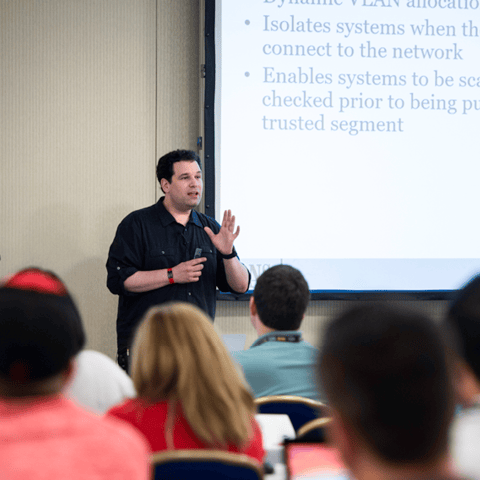
  • Develop in-demand skills: FOR608 will equip you with highly sought-after skills in areas like threat hunting, incident response, and data analysis — critical in today's cybersecurity environment.
  • Learn advanced techniques: You'll gain hands-on experience with industry-standard tools and techniques, including large-scale timeline analysis, enterprise triage acquisition, tactical log analysis, and more.
  • Improve analytical and problem-solving abilities: The course will challenge you to think critically, analyze complex scenarios, and develop effective solutions to cybersecurity challenges.
  • Increase your earning potential: Professionals with strong incident response and threat hunting skills are highly valued in the job market, often commanding higher salaries.
  • Advance your career: The course can help you qualify for roles such as Security Analyst, Incident Responder, Threat Hunter, or Cybersecurity Consultant.
  • Gain a competitive edge: Differentiate yourself from other candidates in the job market by demonstrating advanced cybersecurity knowledge and skills.

Relevant Job Roles

Cyber Intelligence Analyst Training, Salary, and Career Path

European Cybersecurity Skills Framework

Cyber Intelligence Analysts analyze evolving cyber threats, profile adversaries, and leverage intelligence platforms to proactively inform security decisions and mitigation strategies, bridging technical insights with strategic awareness.

Explore learning path

Cyber Incident Responder Training, Salary, and Career Path

European Cybersecurity Skills Framework

Monitor the organisation’s cybersecurity state, handle incidents during cyber-attacks and assure the continued operations of ICT systems.

Explore learning path

Insider Threat Analysis

NICE: Protection and Defense

Responsible for identifying and assessing the capabilities and activities of cybersecurity insider threats; produces findings to help initialize and support law enforcement and counterintelligence activities and investigations.

Explore learning path

Threat Management

SCyWF: Protection And Defense

This role collects and analyzes information about threats, searches for undetected threats and provides actionable insights to support cybersecurity decision-making. Find the SANS courses that map to the Threat Management SCyWF Work Role.

Explore learning path

Cybercrime Investigation (CRIM)

Skills Framework for the Information Age

Collection, preservation, and analysis of digital evidence to trace cybercrime and support prosecution efforts. Technical artefacts are translated into admissible findings in collaboration with legal and law enforcement teams.

Explore learning path

Digital Forensics (OPM 212)

NICE: Protection and Defense

Responsible for analyzing digital evidence from computer security incidents to derive useful information in support of system and network vulnerability mitigation.

Explore learning path

Cybercrime Investigator Training, Salary, and Career Path (OPM 221)

NICE: Investigation

Cybercrime Investigators navigate dark web forums, trace cybercriminal activity, and conduct covert investigations. They follow forensic and legal standards to gather evidence and respond to cybercrimes.

Explore learning path

Military Operations / Law Enforcement Agents

Digital Forensics and Incident Response

Execute digital forensic operations under demanding conditions, rapidly extracting critical intelligence from diverse devices. Leverage advanced threat hunting and malware analysis skills to neutralize sophisticated cyber adversaries.

Explore learning path

Course Schedule and Pricing

Have Questions?Contact Us
Showing 10 of 10

Benefits of Learning with SANS

Bryan Simon: Teacher Standing Next to Smartboard and Explaining Concept

Get feedback from the world’s best cybersecurity experts and instructors
OnDemand Mobile App

Choose how you want to learn - online, on demand, or at our live in-person training events

Close Up of Woman Holding a Pen and Documents

Get access to our range of industry-leading courses and resources