Group Purchasing
Group Purchasing

SEC401: Security Essentials

SEC401Cyber Defense
  • 6 Days (Instructor-Led)
  • 46 Hours (Self-Paced)
Course authored by:
Bryan Simon
Bryan Simon
Course authored by:
Bryan Simon
Bryan Simon
  • GIAC Security Essentials (GSEC)
  • 46 CPEs

    Apply your credits to renew your certifications

  • In-Person, Virtual or Self-Paced

    Attend a live, instructor-led class at a location near you or remotely, or train on your time over 4 months

  • Essential Skill Level

    Course material is for individuals with an understanding of IT or cyber security concepts

  • 20 Hands-On Lab(s)

    Apply what you learn with hands-on exercises and labs

Essentials are not basics. They are the foundation every specialization is built upon—and without them, the specialization itself is unstable.

Course Overview

SEC401: Security Essentials covers more than 30 topical areas of information security—not because breadth is a goal in itself, but because the industry demands it. You cannot effectively defend what you do not understand; and what you do not understand, in an industry this large and this interconnected, will eventually become the gap that matters most.

What You’ll Learn

  • Master foundational principles: network architecture, cryptography, identity, and hardening
  • Analyze real traffic, interpret logs, and identify indicators of compromise
  • Evaluate defensive strategies across on-premises, cloud, and hybrid environments
  • Recognize and respond to the full attack lifecycle: compromise through exfiltration
  • Implement security controls across Windows, Linux, and macOS with consistency
  • Apply vulnerability management practices that prioritize risk intelligently, not reactively
  • Map adversarial tactics to defensive countermeasures—and understand why it matters

Business Takeaways

  • Build a security program grounded in defensible architecture—explainable and measurable
  • Develop a vulnerability management approach that prioritizes by actual organizational risk
  • Reduce risk through systematic hardening across every major platform: Windows, Linux, macOS
  • Connect foundational security controls to the adversarial tactics they're designed to defeat
  • Return to work day one with skills and tools immediately applicable to your environment

Course Syllabus

Explore the course syllabus below to view the full range of topics covered in SEC401: Security Essentials.

Section 1 Network Security and Cloud Essentials

Every organization operates under the same uncomfortable reality: not every attack will be prevented. The question is never "how do we stop everything?" because everything cannot be stopped. The more important question is "how quickly can we detect, understand, and respond when something gets through?" Section 1 builds that answer, starting with the network itself.

Topics covered

  • Defensible Network Architecture
  • Protocols and Packet Analysis
  • Virtualization, Cloud, and AI Essentials
  • Securing Wireless Networks

Labs

  • Tcpdump
  • Wireshark
  • AI Assisted Lab: AWS VPC Flow Logs

Section 2Defense in Depth

No single control stops every threat. That is not a failure of security—it is the reality defense-in-depth is designed to address. Section 2 builds the layered strategy every organization needs but few implement fully: from information assurance principles through identity, authentication, and security frameworks, to data protection and mobile security.

Topics covered

  • Defense-In-Depth
  • IAM, Authentication, and Password Security
  • Security Frameworks
  • Data Loss Prevention
  • Mobile Device Security

Labs

  • Password Auditing
  • Data Loss Prevention
  • Mobile Device Backup Recovery

Section 3Vulnerability Management and Response

Every compromise begins somewhere. Section 3 covers the full arc—from vulnerabilities that give adversaries a foothold, through attack methods, to logging and detection that expose post-compromise activity, and the incident response discipline that shapes effective recovery. Understanding each stage isn’t optional; the adversary already does.

Topics covered

  • Vulnerability Assessments and Penetration Testing
  • Attacks and Malicious Software
  • Web Application Security
  • Security Operations and Log Management
  • Digital Forensics and Incident Response

Labs

  • Network Discovery
  • AI Assisted Lab: Binary File Analysis and Characterization
  • Web App Exploitation
  • SIEM Log Analysis

Section 4Data Security Technologies

Section 4 examines technologies at the core of defensive security—starting with the most misunderstood: cryptography. It then covers prevention and detection at network and endpoint levels. Awareness isn’t enough; understanding how they work, where they fail, and how they complement each other is what makes them truly defensible choices in practice.

Topics covered

  • Cryptography
  • Cryptography Algorithms and Deployment
  • Applying Cryptography
  • Network Security Devices
  • Endpoint Security

Labs

  • Hashing and Cryptographic Validation
  • Encryption and Decryption
  • AI Assisted Lab: Intrusion Detection and Network Security Monitoring

Section 5Windows and Azure Security

Windows remains the most widely used—and most targeted—desktop OS; those facts are linked. Section 5 examines Windows security in today’s ecosystem: Active Directory, Azure, PowerShell, PKI, BitLocker, Microsoft 365, Hyper-V, and more. The simple desktop model no longer applies; this section focuses on the Windows organizations actually defend today.

Topics covered

  • Windows Security Infrastructure
  • Windows as a Service
  • Windows Access Controls
  • Enforcing Security Configurations
  • Microsoft Cloud, Automation, Logging and Auditing

Labs

  • Windows Process Exploration
  • Windows Filesystem Permissions
  • Applying Windows System Security Policies
  • Using PowerShell for Speed and Scale

Section 6Containers, Linux, and Mac Security

The final section of SEC401 addresses the operating systems and deployment models that complete our discussion of the modern enterprise environment — Linux, containers, and macOS. Each presents its own security model, its own strengths, and its own commonly misunderstood limitations.

Topics covered

  • Linux Fundamentals
  • Containerized Security
  • Linux Security Enhancements and Infrastructure
  • macOS Security

Labs

  • Linux Permissions
  • Linux Containers
  • Linux Logging and Auditing

Things You Need To Know

Relevant Job Roles

Data Analysis (OPM 422)

NICE: Implementation and Operation

Responsible for analyzing data from multiple disparate sources to provide cybersecurity and privacy insight. Designs and implements custom algorithms, workflow processes, and layouts for complex, enterprise-scale data sets used for modeling, data mining, and research purposes.

Explore learning path

Systems Security Analyst (DCWF 461)

DoD 8140: Software Engineering

Ensures systems and software security from development to maintenance by analyzing and improving security across all lifecycle phases.

Explore learning path

Database Administrator (DCWF 421)

DoD 8140: Cyber IT

Manages and maintains databases or data systems for efficient storage, querying, and access to organizational data assets and records.

Explore learning path

Cyber Instructional Curriculum Developer (DCWF 711)

DoD 8140: Cyber Enablers

Develops and evaluates cyber training content and methods to ensure relevance, effectiveness, and alignment with organizational needs.

Explore learning path

Technical Support Specialist (DCWF 411)

DoD 8140: Cyber IT

Delivers technical support to users, helping them resolve issues with client hardware/software according to organizational service processes.

Explore learning path

Systems Administration (OPM 451)

NICE: Implementation and Operation

Responsible for setting up and maintaining a system or specific components of a system in adherence with organizational security policies and procedures. Includes hardware and software installation, configuration, and updates; user account management; backup and recovery management; and security control implementation.

Explore learning path

Systems Developer (DCWF 632)

DoD 8140: Cyber IT

Oversees full lifecycle of information systems from design through evaluation, ensuring alignment with functional and operational goals.

Explore learning path

Technology Portfolio Management (OPM 804)

NICE: Oversight and Governance

Responsible for managing a portfolio of technology investments that align with the overall needs of mission and enterprise priorities.

Explore learning path

Course Schedule and Pricing

Have Questions?Contact Us
  • Location & instructor

    Virtual (OnDemand)

    Instructed by
    Date & Time
    OnDemand (Anytime)Self-Paced, 4 months access
    Course price
    $8,780 USD*Prices exclude applicable local taxesBuy now for access on May 21. Use code Presale10 for 10% off course price!
    Registration Options
  • Location & instructor

    SANS Security Central 2026

    New Orleans, LA, US & Virtual (live)

    Instructed by
    Date & Time
    Fetching schedule..
    Course price
    $8,780 USD*Prices exclude applicable local taxes
    Registration Options
  • Location & instructor

    SANS Security West 2026

    San Diego, CA, US & Virtual (live)

    Instructed by
    Date & Time
    Fetching schedule..
    Course price
    $8,780 USD*Prices exclude applicable local taxes
    Registration Options
  • Location & instructor

    SANS Amsterdam May 2026

    Amsterdam, NL & Virtual (live)

    Instructed by
    Date & Time
    Fetching schedule..
    Course price
    €8,230 EUR*Prices exclude applicable local taxes
    Registration Options
  • Location & instructor

    SANS DC Metro June 2026

    Arlington, VA, US & Virtual (live)

    Instructed by
    Date & Time
    Fetching schedule..
    Course price
    $8,780 USD*Prices exclude applicable local taxes
    Registration Options
  • Location & instructor

    SANS Chicago 2026

    Chicago, IL, US & Virtual (live)

    Instructed by
    Date & Time
    Fetching schedule..
    Course price
    $8,780 USD*Prices exclude applicable local taxes
    Registration Options
  • Location & instructor

    SANS Riyadh June 2026

    Riyadh, SA & Virtual (live)

    Instructed by
    Date & Time
    Fetching schedule..
    Course price
    $8,900 USD*Prices exclude applicable local taxes
    Registration Options
  • Location & instructor

    SANS Paris June 2026

    Paris, FR

    Instructed by
    Date & Time
    Fetching schedule..
    Course price
    €8,230 EUR*Prices exclude applicable local taxes
    Registration Options
  • Location & instructor

    SANS Austin 2026

    Austin, TX, US & Virtual (live)

    Instructed by
    Date & Time
    Fetching schedule..
    Course price
    $8,780 USD*Prices exclude applicable local taxes
    Registration Options
  • Location & instructor

    SANSFIRE 2026

    Washington, DC, US & Virtual (live)

    Instructed by
    Date & Time
    Fetching schedule..
    Course price
    $8,780 USD*Prices exclude applicable local taxes
    Registration Options
Showing 10 of 31

Benefits of Learning with SANS

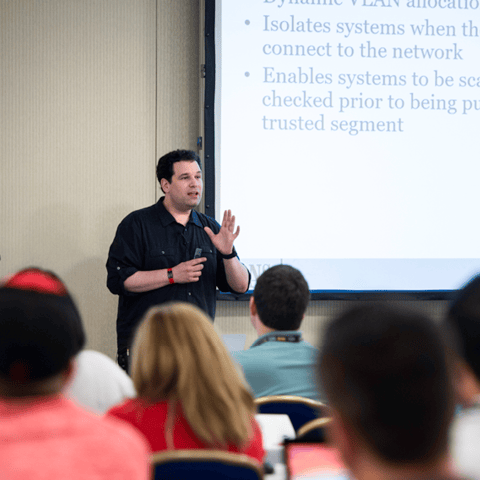
Bryan Simon: Teacher Standing Next to Smartboard and Explaining Concept

Get feedback from the world’s best cybersecurity experts and instructors
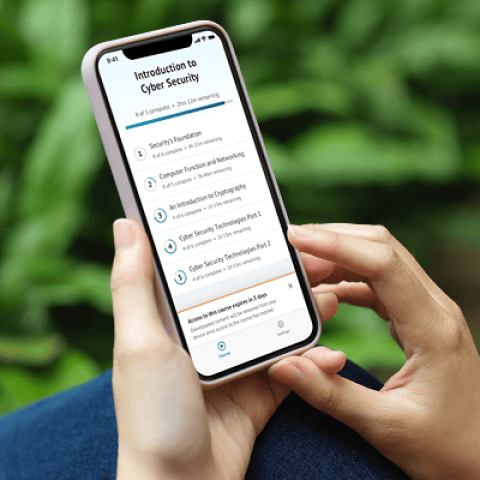
OnDemand Mobile App

Choose how you want to learn - online, on demand, or at our live in-person training events

Close Up of Woman Holding a Pen and Documents

Get access to our range of industry-leading courses and resources