Group Purchasing
Group Purchasing
AI-FOCUSEDNEW

SEC543: AI-Assisted Source Code Analysis and Exploitation for Penetration Testers

SEC543Offensive Operations, Artificial Intelligence

  • 2 Days (Instructor-Led)
  • 12 Hours (Self-Paced)
Course authored by:
Ed SkoudisJoshua WrightChris DavisEvan Booth
Ed Skoudis, Joshua Wright, Chris Davis & Evan Booth
SEC543: AI-Assisted Source Code Analysis and Exploitation for Penetration Testers
Course authored by:
Ed SkoudisJoshua WrightChris DavisEvan Booth
Ed Skoudis, Joshua Wright, Chris Davis & Evan Booth
  • 12 CPEs

    Apply your credits to renew your certifications

  • In-Person, Virtual or Self-Paced

    Attend a live, instructor-led class at a location near you or remotely, or train on your time over 4 months

  • Intermediate Skill Level

    Course material is geared for cyber security professionals with hands-on experience

  • 10 Hands-On Lab(s)

    Apply what you learn with hands-on exercises and labs

Use AI coding agents to analyze source code, discover logic flaws, and generate custom exploits without needing software development expertise.

Course Overview

SEC543: AI-Assisted Source Code Analysis and Exploitation for Penetration Testers teaches pen testers to use AI coding agents as force multipliers for source code analysis. Map unfamiliar codebases more quickly, surface logic flaws that scanners often miss, and generate custom exploitation tools on demand without writing software from scratch.

AI-Powered Penetration Testing: Find What Scanners Miss

Modern applications hide their most critical vulnerabilities in logic flaws, subtle authorization failures, and complex multi-step workflows that automated scanners were never designed to find. Attackers already have access to the same AI platforms you do, and they are using them to analyze codebases, identify subtle vulnerabilities, and rapidly develop custom exploits. SEC543 equips you with the same capabilities for authorized pen tests and security assessments.

Over two intensive days, you will learn the Just-in-Time Toolsmith methodology: a repeatable workflow for using AI coding agents to map unfamiliar codebases, extract security-relevant context, discover vulnerabilities, and generate purpose-built exploitation tools. The methodology applies across a wide range of programming languages and codebase sizes, from small web applications to large enterprise systems.

Programming experience is not required for this course. The AI handles code comprehension and tool generation. You provide the security expertise, direct the analysis, and verify the results: the same operator-and-instrument relationship that makes modern pen testing effective.

Students work hands-on against OverflowStock, a realistic e-commerce application with intentionally embedded vulnerabilities spanning authentication flaws, authorization bypasses, injection points, and business logic errors. Ten labs take you from configuring your AI agent environment through validated exploitation with professional evidence capture.

By the end of the course, you will have a complete, battle-tested methodology for AI-augmented source code analysis that you can apply immediately to your next pen test project.

What You’ll Learn

  • Map and analyze large codebases using AI to identify entry points and trust boundaries
  • Generate custom security tools, fuzzers, and exploits tailored to each target
  • Discover logic flaws and authorization bypasses that automated scanners miss
  • Extract high-fidelity context from source code to get accurate AI analysis
  • Isolate vulnerable components for safe, controlled testing and exploitation
  • Produce validated findings with reproducible evidence for pen test reports

Business Takeaways

  • Find critical vulnerabilities faster with AI-augmented source code analysis
  • Generate purpose-built exploitation tools in minutes instead of days
  • No software development experience required for this course; the AI reads code while your team provides security expertise
  • Move beyond scanner output to context-aware findings with real business impact
  • Immediately applicable methodology that can be adapted to many codebases and languages

Course Syllabus

Explore the course syllabus below to view the full range of topics covered in SEC543: AI-Assisted Source Code Analysis and Exploitation for Penetration Testers.

Section 1Foundations, Environment Provisioning, and Repository Mapping

Build the foundations for AI-augmented penetration testing. Establish the operator mindset for working with AI models, configure a secure agent environment, learn to map unfamiliar codebases without reading every line of code, and master the context engineering techniques that determine whether AI produces actionable results or hallucinated noise.

Topics covered

  • AI failure modes, hallucination patterns, and verification discipline
  • Agentic stack configuration: models, tools, and secure workspaces
  • Strategic repository mapping with AI-assisted codebase navigation
  • Context engineering and high-fidelity artifact creation
  • End-to-end vulnerability discovery pipeline from code to finding

Labs

  • 1.1 The Alignment Gap: AI failure modes and verification discipline
  • 1.2 Secure Agent Configuration: build your AI pen test workspace
  • 1.3 The Cartographer: map a real codebase without reading the code
  • 1.4 High-Fidelity Context Extraction: feed AI the right code slices
  • 1.5 Zero to Vulnerability: full pipeline from source code to finding

Overview

Day 1 takes students from zero to a complete AI-augmented source code analysis workflow. The day opens with Module 1, which establishes the critical operator mindset: AI models are powerful but unreliable, and every output must be verified. Students learn the specific failure modes - hallucination, anchoring bias, sycophantic agreement - that turn AI capabilities into false confidence, and they practice the verification discipline that prevents it.

Module 2 moves into hands-on environment setup. Students configure a command-line interface (CLI)-based AI coding agent, understand the agentic stack from model selection through tool integration, and build a secure workspace with proper credential handling, sandboxed execution, and audit logging. By the end of this module, students have a working AI agent environment ready for source code analysis.

Module 3 introduces strategic repository mapping - the skill of navigating a large, unfamiliar codebase and identifying the files, functions, and data flows that matter for security assessment. Students learn to use lightweight command-line tools alongside AI to build structured repository maps that guide all subsequent analysis, without reading every line of code.

Module 4 teaches the context engineering techniques that make or break AI-assisted analysis. Students learn to extract precisely the right code slices, build context artifacts that fit within model token limits, and create the inputs that produce actionable vulnerability hypotheses instead of vague suggestions. The day culminates in a capstone lab where students run the complete pipeline from raw source code to a validated vulnerability finding.

Full Lab Details

  • Lab 1.1 (The Alignment Gap) demonstrates what happens when AI operates without proper constraints. Students compare unconstrained versus constrained prompts against the same source code and see firsthand how verification discipline changes outcomes.
  • Lab 1.2 (Secure Agent Configuration) walks students through configuring their AI coding agent with proper credential security, sandboxed execution, and audit logging in the SEC543 Docker-based environment.
  • Lab 1.3 (The Cartographer) challenges students to map the OverflowStock codebase - identifying its architecture, key security-relevant files, and trust boundaries - using AI and lightweight CLI tools, without reading the source code directly.
  • Lab 1.4 (High-Fidelity Context Extraction) teaches students to extract and package code context that produces accurate AI analysis, practicing the token optimization and artifact creation techniques from the lecture.
  • Lab 1.5 (Zero to Vulnerability) is a capstone exercise where students run the full Day 1 pipeline end-to-end: map, extract, analyze, and produce a documented vulnerability finding.
  • Lab 1.6 (The Council) has students build a multi-model consensus tool through the LiteLLM proxy and use it to cross-validate a vulnerability finding from Lab 1.5, comparing where models agree, disagree, and hallucinate differently.

Section 2Tool Generation, Execution, and Validation

Turn source code knowledge into validated findings. Generate custom security tools on demand, hunt for logic flaws and authorization bypasses, isolate vulnerable components for safe testing, and produce confirmed exploits with reproducible evidence structured for professional pen test reports.

Topics covered

  • Just-in-Time Toolsmithing: custom parsers, scanners, and analysis tools
  • Logic flaw identification and vulnerability hypothesis development
  • Component isolation for safe, focused exploitation testing
  • Automated exploit generation, fuzzing, and validation
  • Evidence capture and professional pen test report writing

Labs

  • 2.1 The Protocol Surgeon: build a custom protocol parser with AI
  • 2.2 The Bug Hunter: discover logic flaws through AI-guided analysis
  • 2.3 Component Isolation: extract and test vulnerable code in isolation
  • 2.4 The Crash and Report: exploit, fuzz, and document your findings

Overview

Day 2 transforms the reconnaissance and analysis skills from Day 1 into confirmed, documented exploitation. The day follows the natural progression from tool generation through validation and reporting.

Module 5 introduces the Just-in-Time Toolsmith methodology - generating custom, disposable security tools tailored to each specific target. Students learn to describe what they need to the AI and iteratively refine generated tools until they work correctly. The lab has students build a custom protocol parser from scratch, demonstrating that purpose-built tools outperform generic alternatives.

Module 6 focuses on logic flaw identification - the category of vulnerabilities that automated scanners consistently miss. Students learn to hunt for broken access controls, authorization bypasses, race conditions, and business logic errors using AI-guided source code analysis. The methodology emphasizes hypothesis development: forming specific, testable predictions about how code might fail.

Module 7 teaches component isolation - extracting vulnerable functions and classes from complex applications so they can be tested safely and thoroughly. Students learn to mock dependencies, build minimal reproduction environments, and verify exploitation theories without the noise and risk of interacting with a full running application.

Module 8 brings everything together with automated exploitation, fuzzing, and validation. Students generate custom exploits and fuzzers, execute them against both isolated components and the live target application, and capture reproducible evidence. The module closes with professional documentation, turning raw exploit output into findings suitable for pen test deliverables.

Full Lab Details

  • Lab 2.1 (The Protocol Surgeon) challenges students to build a custom parser for an unfamiliar network protocol using only AI assistance and sample traffic captures.
  • Lab 2.2 (The Bug Hunter) has students use AI-guided analysis to discover real logic flaws in the OverflowStock codebase, developing and testing vulnerability hypotheses.
  • Lab 2.3 (Component Isolation) walks students through extracting a vulnerable component from the application, building a minimal test harness, and validating the vulnerability in isolation.
  • Lab 2.4 (The Crash and Report) is the course capstone: students generate exploits, run them against the live application, capture evidence, and produce a professional finding with all supporting documentation.

Things You Need To Know

Important! Bring your own system configured according to these instructions.

A properly configured system is required to fully participate in this course. If you do not carefully read and follow these instructions, you will not be able to fully participate in the hands-on labs. Please arrive with a system meeting all of the specified requirements.

Back up your system before class. Better yet, use a system without any sensitive or critical data. SANS is not responsible for your system or data.

Mandatory System Hardware Requirements

  • CPU: 64-bit processor with at least 4 cores. 8 or more cores is recommended.
  • RAM: 8 GB minimum. 16 GB or more is recommended so Docker Desktop, your host operating system, and the course containers all run comfortably.
  • Storage: 20 GB of free storage minimum. 40 GB or more is recommended.
  • Wireless networking (802.11 standard) is required. There is no wired Internet access in the classroom.

Mandatory Host Configuration and Software Requirements

  • Your host operating system must be the latest version of Windows 10, Windows 11, macOS 12 or newer, or a supported x86_64 Linux distribution.
  • Fully update your host operating system before class to ensure you have the right drivers and patches installed.
  • Install Docker Desktop before class on Windows or macOS. Linux hosts must have a current Docker Engine installation with the Docker Compose plugin.
  • Supported Linux classroom hosts are x86_64 Ubuntu 22.04 LTS, Ubuntu 24.04 LTS, Debian 12, Kali Rolling, Fedora 43, openSUSE Tumbleweed, Arch Linux, and AlmaLinux 9. Other Linux distributions will likely work, but they are outside the officially supported Linux platforms for this course.
  • Apple Silicon Macs are supported, but Rosetta 2 must be installed because the SQL Server container runs as linux/amd64.
  • Local Administrator access is required.
  • You must be able to disable or adjust endpoint protection if it interferes with Docker networking, bind mounts, or localhost access.
  • You must be able to allow outbound HTTPS and localhost port bindings through any host firewall.
  • Internet access is required for all labs. The course uses AI model APIs accessed through an instructor-hosted LiteLLM proxy. Corporate proxies that perform TLS inspection may interfere with API authentication, so students may need an exception or a direct connection.
  • The course environment uses localhost ports 5106, 5200, and 1433. Make sure those ports are available on your host.

Your course media is delivered by download. The media files for class can be large. Start your course media downloads as soon as you receive the link. You will need the course files immediately on the first day of class.

Your course materials include setup instructions that detail the Docker-based workflow you must complete before class.

Your class uses an electronic workbook for its lab instructions. A second monitor or tablet can be useful for keeping class materials visible while you work on labs.

If you have questions about the laptop specifications, please contact customer service.

  • Penetration testers looking to add AI-augmented source code analysis to their methodology
  • Red team operators who want to accelerate vulnerability discovery and custom tool development
  • Security researchers exploring AI-assisted vulnerability research and bug hunting
  • Application security professionals who perform code review or security assessments
  • Security consultants and engineers responsible for assessing application security posture

  • Printed and digital courseware covering all modules and labs
  • Electronic workbook with 10 hands-on labs
  • Downloadable course media with the SEC543 launcher, lab assets, and setup instructions
  • A Docker-based lab environment that runs locally on your own machine
  • Access to the OverflowStock target application for continued practice after the course
  • Reusable prompt templates and constraint frameworks for AI-augmented pen tests
  • The complete Just-in-Time Toolsmith methodology workflow

SEC543 is part of the SANS Offensive Operations learning path, designed to equip penetration testers and red team professionals with modern, AI-augmented techniques for vulnerability discovery and exploitation.

The Offensive Ops learning path develops deep technical expertise in areas such as penetration testing, exploit development, red team operations, and advanced attack techniques. Students progress from foundational offensive security concepts to sophisticated tradecraft used in real-world adversary simulations.

Depending on your current role or future goals, the following courses are natural complements to SEC543 within the Offensive Operations:

AI-assisted penetration testing uses large language models and AI coding agents to augment human security expertise. Rather than replacing pen testers, AI serves as a force multiplier by handling the time-consuming work of reading unfamiliar code, identifying patterns across large codebases, and generating custom tools, while the human operator provides security intuition, directs the analysis, and verifies results. This approach matters because modern applications increasingly rely on complex business logic that automated vulnerability scanners cannot evaluate. Logic flaws, broken access controls, and subtle authorization failures require the kind of semantic understanding that AI models can provide when properly directed. SEC543 teaches the methodology for doing this effectively and safely.

AI is rapidly transforming penetration testing. Security professionals who can effectively direct AI coding agents for source code analysis will find more vulnerabilities, deliver higher-quality assessments, and work more efficiently than those relying solely on traditional tools. SEC543 gives you a repeatable, immediately applicable methodology that differentiates your skillset in a competitive market, whether you work as an in-house pen tester, a security consultant, or an independent researcher.
Course Schedule and Pricing

Looking for Group Purchasing Options?Contact Us
  • Location & instructor

    Virtual (OnDemand)

    Instructed by
    Date & Time
    OnDemand (Anytime)Self-Paced, 4 months access
    Course price
    $3,505 USD*Prices exclude applicable local taxesBuy now for access on Sep 15. Use code Presale10 for 10% off course price!
    Registration Options
  • Location & instructor

    SANS Miami 2026

    Coral Gables, FL, US & Virtual (live)

    Instructed by
    Date & Time
    Fetching schedule..
    Course price
    $3,505 USD*Prices exclude applicable local taxes
    Registration Options
  • Location & instructor

    SANS Secure Singapore 2027

    Singapore, SG & Virtual (live)

    Instructed by
    Date & Time
    Fetching schedule..
    Course price
    S$4,545 SGD*Prices exclude applicable local taxes
    Registration Options
  • Location & instructor

    SANS Chicago 2027

    Chicago, IL, US & Virtual (live)

    Date & Time
    Fetching schedule..
    Course price
    $3,505 USD*Prices exclude applicable local taxes
    Registration Options
Showing 4 of 4

Benefits of Learning with SANS

Bryan Simon: Teacher Standing Next to Smartboard and Explaining Concept

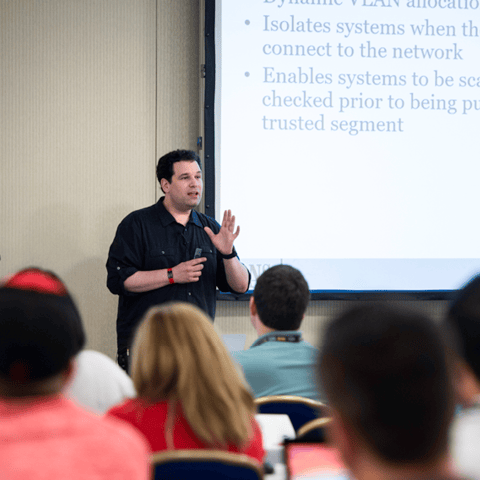
Get feedback from the world’s best cybersecurity experts and instructors
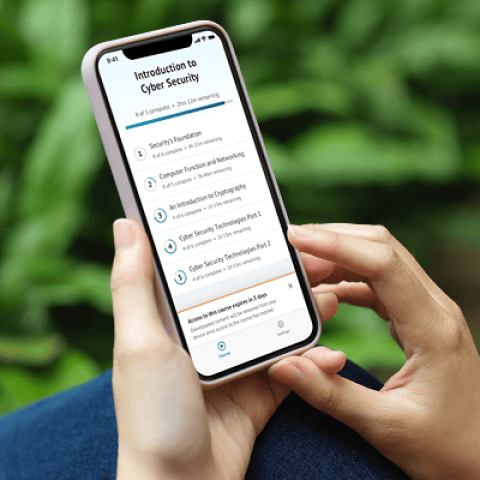
OnDemand Mobile App

Choose how you want to learn - online, on demand, or at our live in-person training events

Close Up of Woman Holding a Pen and Documents

Get access to our range of industry-leading courses and resources