Group Purchasing
Group Purchasing
AI-FOCUSEDMAJOR UPDATES

SEC573: AI-Powered Security Automation: Building Tools with Python, LLMs, and MCP

SEC573Cyber Defense, Artificial Intelligence
  • 6 Days (Instructor-Led)
  • 36 Hours (Self-Paced)
Course authored by:
Mark Baggett
Mark Baggett
SEC573: Automating Information Security with Python
Course authored by:
Mark Baggett
Mark Baggett
  • GIAC Python Coder (GPYC)
  • 36 CPEs

    Apply your credits to renew your certifications

  • In-Person, Virtual or Self-Paced

    Attend a live, instructor-led class at a location near you or remotely, or train on your time over 4 months

  • Advanced Skill Level

    Course material is geared for cyber security professionals with hands-on experience

  • 128 Hands-On Lab(s)

    Apply what you learn with hands-on exercises and labs

Learn how we can leverage Agentic AI development and Python as security professionals. From the Python essentials to developing AI Agents for your own information security tools.

Course Overview

The world may be approaching AI security backwards. We are using these all powerful AI agents that can execute any commands, write and run any Python, browse any website, access all enterprise data, and call any tools through Model Context Protocol (MCP) and then trying to make them safe with containers, policy layers, logging, guardrails, and humans in the loop. Building cages around the beast is the wrong approach. SEC573 teaches a different approach: we have the all powerful AI build its own cage. We use the all-powerful agent to build single purpose AI agents that have only the capabilities they actually need.

SEC573 teaches you how.

Whether you're new to programming or already comfortable writing Python, this course teaches you how to use AI to rapidly engineer purpose-built security agents rather than simply deploy all-powerful general-purpose ones. You'll learn to work alongside AI to develop custom tools, design controlled agent capabilities, and automate complex security tasks using the same architectural concepts behind today's most advanced AI systems.

Throughout the course, you'll progressively build increasingly capable AI agents while controlling exactly what each agent can see and do. You'll learn context and memory management, the tool execution loop, structured output, files, databases, APIs, Model Context Protocol (MCP), Agent-to-Agent (A2A) communication, planning, and guardrails. You'll explore prompt injection, tool abuse, excessive agency, and other emerging threats—and learn why limiting capability at the architecture level can be more effective than trying to cage an unrestricted agent after it has been built.

By the end of SEC573, you'll understand how to engineer secure, reliable AI agents for digital forensics, incident response, threat hunting, penetration testing, security operations, and security engineering. More importantly, you'll know how to build intelligent security systems with the precise capabilities your organization needs—and nothing it doesn't.

The first generation of AI users learned how to ask better questions.

The next generation is learning how to build better AI.

That's what SEC573 is about.

Today's most capable AI systems are far more than a single large language model. They combine memory, planning, reasoning, tool use, external knowledge, and collaboration to solve problems that no standalone model can solve. Understanding how these pieces work together has become one of the most valuable skills in cybersecurity.

Throughout SEC573, you'll build those capabilities one layer at a time.

You'll begin by learning the essential Python skills needed to effectively build new AI agents and understand the software it generates. Not everyone wants to be a coding expert, so we will cover enough for you to effectively identify dangerous code, understand the agent design and escape that infinite loop of the AI generating broken code over and over again. With some essential python knowledge, a helpful nudge to the AI will get it over those humps and on to building productive code. From there, you'll discover how intelligent agents are constructed. You'll learn why language models have no memory, no ability to interact with the outside world, and no understanding of your organization's data—and then you'll learn how engineers overcome each of those limitations.

You'll build agents that can inspect files, analyze packet captures, parse logs, query databases, search APIs, interact with operating systems, and leverage existing security tools. You'll learn how to give AI "eyes" to inspect data, "hands" to interact with external systems, "memory" to manage conversations and long-running tasks, and "knowledge" that extends beyond what was learned during model training.

As your agents become more capable, you'll explore the software architectures that power modern AI systems. You'll implement tool-calling workflows, manage context windows, develop Model Context Protocol (MCP) servers, build reusable skills, orchestrate multi-step reasoning, and connect specialized agents together using Agent-to-Agent (A2A) communication. Rather than treating AI as a black box, you'll understand how these components combine to create reliable, secure, and extensible systems.

Just as importantly, you'll learn where AI fails. You'll see why language models hallucinate, lose track of information, misuse tools, and become vulnerable to prompt injection attacks. More importantly, you'll learn the engineering techniques used to overcome those limitations through structured outputs, context management, guardrails, human oversight, and thoughtful system design.

Every concept is reinforced through hands-on labs that mirror the challenges security professionals face every day. You'll build practical agents that automate investigations, analyze security data, assist with digital forensics, accelerate penetration testing, and integrate with modern security infrastructure. By the end of the course, you'll understand not only how to use AI, but how to engineer AI systems that are trustworthy, maintainable, and capable of solving real cybersecurity problems.

Whether you're building a personal security assistant, connecting enterprise security products through MCP, orchestrating multiple AI agents, or creating entirely new workflows that didn't exist before, SEC573 provides the practical foundation for the next generation of cybersecurity engineering.

So, Is SEC573 Right for You?

Artificial intelligence is changing how cybersecurity professionals work—but there's a big difference between using AI and understanding how to build with AI.

If you've ever wondered how tools like ChatGPT or Claude CLI interact with files, search the web, remember previous conversations, call external tools, or collaborate with other AI agents, this course was designed for you.

SEC573 is for security professionals who want to understand the engineering behind modern AI systems—and learn how to use powerful general-purpose AI systems to build smaller, purpose-built agents that have only the tools, data access, and capabilities required for the task. Rather than giving every agent unrestricted access to a command shell, Python, the web, or every available MCP tool, you'll learn to apply the principle of least privilege to agent design.

Throughout the course, you'll build intelligent agents with LangChain that can use tools, manage context, access enterprise data, collaborate with other agents, and solve real cybersecurity problems. More importantly, you'll understand why these systems work the way they do, allowing you to evaluate new frameworks and technologies long after today's tools have changed.

You do not need to be an experienced programmer. The course begins with the Python fundamentals needed to work effectively with AI-assisted development, then progressively introduces the building blocks of modern agent engineering. If you already write Python, the self-paced lab environment will let you quickly move beyond the essentials to more advanced architectures, design patterns, and engineering techniques used to build today's most capable AI systems.

Whether you work in a SOC, digital forensics, incident response, threat hunting, penetration testing, cloud security, security engineering, or software development, the ability to build, customize, and securely deploy AI agents is quickly becoming a core technical skill. If you want to move beyond simply prompting AI and learn how to engineer intelligent systems that solve real security problems with only the capabilities they actually need, SEC573 is the course for you.

Author Statement

I believe the cybersecurity industry is approaching AI security the wrong way.

AI agents are becoming more powerful every day. Systems like ChatGPT, Claude, and Grok can write and execute code, use command shells, browse the web, call APIs, interact with MCP servers, access enterprise data, and perform increasingly complex tasks. Yet much of the industry is taking these extraordinarily powerful general-purpose agents and trying to make them safe by building cages around them—containers, policy layers, monitoring, guardrails, and humans in the loop.

I think that's backwards. If OPENAI can’t contain their own agents why do we think we can?

These systems are getting more and more powerful every day. The bad news is that they are already powerful enough to find ways around the cages we build. The good news is that they're also powerful enough to help us build something better.

Instead of giving an AI agent every imaginable capability and then trying to restrict what it does, we should use these powerful general-purpose AI systems to build smaller, purpose-built agents that have only the capabilities required to accomplish a specific business objective. If an agent only needs access to read access to one table in the database and two tools, why give it a command shell, arbitrary Python execution, the entire web, and every tool on an MCP server?

Security professionals already understand this idea. It is the principle of least privilege applied to AI agent capabilities. So why aren't we doing it? Because most of us don't yet know how to build a better agent.

That is what SEC573 is about.

This course isn't about learning how to write better prompts. It's about learning how to use AI to engineer intelligent systems with deliberately constrained capabilities. Throughout the week, we'll build agents with LangChain that use specific tools, manage context, interact with enterprise data, communicate with other agents, and solve real cybersecurity problems—while controlling exactly what each agent is capable of doing.

My goal isn't to make you an expert in LangChain, MCP, or any particular AI framework. Those technologies will continue to evolve. My goal is to teach you the underlying concepts that modern AI systems share: how agents reason, remember, use tools, access information, communicate with other agents, and safely interact with the world.

Whether you're building a forensic parser, an incident response assistant, a threat hunting workflow, or an entirely new security product, I want you to leave SEC573 knowing how to take today's extraordinarily powerful AI systems and use them to build focused, business-objective-driven agents that solve real problems—and can do only what you intended them to do.

What You'll Learn

  • Build intelligent AI agents that can reason, use tools, manage context, and solve real cybersecurity problems.
  • Collaborate with AI to rapidly design, write, debug, and maintain custom cybersecurity tools—even if you're new to programming.
  • Engineer modern AI systems using agent frameworks, tool calling, Model Context Protocol (MCP), Agent-to-Agent (A2A) communication, and structured outputs.
  • Extend AI with "hands," "eyes," and "memory" by connecting agents to files, databases, networks, web services, APIs, and existing security tools.
  • Design secure, reliable AI workflows that defend against prompt injection, safely execute tools, and overcome the limitations of large language models.
  • Apply AI agent engineering to digital forensics, incident response, threat hunting, penetration testing, security operations, and security engineering.
  • Understand the core principles behind modern AI systems so you can confidently adapt to new models, frameworks, and technologies as they emerge.

Business Takeaways

  • Rapidly develop custom AI-powered solutions instead of waiting for commercial tools or vendor feature requests.
  • Build purpose-specific AI agents with only the tools, data access, and permissions required for the task—applying the principle of least privilege to AI system design.
  • Automate repetitive investigations and operational tasks, allowing security teams to focus on higher-value work.
  • Empower security professionals to use powerful general-purpose AI systems to create smaller, controlled agents that integrate with existing security tools, APIs, MCP servers, and enterprise workflows.
  • Reduce risk by avoiding unnecessarily powerful agents with unrestricted access to command shells, Python execution, enterprise data, or external tools.
  • Equip your organization with professionals who understand how to safely engineer, evaluate, and deploy AI systems—not just use them.
  • Increase productivity across security operations, incident response, digital forensics, threat hunting, penetration testing, and security engineering through AI-assisted development and intelligent automation.

How SEC573 Prepares You for GPYC

SEC573 is built around the exam objectives that make up the GPYC certification:

  • Section 1, Essential Skills Workshop builds skills tested under Python Basics, Control Structures and Iteration, and Functions, Classes and Objects.
  • Section 2, Essentials Knowledge Workshop aligns with Data Structures.
  • Section 3, Automated Defense with AI builds skills tested under Regular Expressions, Data Analysis with Python, and Packet Analysis with Python.
  • Section 4, Automated Forensics with AI aligns with Database Interaction and Website Interaction.
  • Section 5, Automated Offense with AI builds skills tested under Network Interfaces, Exception Handling, and Creation of Executables.

Across all six sections, 128 hands-on labs and a team capstone workshop give you the chance to apply each skill in live Python, network, and forensic environments before you sit the exam.

Read the full GPYC certification overview.

Course Syllabus

Explore the course syllabus below to view the full range of topics covered in SEC573: Automating Information Security with Python.

Section 1Essential Skills Workshop

Learn the Python fundamentals every AI engineer needs to collaborate with AI coding assistants to design, debug, test, and improve software. These core skills are the foundation for every agent you’ll build in this course, from if-statements that route tool calls to the functions behind MCP and agent tools.

Topics covered

  • Where AI and Vibe Coding fails
  • Python Fundamentals for AI-Assisted Development
  • Variables, Strings, and Functions
  • Program Flow with Conditions and Loops
  • Visual Studio Code and Debugging Techniques

Labs

  • Advanced coders work through advanced CTF style self-learning challenges
  • 35+ hands-on PyWars labs teaching essential coding constructs for AI Agents
  • Learn to debug, test, and improve AI-generated code instead of starting over
  • Practice solving progressively challenging programming problems
  • Develop the Python skills and confidence to build intelligent AI agents

Section 2Essentials Knowledge Workshop

Continue building the foundational knowledge needed to understand how AI agents work and evaluate AI-generated code. Learn to manage Python virtual environments, use for/while loops to understand an agent’s tool-calling loop, and work with the lists and dictionaries that make up an agent’s context window.

Topics covered

  • Managing Python Modules and Virtual Environments
  • Working with Lists, Tuples, and Loops
  • Organizing Data with Dictionaries and Sets
  • Leveraging Python’s Extensive Library Ecosystem
  • Python Tips, Tricks, and Best Practices

Labs

  • Advanced coders work through advanced CTF style self-learning challenges
  • 20+ hands-on PyWars labs teaching essential coding constructs for AI Agents
  • Configure and manage Python virtual environments and third-party modules
  • Solve practical challenges using lists, loops, dictionaries, and sets
  • Apply Python libraries to simplify common programming tasks

Section 3Automated Defense with AI

Large language models aren’t magic. Learn how AI “thinks,” where it excels and struggles, and how to build tools that locate, extract, and deliver exactly the data it needs. Expose those tools through MCP so agents can interact safely with the world, ending the day with a security agent that parses logs for you.

Topics covered

  • Understanding AI Strengths, Limitations, and Context Windows
  • AI-Assisted Development and Vibe Coding
  • Building MCP Servers and Automation Workflows
  • Finding the Right Data with Regular Expressions
  • Log Parsing and Data Analysis for AI Agents

Labs

  • Build tools so agents can locate and extract the most relevant data
  • Develop an MCP server and connect it to n8n for secure tool integration
  • Use regular expressions to identify and isolate meaningful security data
  • Parse and analyze log files to provide AI with focused, high-value context
  • See how our Security Investigator Agent uses MCP to tackle security challenges

Section 4Automated Forensics with AI

AI can only reason about data it can access. Transform a simple chat agent into a security investigator that inspects files, databases, registry hives, packet captures, and web services. Learn to separate deterministic from non-deterministic operations, prepare and structure data for AI, and build an MCP server for real investigations.

Topics covered

  • Transforming Chat Agents into Tool-Calling Security Investigators
  • Preparing Data for AI with Structured Parsing and Pydantic
  • Building AI Agents with Chat Completions and the Responses API
  • Giving AI Access to Security Data Sources and Web Services
  • Developing an Advanced MCP Server for Cybersecurity Investigations

Labs

  • Build an AI-powered investigator that performs real cybersecurity tasks
  • Transform raw security data into AI-friendly formats with Pydantic
  • Give AI access to SQL databases, Registry hives, packet captures, and APIs
  • Expand your MCP server into a platform for secure investigative access
  • Complete 17+ hands-on labs building an agent for real-world investigations

Section 5Automated Offense with AI

Explore how agents collaborate through MCP and Agent-to-Agent communication, defend against prompt injection, safely execute security tasks, and manage long investigations. Learn to handle AI refusing tasks like building a C2 backdoor, and design agents that plan, remember, load skills, and manage context.

Topics covered

  • Connecting AI Agents with MCP and Agent-to-Agent (A2A) Communication
  • Prompt Injection Attacks, Guardrails, and Secure AI Engineering
  • Understanding AI Safety, Security Refusals, and Their Impact on Cybersecurity
  • AI-Controlled Security Apps with Networking and Process Execution
  • Context Engineering, Loadable Skills, Planning, and Long-Term Agent Memory

Labs

  • Explore prompt injection attacks and evaluate input/output guardrails
  • Develop Offensive tools when AI has refuses to help
  • Build a Command-and-Control backdoors with code execution, upload and download
  • Build an AI bot controller managing remote systems via networking
  • Extend your agent with context management, compression, skills, and planning

Section 6Capture-the-Flag Challenge

The Capstone challenges students to apply their skills in real-world scenarios: exploiting systems, analyzing packets, parsing logs, automating tasks, and interacting with websites. Your AI coding agents are there to help. Live students compete as teams; OnDemand students work independently with expert support.

Things You Need To Know

Laptop Required

Students are required to bring their own laptop so that they can connect directly to the workshop network we will create, and thus get the most value out of the course. It is the student's responsibility to make sure that the system is properly configured and capable of running both a Windows and Linux VMWare compatible virtual machines at the same time.

Some of the course exercises are based on Windows, while others focus on Linux. VMware Player or VMware Workstation is required for the course. If you plan to use an Intel based Mac, please make sure you bring VMware Fusion, along with a Windows guest virtual machine. All of the VMware products are available at www.vmware.com.

Important Note: You may also be required to disable your anti-virus tools temporarily for some exercises, so make sure you have the anti-virus administrator permissions to do so. Do not plan on just killing your anti-virus service or processes, because most anti-virus tools still function even when their associated services and processes have been terminated. For many enterprise-managed clients, disabling your anti-virus tool may require a different password than the Administrator account password. Please bring that Administrator password for your anti-virus tool.

Enterprise VPN clients may interfere with the network configuration required to participate in the course. If your system has an enterprise VPN client installed, you may need to uninstall it for the course exercises.

Mandatory Laptop Hardware Requirements

  • CPU: 64-bit Intel i5/i7 (8th generation or newer), or AMD equivalent. A x64 bit, 2.0+ GHz or newer processor is mandatory for this class.
  • CRITICAL: Apple Silicon devices cannot perform the necessary virtualization and therefore cannot in any way be used for this course.
  • BIOS settings must be set to enable virtualization technology, such as "Intel-VTx" or "AMD-V" extensions. Be absolutely certain you can access your BIOS if it is password protected, in case changes are necessary.
  • 16GB of RAM or more is required.
  • 200GB of free storage space or more is required.
  • At least one available USB 3.0 Type-A port. A Type-C to Type-A adapter may be necessary for newer laptops. Some endpoint protection software prevents the use of USB devices, so test your system with a USB drive before class.
  • Wireless networking (802.11 standard) is required. There is no wired Internet access in the classroom.

If you have additional questions about the laptop specifications, please contact customer service.

SEC573 is designed for security professionals who want to move beyond simply using AI and learn how to build secure, purpose-driven AI agents, including:

  • Security professionals who want to use powerful AI systems to build focused agents with only the tools, data, and capabilities required for the job
  • SOC analysts, threat hunters, and incident responders who want AI agents to investigate data, use security tools, and automate multi-step workflows
  • Digital forensics professionals who need to rapidly build agents that can analyze new artifacts, file formats, logs, and other evidence
  • Penetration testers and offensive security professionals who want to build specialized agents for reconnaissance, analysis, testing, and automation
  • Security engineers and developers who need to integrate AI with APIs, databases, enterprise systems, MCP servers, and existing security infrastructure
  • Security architects and technical leaders who need to understand agent capabilities, tool access, prompt injection, guardrails, and how to apply the principle of least privilege to AI
  • Security professionals who want to turn their own expertise and workflows into intelligent tools rather than waiting for a vendor to build them

The GIAC Python Coder (GPYC) certification validates a practitioner's understanding of core programming concepts, and the ability to write and analyze working code using the Python programming language. GPYC certification holders have demonstrated knowledge of common python libraries, creating custom tools, collecting information about a system or network, interacting with websites and databases, and automating testing.

  • Python language essentials
  • Packet and data analysis
  • Website and database interaction
  • Regular expressions
  • Exception handling and debugging

More Certification Details

  • A USB containing a virtual machine filled with sample code and working examples
  • MP3 audio files of the complete course lecture

A basic understanding of any programming or scripting language is highly recommended but not required for this course. SEC573 starts with the fundamentals of Python programming. There is no aspect of programming or Python that must be understood before attending this course. The lab environment is self-paced and this allows students who have had some experience coding to advance more quickly than those who have not. You are provided a Virtual Machine that gives you the ability to complete the labs that are in your course book after the live course or your OnDemand access has finished.

SEC573 fits into the SANS learning path as the course that teaches security professionals how to build AI agents and automation that can be applied across many cybersecurity disciplines.

Some SANS courses introduce Python, AI, or automation because those skills support the primary subject being taught. SEC573 goes deeper by teaching the agent-engineering concepts behind modern AI systems: tool calling, context management, structured output, MCP, agent-to-agent communication, AI-assisted development, and the principle of least privilege applied to agent capabilities.

The skills taught in SEC573 can help you get more from courses such as:

SEC573 is also a natural follow-on to courses that teach investigations, detection, forensics, and response because it shows you how to turn those skills into purpose-built AI agents and automated workflows. These include:

SEC573 is especially valuable for professionals who want to connect their existing cybersecurity expertise with modern AI agent engineering rather than treating AI as a separate specialty.

AI-powered information security automation uses artificial intelligence to build agents that can analyze data, use security tools, make decisions, and carry out multi-step cybersecurity tasks. But giving an AI unrestricted access to a command shell, Python, the web, enterprise data, and every available tool creates unnecessary risk. SEC573 teaches a different approach: use powerful general-purpose AI systems to rapidly build purpose-driven agents with only the tools, data, and capabilities required for their specific mission.

Using AI-assisted development, Python, LangChain, Model Context Protocol (MCP), and agent-to-agent communication, you will learn to create security agents for tasks such as log analysis, packet analysis, incident response, threat hunting, digital forensics, and offensive security. "Vibe coding" makes this development process accessible even to security professionals who are not experienced software developers.

Key benefits include:

  • Least Privilege: Give agents only the capabilities and access required to accomplish their assigned task.
  • Faster Development: Use AI to rapidly build custom security tools and agents instead of waiting for commercial solutions.
  • Automation: Allow agents to perform repetitive analysis and multi-step workflows while security professionals focus on higher-value decisions.
  • Integration: Connect agents to existing tools, APIs, databases, enterprise data, and MCP servers.
  • Customizability: Build agents around your organization's specific security processes, data, and business objectives.
  • Scalability: Turn the expertise of individual security professionals into repeatable, intelligent workflows that can be used across the organization.

SEC573 can help advance your career by giving you practical skills in one of the fastest-growing areas of cybersecurity: building and securing AI agents. As organizations move beyond experimenting with ChatGPT and begin deploying AI into real business and security workflows, they need professionals who understand how these systems work, how to integrate them safely, and how to limit their capabilities appropriately.

Key benefits for your career include:

  • Differentiate Yourself: Move beyond simply using AI tools and learn how to engineer AI agents that solve real security problems.
  • Develop In-Demand Skills: Gain hands-on experience with LangChain, MCP, tool calling, agent-to-agent communication, context management, and AI-assisted development.
  • Expand Your Role: Apply agent engineering to incident response, threat hunting, digital forensics, penetration testing, security operations, and security engineering.
  • Build Instead of Wait: Use powerful AI systems to rapidly create purpose-built tools and agents instead of depending on vendors to solve every new problem.
  • Understand AI Security: Learn how to apply least privilege to agent capabilities and make informed decisions about tools, permissions, data access, and risk.
  • Prepare for What Comes Next: Learn the underlying concepts behind modern AI agents so your skills remain valuable as models and frameworks continue to change.

SEC573 helps position you as the person who can do more than use AI—the person who can design, build, and secure the AI systems your organization will increasingly depend on.
Relevant Job Roles

Data Analysis (OPM 422)

NICE: Implementation and Operation

Responsible for analyzing data from multiple disparate sources to provide cybersecurity and privacy insight. Designs and implements custom algorithms, workflow processes, and layouts for complex, enterprise-scale data sets used for modeling, data mining, and research purposes.

Explore learning path

Technology Research and Development (OPM 661)

NICE: Design and Development

Responsible for conducting software and systems engineering and software systems research to develop new capabilities with fully integrated cybersecurity. Conducts comprehensive technology research to evaluate potential vulnerabilities in cyberspace systems.

Explore learning path

Malware Analyst

Digital Forensics and Incident Response

Malware analysts face attackers’ capabilities head-on, ensuring the fastest and most effective response to and containment of a cyber-attack. You look deep inside malicious software to understand the nature of the threat – how it got in, what flaw it exploited, and what it has done, is trying to do, or has the potential to achieve.

Explore learning path

Digital Forensic Analyst Training, Salary, and Career Path

Digital Forensics and Incident Response

This expert applies digital forensic skills to a plethora of media that encompass an investigation. The practice of being a digital forensic examiner requires several skill sets, including evidence collection, computer, smartphone, cloud, and network forensics, and an investigative mindset. These experts analyze compromised systems or digital media involved in an investigation that can be used to determine what really happened. Digital media contain footprints that physical forensic data and the crime scene may not include.

Explore learning path

Digital Forensics (OPM 212)

NICE: Protection and Defense

Responsible for analyzing digital evidence from computer security incidents to derive useful information in support of system and network vulnerability mitigation.

Explore learning path

Military Operations / Law Enforcement Agents

Digital Forensics and Incident Response

Execute digital forensic operations under demanding conditions, rapidly extracting critical intelligence from diverse devices. Leverage advanced threat hunting and malware analysis skills to neutralize sophisticated cyber adversaries.

Explore learning path

Vulnerability Assessment

SCyWF: Protection And Defense

This role tests IT systems and networks and assesses their threats and vulnerabilities. Find the SANS courses that map to the Vulnerability Assessment SCyWF Work Role.

Explore learning path

Media Exploitation Analyst

Digital Forensics and Incident Response

This expert applies digital forensic skills to a plethora of media that encompasses an investigation. If investigating computer crime excites you, and you want to make a career of recovering file systems that have been hacked, damaged or used in a crime, this may be the path for you. In this position, you will assist in the forensic examinations of computers and media from a variety of sources, in view of developing forensically sound evidence.

Explore learning path

Course Schedule and Pricing

Have Questions?Contact Us
Showing 10 of 15

Benefits of Learning with SANS

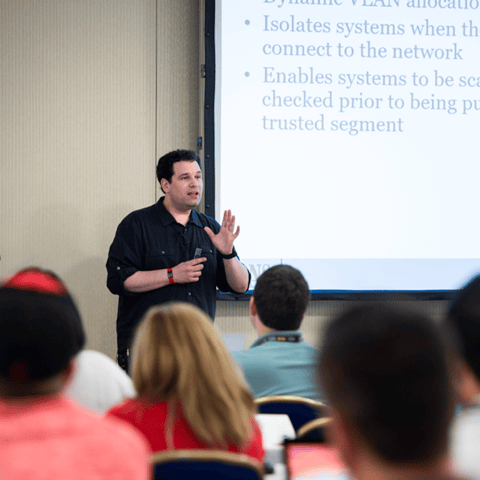
Bryan Simon: Teacher Standing Next to Smartboard and Explaining Concept

Get feedback from the world’s best cybersecurity experts and instructors
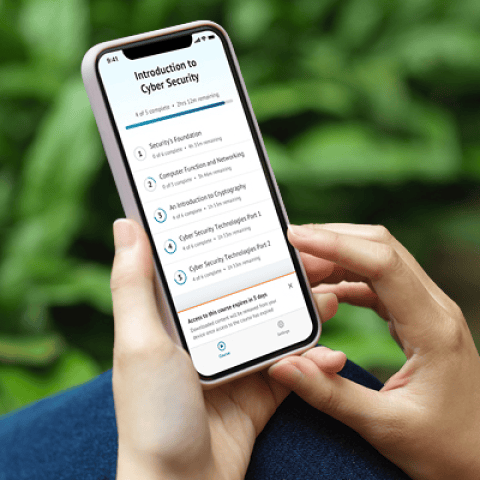
OnDemand Mobile App

Choose how you want to learn - online, on demand, or at our live in-person training events

Close Up of Woman Holding a Pen and Documents

Get access to our range of industry-leading courses and resources