Group Purchasing
Group Purchasing
NEW

FOR668: Threat Hunting and Data Analysis

FOR668Digital Forensics and Incident Response
  • 3 Days (Instructor-Led)
  • 18 Hours (Self-Paced)
Course authored by:
David BiancoSydney Marrone
David Bianco & Sydney Marrone
FOR668
Course authored by:
David BiancoSydney Marrone
David Bianco & Sydney Marrone
  • 18 CPEs

    Apply your credits to renew your certifications

  • Intermediate Skill Level

    Course material is geared for cyber security professionals with hands-on experience

  • 10 Hands-On Lab(s)

    Apply what you learn with hands-on exercises and labs

Learn a structured, data-driven approach to threat hunting using real-world logs, statistical analysis, PEAK, and AI-assisted techniques to find missed threats and improve detections.

Course Overview

FOR668 teaches a structured, data-driven approach to proactive threat hunting. Students use realistic host and network data to build hypotheses, establish baselines, identify anomalies, improve detections, and use AI as an assistant while keeping the human hunter responsible for validation and decisions.

Build a Threat Hunting Program That Improves Security

Threat hunting is more than searching for incidents that automated tools missed. FOR668 teaches students how to use hunting as a repeatable process for finding suspicious behavior, improving detections, and driving broader security improvements.

Using the PEAK (Prepare, Execute, and Act with Knowledge) framework, students practice hypothesis-driven and baseline hunting against realistic datasets. They work with HTTP logs, Windows process execution data, network flow records, passive DNS, and Windows authentication and privilege-use logs. The course also develops practical analysis skills including searching, filtering, statistics, regular expressions, data enrichment, data dictionaries, visualization, baselining, and anomaly detection.

Students learn how to scope hunt topics, create testable hypotheses, document findings, communicate results, and turn successful hunts into automated detections and other security improvements. AI and LLMs are introduced as assistants that can accelerate planning and analysis. The student remains the lead hunter, evaluating AI output for accuracy, completeness, and hallucinations before acting on results.

By the end of the course, students will have practiced the full hunting lifecycle, from preparing a hunt through analyzing data, identifying anomalies, acting on findings, and measuring the impact of the hunting program.

What You’ll Learn

  • Build and scope testable threat hunting hypotheses using PEAK and ABLE.
  • Search and analyze common host and network data for suspicious behavior.
  • Establish baselines and use statistics to identify meaningful anomalies.
  • Turn hunt findings into detections and other security improvements.
  • Use AI as a hunting assistant while validating its output and decisions.
  • Document and communicate hunt results to technical and business stakeholders.

Business Takeaways

  • Find suspicious behavior that automated detections may miss.
  • Improve detections by converting successful hunts into repeatable controls.
  • Prioritize hunts so teams focus on the highest-value security questions.
  • Communicate hunt results and their impact more clearly to stakeholders.
  • Use AI to save analyst time while keeping human validation in control.

Course Syllabus

Explore the course syllabus below to view the full range of topics covered in FOR668: Threat Hunting and Data Analysis.

Section 1Fundamentals of Threat Hunting

Build the foundation for proactive threat hunting. Learn what hunting is, how it improves security, the PEAK framework, key HTTP data, core ES|QL analysis techniques, team structure, hunt topic management, and practical searching, statistics, enrichment, and regex skills.

Topics covered

  • Threat hunting purpose, history, ATT&CK, Sqrrl, TaHiTi, and PEAK
  • HTTP server and proxy logs for threat hunting
  • SOF-ELK and ES|QL searching, filtering, sorting, stats, and eval
  • Hunt team structure, topic creation, prioritization, and scheduling
  • Regex, field extraction, lookup tables, and data enrichment

Labs

  • Lab 1.1: Search, filter, sort, and organize HTTP log data
  • Lab 1.2: Use statistics and calculated fields to find patterns
  • Bonus Lab 1.2: Enrich hunts with threat intelligence lookups
  • Lab 1.3: Use regex and field extraction to find suspicious payloads

Section 2Hypothesis-Based Hunting

Learn how to turn an idea about attacker behavior into a focused, testable hunt. Students use the ABLE method to scope hypotheses, work with Windows process execution data, act on findings, and compare manual hunting with an AI-assisted approach while validating AI output.

Topics covered

  • Hypothesis-based hunting through PEAK Prepare, Execute, and Act
  • ABLE: Actor, Behavior, Location, and Evidence
  • Windows process execution logs and suspicious process behavior
  • Hunt documentation, communication, detections, and follow-up actions
  • Safe and effective human-AI collaboration for threat hunting

Labs

  • Lab 2.1: Research, scope, and plan a hypothesis-based hunt
  • Lab 2.2: Hunt unusual process execution chains and act on findings
  • Lab 2.3: Repeat the hunt with an AI assistant under human supervision

Section 3Baseline Hunting

Learn how to define normal activity and use deviations to find suspicious behavior. Students document network data, build a baseline, apply statistics and visualizations to detect anomalies, turn findings into detections, and measure the security impact of hunting.

Topics covered

  • Baseline hunting through PEAK Prepare, Execute, and Act
  • Network flow data, data dictionaries, and expected values
  • Five-number summaries, distributions, and visual analysis
  • Standard deviation, Z-score, modified Z-score, and IQR
  • Detection automation and metrics that show hunting impact

Labs

  • Lab 3.1: Create a data dictionary for network session logs
  • Lab 3.2: Build and document a baseline of normal network traffic
  • Lab 3.3: Use statistics and visualizations to detect anomalies

Things You Need To Know

Students need an x86_64 laptop capable of running VMware Workstation or VMware Fusion. The course VM is Linux-based with SOF-ELK pre-installed and configured, datasets already ingested, and ES|QL support. Allocate 2 vCPUs and 8 GB RAM to the VM. A laptop with at least 16 GB RAM and 225 GB of free disk space is recommended. In-person classes require Internet access.

If you have additional questions about the laptop specifications, please contact customer service.

  • Threat hunters expanding their data analysis and program-impact skills
  • Detection engineers turning human-led hunts into automated detection
  • SOC analysts moving beyond alert triage into proactive hunting
  • Incident responders looking to proactively uncover attacker activity
  • CTI analysts translating intelligence into actionable hunts
  • Red teamers and penetration testers seeking to understand detection gaps

  • Course VM with SOF-ELK and the required datasets pre-loaded
  • Realistic host and network data for hands-on hunting exercises
  • Practice using ES|QL for searching and analyzing security data
  • Hands-on experience with hypothesis and baseline hunting methods
  • Practical experience using AI as a supervised hunting assistant

A basic knowledge of how IT systems work is required. Prior threat hunting experience is helpful but not required. Splunk experience, previous host- or network-based DFIR training such as FOR508 or FOR572, and prior use of ChatGPT or a similar system may help, but none are mandatory.

FOR668 fits within the SANS DFIR curriculum as a dedicated threat hunting and data analysis course. Related and follow-on courses identified in the proposal include FOR508, FOR572, FOR608, FOR577, and a proposed follow-on course in model-assisted threat hunting.

Threat hunting is a proactive security practice that uses data and analysis to identify malicious behavior that automated detection systems may have missed. A mature hunting program can do more than uncover incidents: it can expose detection gaps, improve security controls, generate better detections, and help teams continuously strengthen their defenses.

FOR668 builds practical skills for roles that need to investigate security data proactively rather than rely only on alerts. You will practice structuring hunts, analyzing multiple data sources, finding anomalies, communicating results, improving detections, and using AI responsibly as an assistant. These skills can support growth in threat hunting, detection engineering, SOC, incident response, CTI, and related DFIR roles.
We're updating our course schedule - please check back later.

Benefits of Learning with SANS

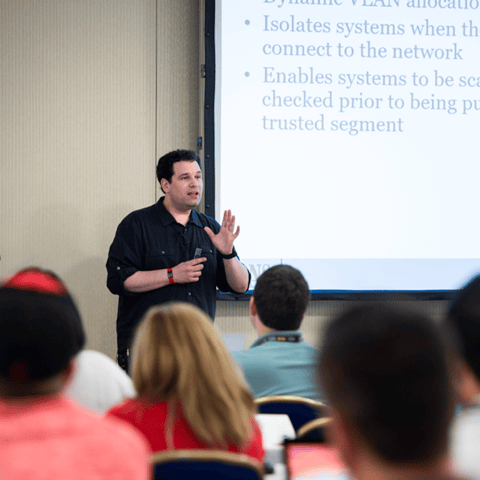
Bryan Simon: Teacher Standing Next to Smartboard and Explaining Concept

Get feedback from the world’s best cybersecurity experts and instructors

OnDemand Mobile App

Choose how you want to learn - online, on demand, or at our live in-person training events

Close Up of Woman Holding a Pen and Documents

Get access to our range of industry-leading courses and resources