Group Purchasing
Group Purchasing
NEW

ICS613: ICS/OT Penetration Testing & Assessments

ICS613Industrial Control Systems Security
  • 5 Days (Instructor-Led)
  • 30 Hours
Course authored by:
Jason DelyTyler WebbDon C. Weber
Jason Dely, Tyler Webb & Don C. Weber
Course authored by:
Jason DelyTyler WebbDon C. Weber
Jason Dely, Tyler Webb & Don C. Weber
  • 30 CPEs

    Apply your credits to renew your certifications

  • In-Person

    Attend a live, instructor-led class at a location near you

  • Advanced Skill Level

    Course material is geared for cyber security professionals with hands-on experience

  • 27 Hands-On Lab(s)

    Apply what you learn with hands-on exercises and labs

Security professionals gain critical skills to conduct safe, effective penetration tests and assessments in ICS/OT environments without compromising operational integrity.

Course Overview

Industrial Control Systems (ICS) and Operational Technology (OT) are increasingly targeted by adversaries, yet traditional penetration testing approaches often focus on the wrong outcomes and can cause unintended disruptions with severe consequences – including production outages, injury to personnel, loss of life, and environmental hazards.

ICS613: ICS/OT Penetration Testing & Assessments trains engineering, operations, and security professionals with the mindset, methodologies, and techniques to safely and appropriately conduct ICS penetration tests and security assessments, identify practical mitigations, and effectively communicate results to stakeholders and leadership to improve the operational resilience of ICS environments. As a specialized ICS pentesting course, ICS613 equips students to approach assessments with precision and safety in mind.

Conducting Safe ICS Assessments for Industrial Environments

Engineering, operations, and security professionals around the world are increasingly required to perform penetration tests and security assessments on key systems and devices in industrial environments and critical infrastructure sectors. This course provides students with the necessary knowledge and skills to perform these tasks safely, ensuring operations remain reliable and resilient while achieving effective cybersecurity outcomes.

ICS613 addresses the unique drivers and constraints of ICS environments. The course provides direct hands-on training to develop penetration testing and assessment capabilities specific to ICS devices, applications, architectures, communications, and process environments. By the end of this course, students will be equipped to perform real-world penetration tests and conduct security assessments of operational environments.

What You'll Learn

  • Plan and execute safe, effective, and valuable penetration tests and security assessments, using both passive and active techniques to assess ICS operational resilience
  • Tailor ICS penetration tests and security assessments to organizational and operational security objectives
  • Identify realistic ICS attack scenarios targeting Crown Jewel Assets (CJA)
  • Communicate with stakeholders to define expectations, goals, and outcomes for ICS security assessments, and deliver accurate, actionable reports that support these outcomes
  • Understand the benefits of a top-down/bottom-up approach to active testing, and align penetration test methodologies to the ICS Cyber Kill chain
  • Evaluate tools and techniques for effectiveness and safety before applying them to ICS devices and networks
  • Identify relevant targets and select applicable adversary TTPs for developing effective attack scenarios in ICS penetration tests and security assessments, regardless of industry sector

Business Takeaways

  • Reduce risk of unplanned outages during security testing
  • Enhance protection of operational crown jewel assets
  • Improve communication between IT security and OT teams
  • Demonstrate compliance with sector-specific regulations
  • Gain practical risk mitigation strategies for industrial systems
  • Increase operational resilience against cyber threats
  • Implement cost-effective security recommendations

Course Syllabus

Explore the course syllabus below to view the full range of topics covered in ICS613: ICS Penetration Testing and Assessments.

Section 1Bench and Lab Testing

This section introduces the types of ICS/OT assessments, the risks and the three tenets of ICS/OT assessments. The section also introduces the three types of bench and lab testing for ICS/OT assessments, covering a high-level process of devices bench testing including hardware, firmware, administration and communication analysis.

Topics covered

  • Types of ICS/OT assessments
  • Introduction to the bench testing assessment
  • Bench and lab testing case studies, methodology and tool preparation
  • Analyze device functionality, configuration and interfaces
  • Hardware and firmware analysis including tools

Labs

  • Build and program student kit
  • Custom tool development
  • Firmware analysis
  • Analyze unknown protocols

Overview

This section introduces the types of ICS/OT assessments and the three types of bench and lab testing for ICS/OT assessments.

Full Lab Details

  • Build and program the ICS613 Student Kit
  • Analyze industrial communications using common tools and custom scripts to generate target lists
  • Identify unknown industrial protocols to develop enumeration capabilities utilizing AI
  • Analyze embedded device firmware to identify software components and vulnerabilities

Full Topic Details

  • Cover the various assessment types and their selection for specific ICS/OT assessment goals
  • Approach to safely and effectively assess ICS/OT environments
  • Types of bench and lab testing as it relates to ICS/OT
  • Tool and preparation for device bench testing including the develop
  • How to analyze device functionality, configuration, interfaces and protocols
  • Process and objectives involved in hardware and firmware analysis and testing

Section 2Preparing for ICS/OT Assessments

This section introduces passive and active security assessments for ICS/OT environments, covering how to define goals, choose an approach, apply threat intelligence and prepares students to plan, execute, and deliver safe and effective ICS/OT security assessments while emphasizing stakeholder collaboration.

Topics covered

  • Define assessment goals and outcomes and testing terminology
  • Align with ICS/OT Cyber Kill Chain, Crown Jewel Analysis and threat intelligence
  • Outline phased assessment methodology
  • Collaborate with stakeholders
  • Structure actionable test reports and balance mitigation options

Labs

  • Understand the operation of ICS613 student kit LNG process
  • Understand the preparation for ICS/OT assessment through the Crown Jewel Analysis process

Overview

This section prepares students to plan, prepare, and execute safe and effective ICS security assessments.

Full Lab Details

  • Understand the LNG operation simulated in the ICS613 Student Kit in preparation for assessment
  • Collect and analyze documentation during planning to define engagement scope and objectives.

Full Topic Details

  • Identify and define assessment goals and outcomes
  • Align engagement scoping and reconnaissance with the ICS/OT Cyber Kill Chain
  • Crown Jewel Analysis (CJA) alignment with targeting activities in the ICS/OT Cyber Kill Chain
  • Leverage frameworks and threat intel to add real-world adversary context to assessment activities
  • Understand concepts, terminology, and resources related to ICS penetration testing and security assessments
  • Outline a phased assessment methodology that includes planning, scoping, targeting, and passive and active analysis
  • Collaborate and coordinate with stakeholders from engineering, operations, administrators, and cybersecurity teams
  • Structure accurate and actionable penetration test report providing appropriate context to findings, and identify different mitigation options balanced across cost, effectiveness and time

Section 3Top-Down Active Methodology

This section introduces a top-down penetration methodology aligned with the ICS/OT Cyber Kill Chain. Students learn to execute engagement objectives in simulated production environments using "living off the land" techniques while focusing on privilege escalation and OT boundary pivoting.

Topics covered

  • Follow assumed breach scenarios
  • Master process enumeration
  • Identify effective targets

Labs

  • Exploit certificate services
  • Abuse credential reuse
  • Transfer tools using native binaries
  • Hijack operator sessions
  • Bypass endpoint hardening controls

Overview

This section introduces a top-down active penetration methodology aligned to the ICS/OT Cyber Kill Chain. Students will gain the skills to plan, prepare, and achieve engagement objectives in a simulated production DCS environment using "living off the land" techniques.

Full Lab Details

  • Exploit Active Directory Certificate Services to escalate privileges in an enterprise domain
  • Abuse credential reuse across IT boundaries to pivot into the operational technology (OT) DMZ
  • Transfer tools to compromised systems and exfiltrate data using living-off-the-land binaries
  • Use existing system utilities to hijack operator sessions and gain access critical control network assets
  • Bypass endpoint hardening controls and escape restricted operator environments
  • Assess command and control (C2) capabilities in ICS/OT environments

Full Topic Details

  • Understand why ICS/OT penetration test should follow an assumed breach scenario
  • Understand essential process enumeration techniques for realistic ICS/OT attack scenario development
  • Identify the most effective targets and TTPs for process enumeration, regardless of industry sector

Section 4Security and Vulnerability Assessment

This section introduces passive security assessments for ICS/OT environments, covering nonintrusive techniques to collect and analyze the environment that align with industry standards. Students will learn ICS/OT specific knowledge and skills to analyze perimeters, network communications, hosts and active directory.

Topics covered

  • ICS/OT standard and frameworks alignment
  • Common perimeter architectures and exploitable vectors
  • ICS/OT vulnerability discovery and management
  • Network analysis techniques
  • Server and workstation analysis

Labs

  • Exploit operator workstation services
  • Advance ICS/OT network analysis
  • Validate tools and techniques

Overview

This section introduces passive security assessments for ICS/OT environments, covering nonintrusive techniques to collect and analyze the environment that align with industry standards.

Full Lab Details

  • Identify and exploit operator workstation services
  • Advance network analysis and customer tool development for ICS/OT assessments
  • Automate system security posture assessment using existing OS tools and utilities
  • Validate tools and techniques before using them in production environments

Full Topic Details

  • Explore when and how to align industry standards and frameworks into ICS/OT security assessments
  • Explore various perimeter architecture between sectors to guide in identifying vectors into ICS/OT networks
  • Review the benefits and pitfalls of traditional vulnerability management process in ICS/OT networks
  • Review and prepare for safe, effective and relevant network analysis in ICS/OT
  • Review and prepare for safe, effective and relevant host analysis in ICS/OT
  • Review and prepare for safe, effective and relevant active directory analysis in ICS/OT

Section 5Bottom-Up Operations Assessment and Capstone

This section covers a bottom-up approach to ICS/OT attack identification aligned with the ICS/OT Cyber Kill Chain. Students learn to develop realistic attack scenarios with expected physical consequences, and demonstrate attacks in controlled environments, while emphasizing stakeholder collaboration.

Topics covered

  • Various control system models and architectures
  • Assess realistic attack scenarios and operational impacts
  • Consequences and impacts to physical equipment
  • Apply adversarial methods on targeting and TTPs
  • Evaluate weaknesses and readiness of attack

Labs

  • Enumeration EWS and DCS architectures
  • Identify and exploit operational vulnerabilities
  • Develop and execute adversarial attack scenarios and methods
  • Capstone

Overview

This section covers the bottom-up approach to ICS/OT attack identification, delivery and execution, aligned with the ICS/OT Cyber Kill Chain. The capstone allows students to apply all skills learned throughout the course in a comprehensive hands-on exercise against the ICS613 kit and in-class physical range.

The capstone allows students to apply all skills learned throughout the course in a comprehensive hands-on exercise against the ICS613 kit and in-class physical range, identifying vulnerabilities and recommending improvements to enhance ICS/OT defenses.

Full Lab Details

  • Enumerate engineering workstation using built-in functionality and vendor tools
  • Enumerate DCS architectures and system functionality using vendor tools
  • Assess operational weaknesses and vulnerabilities
  • Deploy and configure a shadow HMI to enumerate industrial process information
  • Identify and develop realistic ICS/OT attack scenarios against DCS targets with expected physical consequences
  • Demonstrate an ICS/OT attack on physical equipment in operations on the in-class lab environment
  • Capstone: Apply skills learned throughout the course, Identify and prioritize recommendations

Full Topic Details

  • Explore the various traditional and modern control system models and architectures including the tools and
  • Collaborate with the customer to identify realistic ICS/OT attack scenarios
  • Analyze consequences and impacts to physical equipment and its operations from assessments and threat group activities
  • Identify impact associated with specific, learned, operational functions
  • Apply adversarial methods to targeting and TTPs for effective attack scenario-based ICS/OT penetration tests
  • Evaluate weaknesses and reediness in ICS/OT defense of attack scenario assessed to identify effective mitigation

Things You Need To Know

Important! Bring your own system configured according to these instructions.

A properly configured system is required to fully participate in this course. If you do not carefully read and follow these instructions, you will not be able to fully participate in hands-on exercises in your course. Therefore, please arrive with a system meeting all of the specified requirements.

Back up your system before class. Better yet, use a system without any sensitive/critical data. SANS is not responsible for your system or data.

Mandatory System Hardware Requirements

  • CPU: 64-bit Intel i5/i7 (8th generation or newer), or AMD equivalent. A x64 bit, 2.0+ GHz or newer processor is mandatory for this class.
  • CRITICAL: Apple Silicon devices cannot perform the necessary virtualization and therefore cannot in any way be used for this course.
  • BIOS settings must be set to enable virtualization technology, such as "Intel-VTx" or "AMD-V" extensions. Be absolutely certain you can access your BIOS if it is password protected, in case changes are necessary.
  • 16GB of RAM or more is required.
  • 200GB of free storage space or more is required.
  • At least one available USB Type-A or USB Type-C port. Some endpoint protection software prevents the use of USB devices, so test your system with a USB drive before class.
  • Wireless networking (802.11 standard) is required. There is no wired Internet access in the classroom.
  • SANS has begun providing printed materials in PDF and Web format (electronic workbook). In this new environment, a second monitor and a tablet device can be helpful by keeping the class materials visible while the instructor is presenting or while you are working on lab exercises.

Mandatory Host Configuration and Software Requirements

  • Ability to update BIOS configuration settings to enable virtualization (VT-x) support
  • Your host operating system must be the latest version of Windows 10, Windows 11, or newer.
  • Fully update your host operating system and hardware drivers prior to the class to ensure you have the right drivers and patches installed.
  • Linux hosts are not supported in the classroom due to their numerous variations. If you choose to use Linux as your host, you are solely responsible for configuring it to work with the course materials and/or VMs.
  • Local Administrator Access is required. (Yes, this is absolutely required. Don't let your IT team tell you otherwise.) If your company will not permit this access for the duration of the course, then you should make arrangements to bring a different laptop.
  • You should ensure that antivirus or endpoint protection software is disabled, fully removed, or that you have the administrative privileges to do so. This course requires full administrative access to the operating system and these products will prevent you from accomplishing the labs.
  • Any filtering of egress traffic may prevent accomplishing the labs in your course. Firewalls should be disabled or you must have the administrative privileges to disable it.
  • Download and install VMware Workstation Pro 16.2.X+ or VMware Player 16.2.X+ (for Windows 10 hosts), VMware Workstation Pro 17.0.0+ or VMware Player 17.0.0+ (for Windows 11 hosts) prior to class beginning. If you do not own a licensed copy of VMware Workstation Pro, you can download a free 30-day trial copy from VMware. VMware will send you a time-limited serial number if you register for the trial at their website. Also note that VMware Workstation Player offers fewer features than VMware Workstation Pro. For those with Windows host systems, Workstation Pro is recommended for a more seamless student experience.
  • On Windows hosts, VMware products might not coexist with the Hyper-V hypervisor. For the best experience, ensure VMware can boot a virtual machine. This may require disabling Hyper-V. Instructions for disabling Hyper-V, Device Guard, and Credential Guard are contained in the setup documentation that accompanies your course materials.
  • Download and install 7-Zip (for Windows Hosts). This tool is also included in your downloaded course materials.

Your course media will now be delivered via download. The media files for class can be large. Many are in the 40-50GB range, with some over 100GB. You need to allow plenty of time for the download to complete before arrival to class. Internet connections and speed vary significantly and are dependent on many different factors. Consequently, it is impossible to estimate the length of time it will take to download your materials. Please start your course media downloads as you get the link. You will need your course media immediately on the first day of class. Waiting until the night before the class starts to begin your download has a high probability of failure.

Your course materials include a "Setup Instructions" document that details important steps you must take before you travel to a live class event or start an online class. It may take 30 minutes or more to complete these instructions.

If you have questions about the laptop specifications, please contact customer service.

ICS613 training is recommended for a diverse range of individuals, including:

  • Cybersecurity Professionals who have a mission to assess Industrial Environments
  • Cybersecurity Professionals who must conduct cyber assessments and penatration tests for regulatory compliance
  • ICS Red/Blue/Hunt/Incident Responders/Penetration testers who are looking to enhance their individual and team capabilities
  • Teams conducting assessments within Federal and DoD industrial facilities or weapon systems
  • Cybersecurity professionals that are looking to gain experience in safely working with industrial devices and Distributed Control Systems
  • Experienced pen-testers and cyber professionals who are looking to enhance their tradecraft and skills applied to the ICS domain

  • A fully functional SANS ICS613 Student Kit that students will keep after class:
    • A CLICK PLC Plus Controller w/ Bluetooth and Wi-Fi, including additional modules and communication cards with a sector simulation board.
    • Physical components and attachments for I/O connections to the SANS sector simulator board.
    • Commercial Click PLC Programming software from KOYO Electronics.
    • Commercial human machine interface (HMI) control system runtime applications from Rockwell Automation.
    • Commercial OPC server application software from Matrikon.
  • A SANS ICS613 Windows Virtual Machine.
  • A SANS ICS613 Kali Virtual Machine.
  • Access to the in-class physical ICS range running a distributed control system (DCS) and automation components.
  • Unique custom tools that can be used for hardware and software asset data collection, industrial protocol network analysis, attack surface mapping, and ICS vulnerability validation.

This 600-level ICS pentesting course covers assessments and penetration testing within ICS systems and networks. With this cross-discipline focus, it is helpful for all students to have a foundational knowledge of ICS/OT terms, drivers and constraints, and operational risks. With your purchase of this OT pentesting course, you’ll receive complimentary OnDemand access to ICS310: ICS Cybersecurity Foundations™ an added benefit, not a prerequisite or requirement. This course is a great way to reinforce key concepts or fill gaps in your ICS/OT security knowledge.

The learning path typically begins with ICS410: ICS/SCADA Security Essentials to establish essential knowledge. ICS613 provides specialized methods for applying these skills safely in industrial environments, with potential advancement to ICS612: ICS Cybersecurity In-Depth, for comprehensive defensive capabilities.

Industrial control system penetration testing is a specialized security assessment methodology that safely evaluates vulnerabilities in operational technology environments without compromising safety or production. Unlike traditional IT penetration testing, ICS assessments require an understanding of process controls, safety systems, and operational constraints to avoid disruptions that could lead to equipment damage, safety incidents, or environmental harm.

This ICS pentesting course delivers specialized skills that are in high demand across industrial sectors, equipping professionals to conduct assessments that bridge IT security and OT operations. The course positions you for roles requiring OT pentesting certification, providing expertise few cybersecurity professionals possess. You will be prepared to defend essential systems from advanced threats while supporting operational continuity.
Relevant Job Roles

Operational Technology (OT) Cybersecurity Engineering (OPM 652)

NICE: Design and Development

Responsible for working within the engineering department to design and create systems, processes, and procedures that maintain the safety, reliability, controllability, and security of industrial systems in the face of intentional and incidental cyber-related events. Interfaces with Chief Information Security Officer, plant managers, and industrial cybersecurity technicians.

Explore learning path

Industrial Control Systems and Operational Technologies

SCyWF: Industrial Control Systems And Operational Technologies

This role conducts cybersecurity tasks for Industrial Control Systems and Operational Technologies (ICS/OT). Find the SANS courses that map to the Industrial Control Systems and Operational Technologies SCyWF Work Role.

Explore learning path

ICS/OT Security Pen Tester

Industrial Control Systems

Discovers system vulnerabilities and works with asset owners and operators to mitigate discoveries and prevent exploitation from adversaries.

Explore learning path

Infrastructure Operations (ITOP)

Skills Framework for the Information Age

Management of daily IT operations, including system monitoring, availability, maintenance, and response to incidents. Roles ensure service continuity and operational stability.

Explore learning path

ICS Security Analyst Training, Salary, and Career Path

Industrial Control Systems

Acquires and manages resources, supports, and performs key industrial security protection while adhering to safety and engineering goals.

Explore learning path

Course Schedule and Pricing

Looking for Group Purchasing Options?Contact Us
Showing 7 of 7

Benefits of Learning with SANS

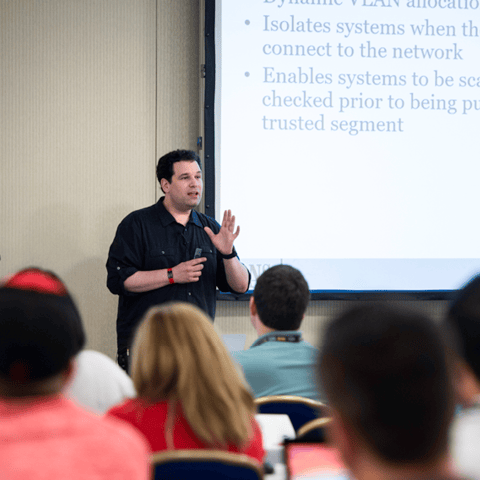
Bryan Simon: Teacher Standing Next to Smartboard and Explaining Concept

Get feedback from the world’s best cybersecurity experts and instructors
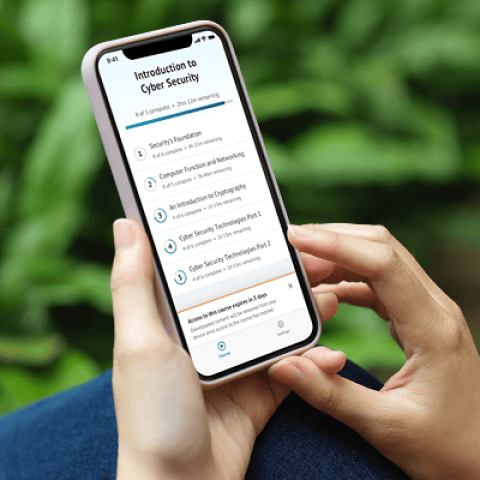
OnDemand Mobile App

Choose how you want to learn - online, on demand, or at our live in-person training events

Close Up of Woman Holding a Pen and Documents

Get access to our range of industry-leading courses and resources