SEC536: Adversarial AI - Penetration Testing AI Systems
SEC536Offensive Operations, Artificial Intelligence


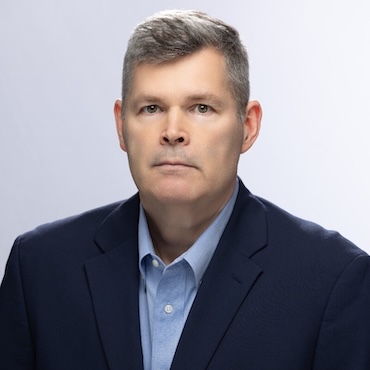
Former Assistant Director, FBI Cyber Division
Matt Gorham currently serves as a strategic adviser to several companies regarding strategy and risk. He previously led PwC's Cyber and Risk Innovation Institute from 2021 to 2026, where he advised boards and C-suite executives on issues related to risk, cyber and physical security, and regulatory matters.
Prior to PwC, he had a 25-year career with the Federal Bureau of Investigation (FBI). Among other leadership roles during his tenure, Gorham served as director of the National Cyber Investigative Joint Task Force (NCIJTF) and deputy assistant director of the Critical Incident Response Group (CIRG), where he oversaw the FBI's national crisis response assets.
In his final FBI role, Gorham served as assistant director of the FBI's Cyber Division, where he led all FBI cyber investigations and operations involving nation-state and criminal actors. After leaving the FBI, he also served a four-year term on the U.S. Secret Service Cyber Investigative Advisory Board.
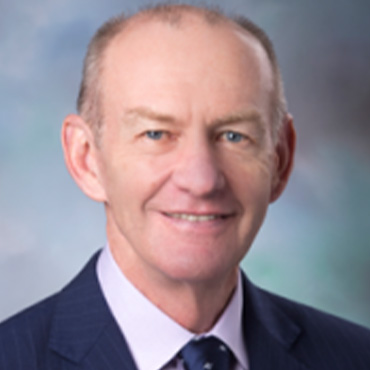
Lt. Gen. (Ret.), U.S. Army; Former Commander, Army Cyber Command
Retired Army Lt. Gen. Ed Cardon's service to our nation spans over 36 years and includes extensive experience establishing, leading, and transforming 14 different organizations with diverse missions in operations, education, cyber, and innovation. He commanded the 2nd Infantry Division in the Republic of Korea.
He transformed and scaled Army Cyber Command into a world-class cyber force while simultaneously establishing new cyber organizations to meet the demands of this contested domain, including U.S. Cyber Command's Task Force ARES, the offensive cyber task force against ISIS. He spearheaded the creation of the Cyber Branch for the U.S. Army, the first new branch of the 21st century. His last assignment was as director of business transformation for the Army, and he led the task force that helped create Army Futures Command, which is responsible for modernizing the Army.
Today, General Cardon is a founding partner and co-CEO of Touchstone Futures, a senior counselor with The Cohen Group, a visiting scholar at the Vanderbilt Institute of National Security, and a senior advisor to the Army Cyber Institute. He continues to focus on helping individuals and teams solve hard problems.
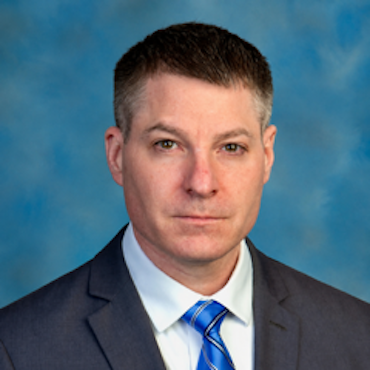
VP and Deputy CISO, Microsoft
Bryan Vorndran is an adviser to SANS. He is also vice president and deputy chief information security officer (CISO) at Microsoft, where he is responsible for leading cybersecurity strategy, risk management, and security operations across finance, marketing, commerce, mergers and acquisitions, human resources, legal, and supply chain functions, ensuring these business areas maintain compliance, protect sensitive data, and reduce enterprise risk.
Vorndran retired in 2025 after more than 20 years in the U.S. intelligence community. He previously led the FBI's Cyber Division, overseeing intelligence and disruption operations against Chinese, Russian, Iranian, and North Korean threat actors, as well as cyber criminals.
Vorndran has testified before Congress, teaches at Johns Hopkins University, and guest lectures at top universities. He co-hosted the podcast "Ahead of the Threat" and holds degrees from Lafayette College and the University of Michigan.
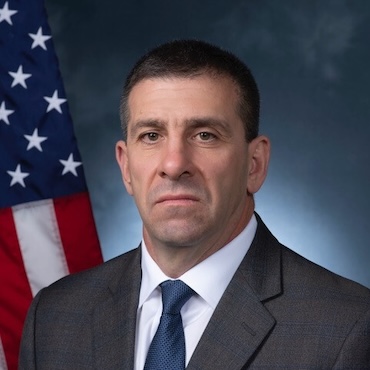
Managing Director, Liberty Strategic Capital
Michael D'Ambrosio serves as managing director at Liberty Strategic Capital, where he focuses primarily on cybersecurity, aerospace and defense, and other investment opportunities with a security dimension.
Before joining Liberty, he served as assistant director of the Office of Investigations in the U.S. Secret Service. In that role, he was the senior executive leading all 162 Secret Service field offices, which fight cybercrime and protect the U.S. financial system. He was also responsible for the administration and resourcing of the agency's Cyber Task Force network, comprising 40 Electronic Crime Task Forces (ECTFs) and 46 Financial Crimes Task Forces (FCTFs). He planned and oversaw major domestic and international criminal investigations into cyber fraud, ransomware attacks, and other high-profile network intrusions and played a leading role in training private-sector partners on cybersecurity preparedness and incident response.
His Secret Service career began in 1997, when he joined as a special agent assigned to the New York Field Office after five years of service as an infantry officer in the U.S. Marine Corps.