SEC536: Adversarial AI - Penetration Testing AI Systems
SEC536Offensive Operations, Artificial Intelligence

Experience SANS training through course previews.
Learn MoreLet us help.
Contact usBecome a member for instant access to our free resources.
Sign UpWe're here to help.
Contact Us
My argument in short: Many boards may think the EU AI Act is only relevant to the AI they bought, but it is so much more. One example outside that category is the AI they cannot list. For most organizations, demonstrating governance becomes difficult if they cannot answer, "Which AI systems do we operate?"
Unlike AI capabilities that can appear through software updates, personal data inventories are generally more stable. Data maps are painful to build, but they stay roughly true. AI systems do not behave that way. You can have an organization with a chatbot someone piloted, a summarization feature switched on in an existing SaaS license, or a module that a vendor added in last release notes. None of these passed through a procurement process.
This is the “Shadow IT” problem all over again. Can organizations inventory AI embedded in software they already license, including capabilities introduced through vendor updates? In my view, the answer today for most organizations is no.
An inventory is not a one-off project. It is a process, and it needs a trigger such as change management. If a new AI capability in an existing product is introduced, then it should raise a flag, in a very similar way that a new data flow can raise a privacy review.
This is the same issue as Shadow IT, but with a focus on AI. You can have two categories:
An employee copies or pastes a contract, a customer list, an email, or source code into a public AI because it potentially saves an hour of work. This is the familiar shadow IT pattern. It is a confidentiality risk. Additionally, there are so many public AI services that blacklisting is an unwinnable battle.
While the first category is not an easy one to solve, this one will be even harder, and I think it is also an underestimated issue. One tool starts summarizing calls. Another tool drafts replies to emails, scores sales leads, creates excel files, etc. The person initiating the activity or clicking the button often might not have the slightest idea a model is involved, and the organization may not know either.
For some products there is no setting to turn the AI off. It is bundled into the product, enabled by default, or can only be disabled at a higher tier.
Below are some actions you could potentially take to tackle this risk:
Shadow AI is a visibility challenge. Without visibility, demonstrating governance, accountability, transparency, or risk management becomes significantly harder.
All these statements above are treating regulation as something that happens to the legal department, and are focused on compliance. There are enough real-world cases demonstrating that being compliant doesn’t mean you are secure. Security doesn't make you compliant either, because the AI Act's product safety obligations (roles, documentation, and conformity) are something no security program produces on its own.
Fines are there to help enforcement. Learning from GDPR, we notice that fines tell you little about what happened inside the organizations that were never fined.
The penalty ceilings are worth knowing, but they should not be the main driver: up to €35 million or 7% of global turnover for prohibited practices, and €15 million or 3% for most other infringements.
The lasting effect of EU regulation is a change to the organizational processes, not the fines.
An inventory, a classification method, named owners, and contract language. None of these can be created and set up in a month, and all of them are needed before a regulator or a customer asks. The challenge is not meeting the final deadline, but rather establishing visibility, ownership, and governance before those deadlines arrive.
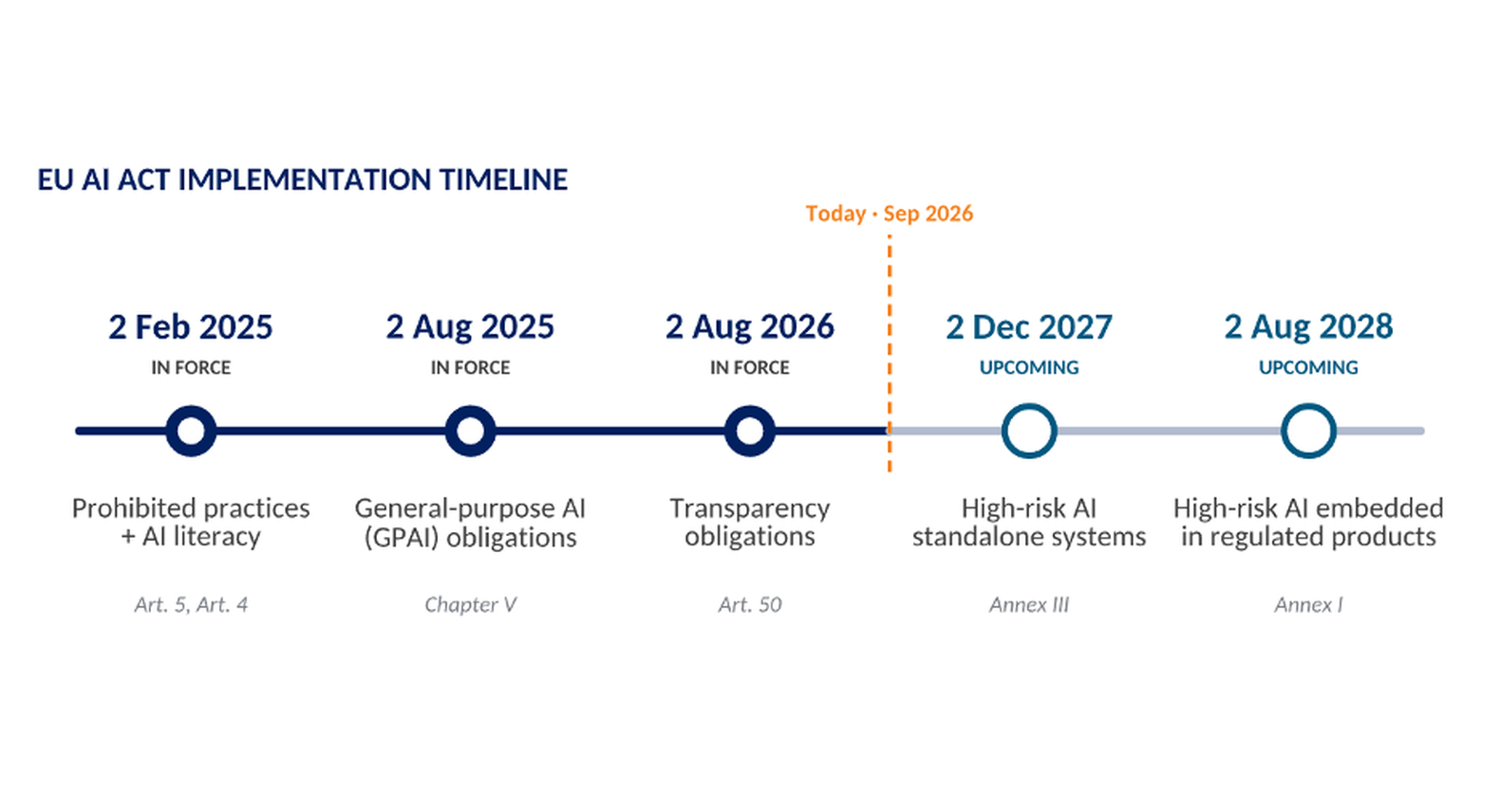
A security leader does not need to own the AI Act to take actions. Below is a list of actions and tasks that can be initiated:
I truly don’t think we are there yet. We are learning as we go, and as the adoption of AI matures, so will we. However, there are some items we cannot ignore, which we should be doing right now. AI adoption is linked to cybersecurity because it introduces new attack surfaces, dependencies, and data exposure risks.
Knowing which AI systems you operate, why they are used, who owns them, and who is accountable for them are governance questions. And this is the foundation of AI security: You cannot defend, monitor, or respond to things that you do not know exist.
Questions you might ask yourself:
Jan D’Herdt is a SANS Certified Instructor teaching LDR512 and SEC566. With experience across Deloitte, IBM, and UCB, he helps organizations implement and transform the CISO organization, and align cybersecurity with governance and business risk.
Read more about Jan D'Herdt