SEC536: Adversarial AI - Penetration Testing AI Systems
SEC536Offensive Operations, Artificial Intelligence

Experience SANS training through course previews.
Learn MoreLet us help.
Contact usBecome a member for instant access to our free resources.
Sign UpWe're here to help.
Contact Us


In this three-part blog series, co-authored by Sean O’Connor and Will Thomas, co-authors of SANS FOR589: Cybercrime Intelligence, and by Freddy Murstad, PhD candidate specializing in traditional intelligence methodologies within cyber threat intelligence (CTI), we explore how the Admiralty System can be applied to assess unstructured and unverified data sources.
In Part 1, we introduced the Admiralty System as a structured framework for evaluating the reliability and credibility of these various types of data sources, which helps analysts cut through the noise of sometimes deceptive cybercrime claims to produce structured intelligence assessments, and is a key focus of the FOR589 course.
In Part 2, we will demonstrate practical application of the Admiralty System by analyzing cybercriminal claims related to the Ticketmaster data breach and its cloud-based data warehousing platform, Snowflake.
In a rush to be the first to break news on a cyber incident, some analysts fall into the trap of prioritizing speed over accuracy. They often screenshot and share raw data from underground forums or social media posts without conducting proper verification, leading to misleading narratives that later require correction.
Instead, analysts should use structured approaches, applying frameworks like the Admiralty System to assess both the reliability of sources and the credibility of claims. If urgency demands rapid reporting, it should be accompanied by clear disclaimers:
These types of statements help ensure transparency and prevent unverified claims from becoming accepted as fact.
In this blog post, we will demonstrate how to apply the Admiralty System via the following:
We elected to use a Structured Analytic Technique (SAT) called Timeline, because it helped visualize what we “knew” as the incident unfolded and then expanded on it as we continued our assessment and analysis.
The Timeline technique is a great way to “counter the impact of cognitive biases and heuristics, including accepting data as true without assessing its credibility because it helps ‘make the case’ (Evidence Acceptance Bias), seeing patterns in random events as systematic and part of a coherent story (Desire for Coherence and Uncertainty Reduction), and providing quick and easy answers to difficult problems (Mental Shotgun).” (Pherson & Heuer)
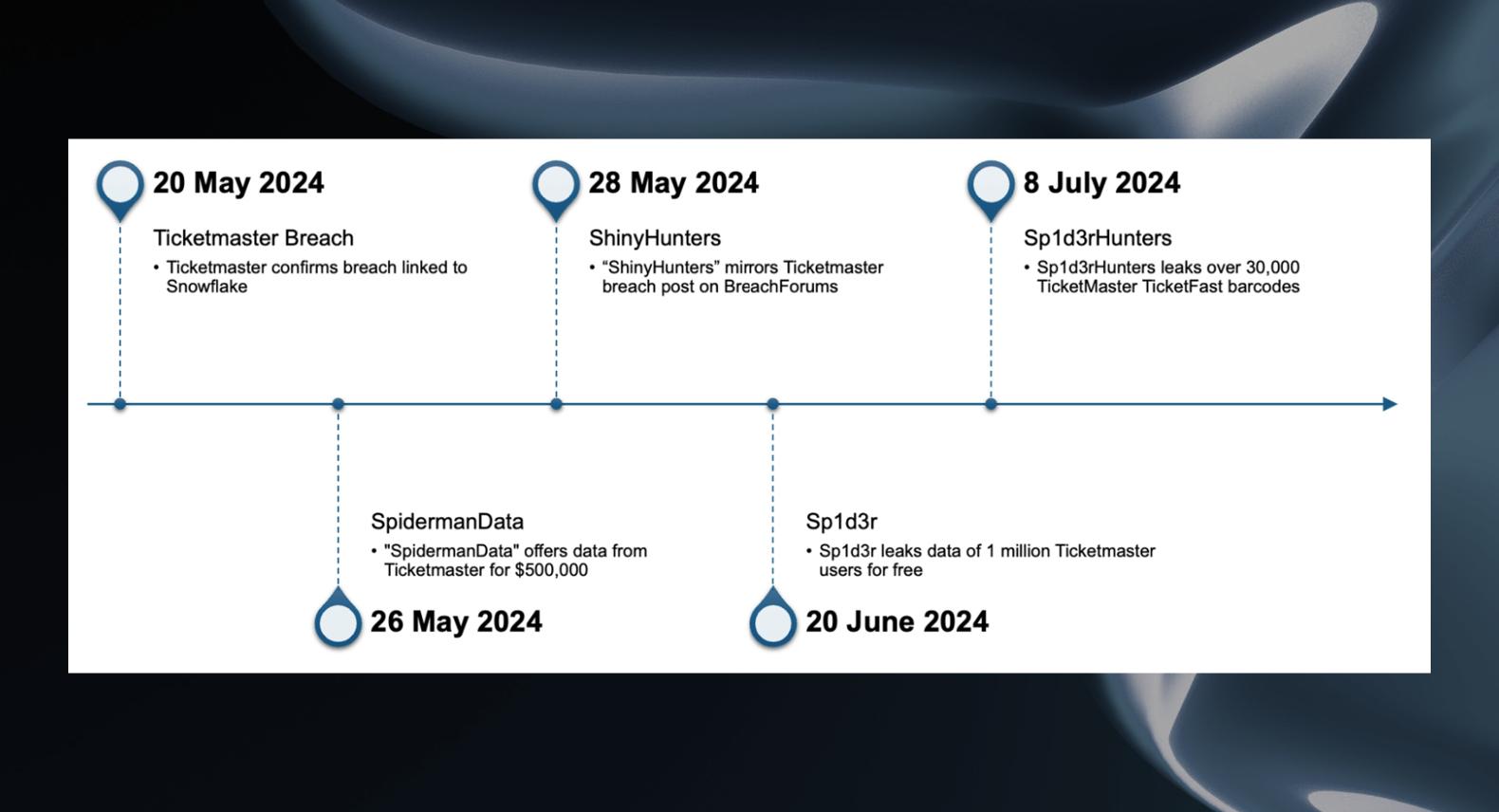
In the flurry of reporting following a major data breach, the first entity to make a claim can hijack the early narrative, regardless of whether their claim is true. Many cybercriminals use these high-profile moments to boost their reputation, gain credibility within underground communities, or simply drive attention to their services.
In these uncertain scenarios, unverified claims spread rapidly, amplified by the media and social media posts eager to break news before conducting thorough verification. This can lead to an unproductive cycle where speculation turns into accepted fact, making it harder to separate legitimate intelligence from opportunistic noise.
Instead of blindly accepting or amplifying claims made by various online personas, analysts must take a structured approach to scrutinize sources, cross-reference claims, and apply frameworks like the Admiralty System to assess credibility before drawing conclusions. By doing so, we move beyond the race to be first and focus on producing intelligence that is both actionable and accurate.
Ticketmaster confirms unauthorized access to data within a third-party cloud environment, attributed to Snowflake’s compromised systems
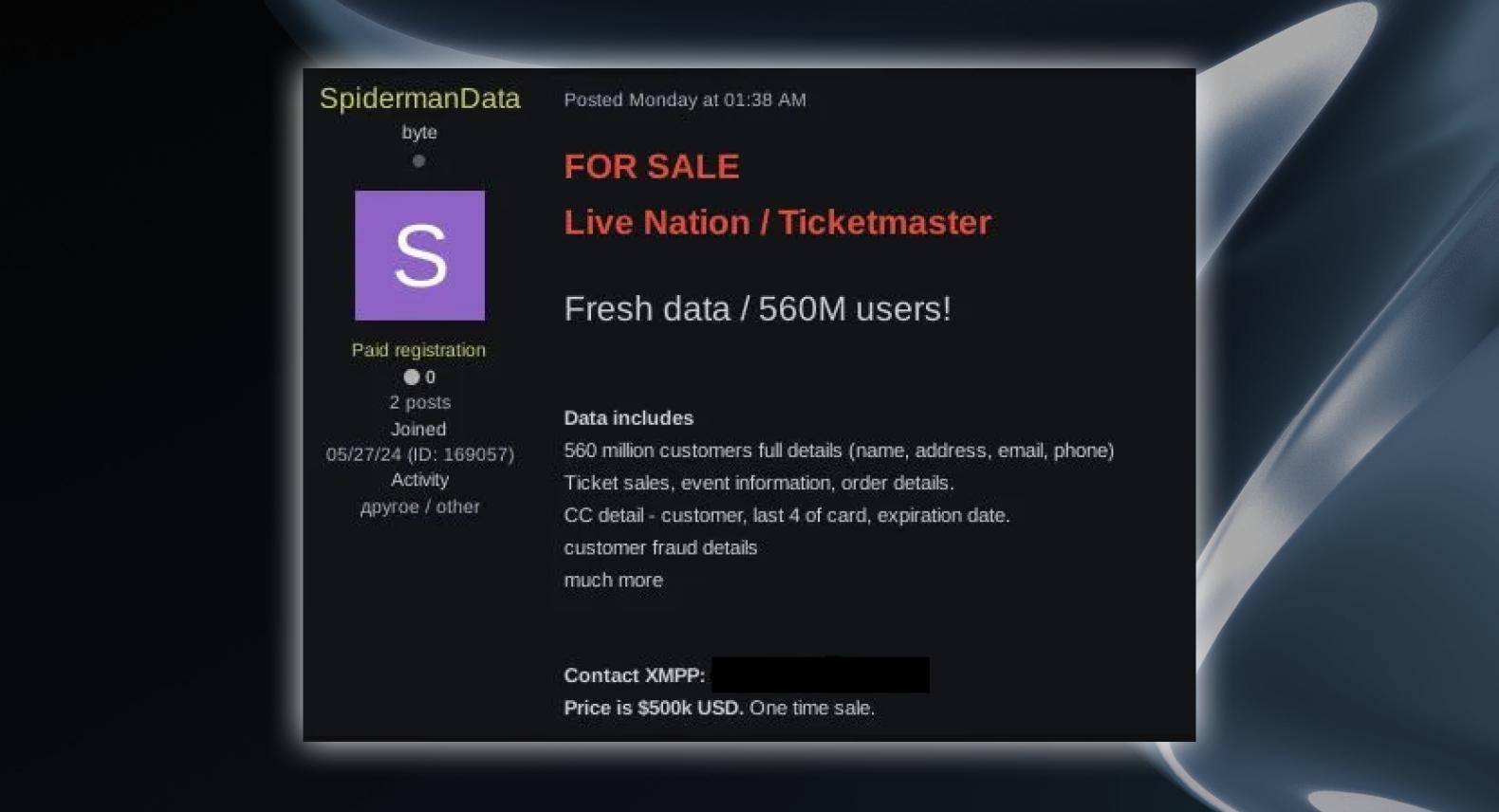
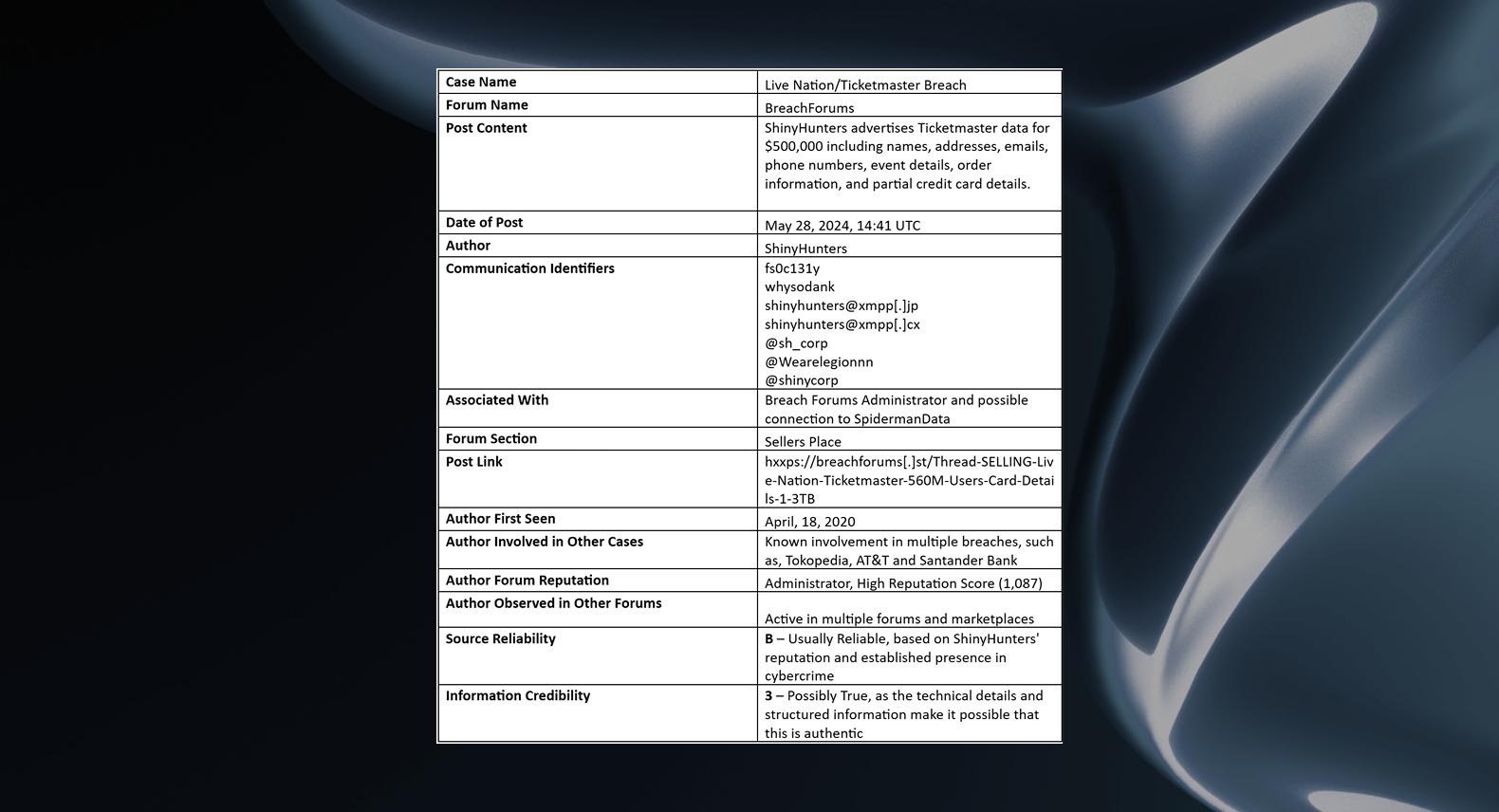
"SpidermanData" offers data from Ticketmaster for $500,000
On May 26, 2024, a threat actor using the persona "SpidermanData" advertised purported data of 560 million users from Live Nation and Ticketmaster for sale on the Russian-language cybercrime forum Exploit[.]in, with an asking price of $500,000 USD.
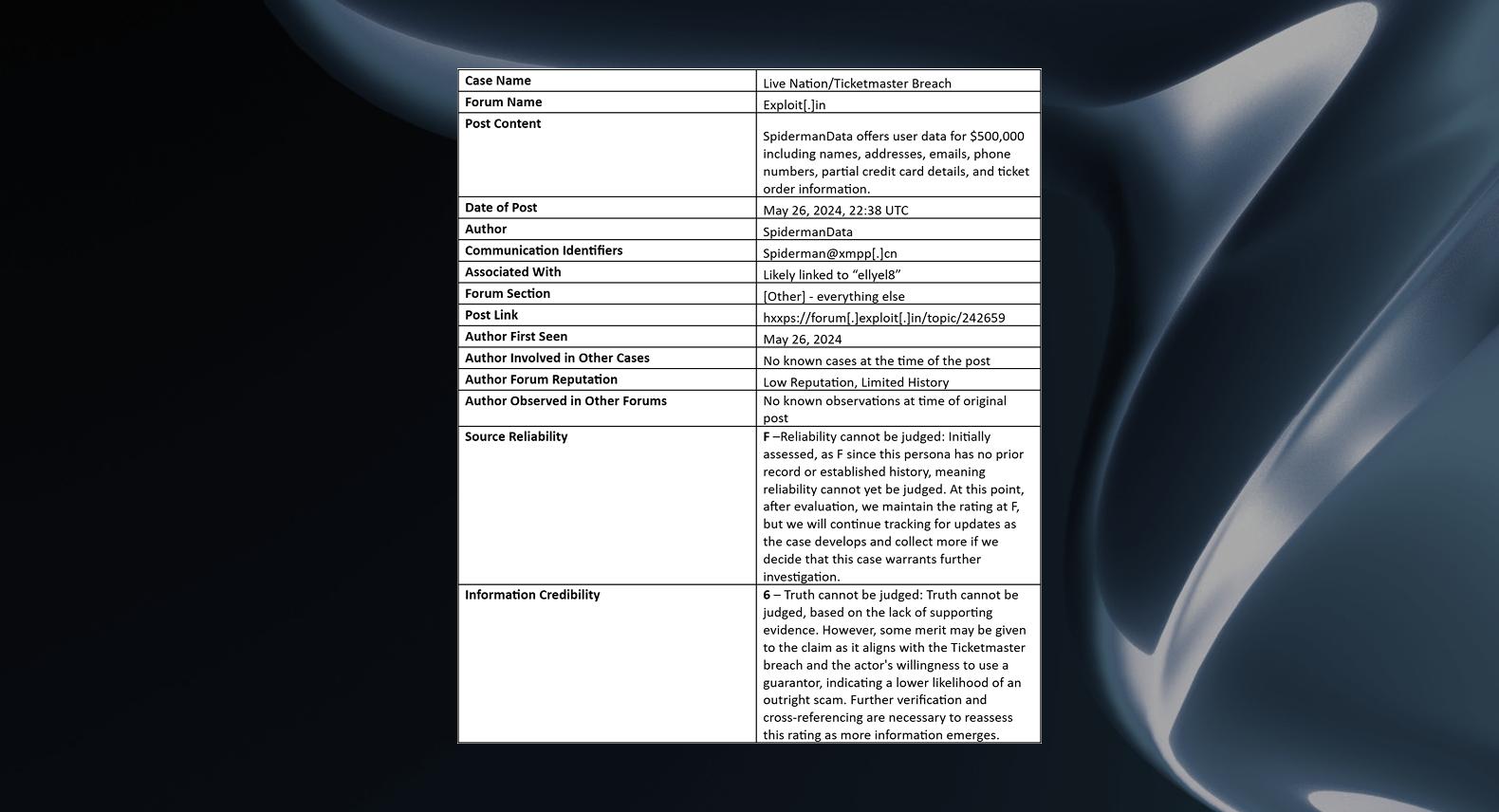
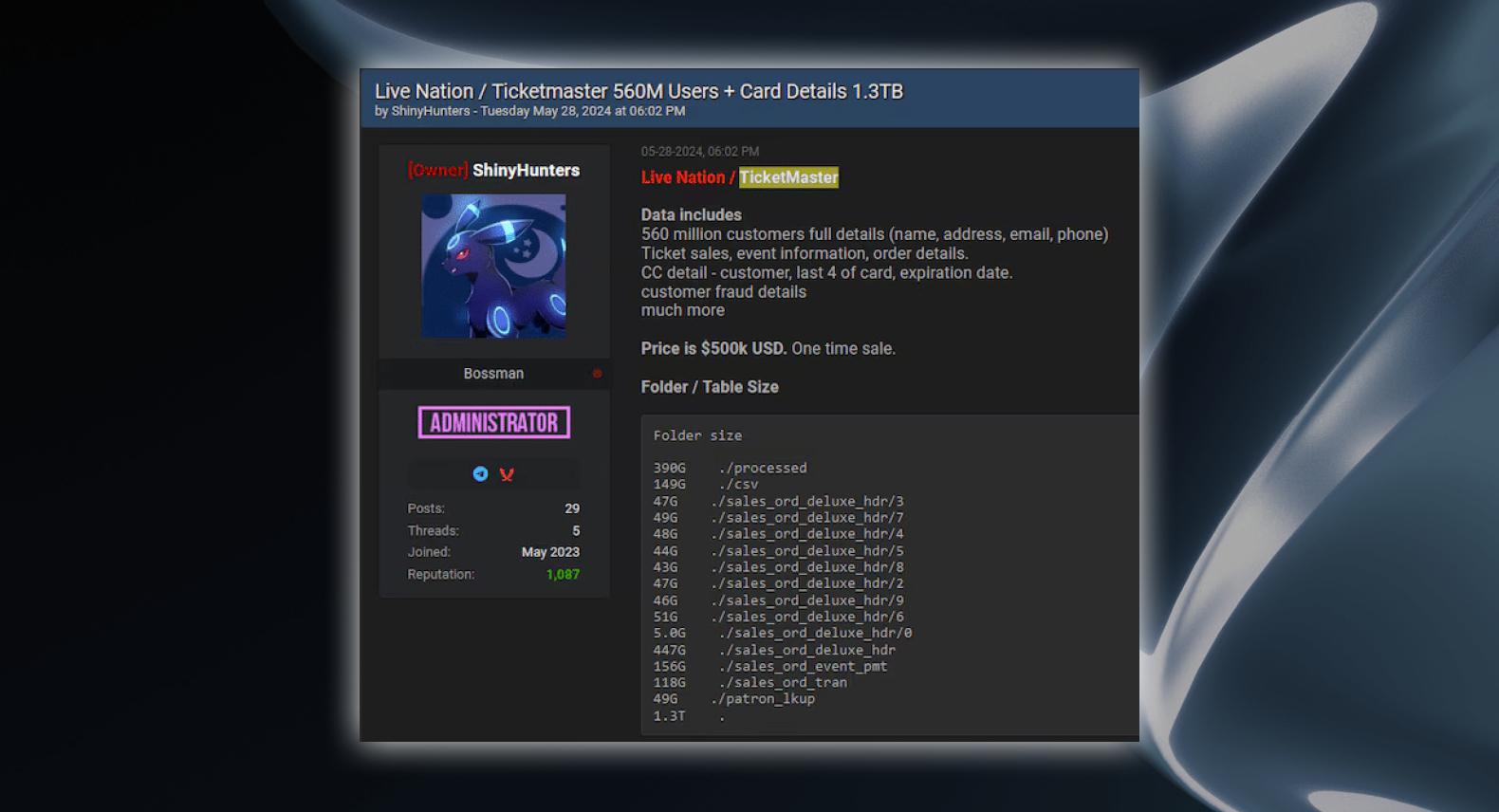
“ShinyHunters” mirrors Ticketmaster data breach post on BreachForums
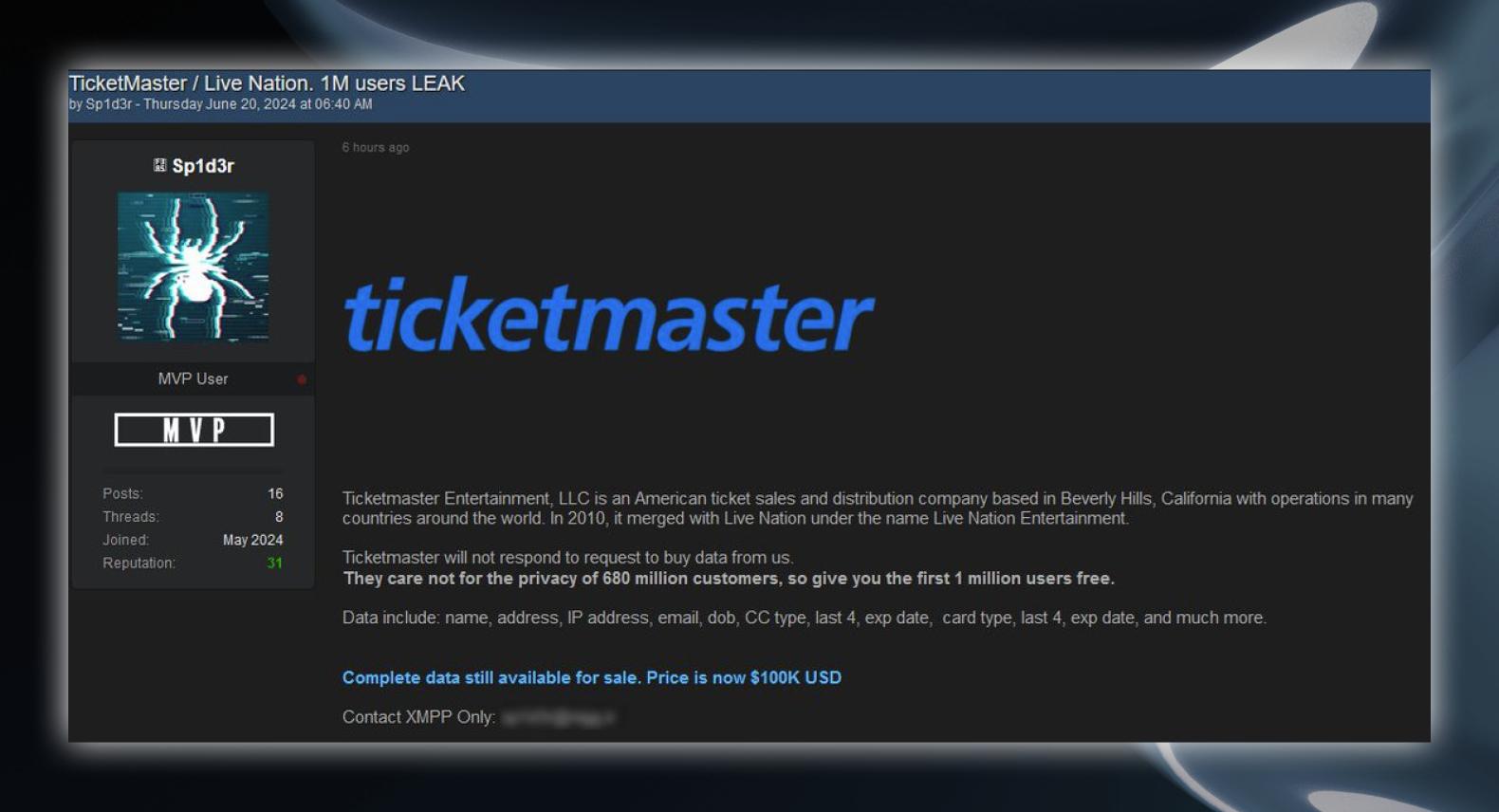
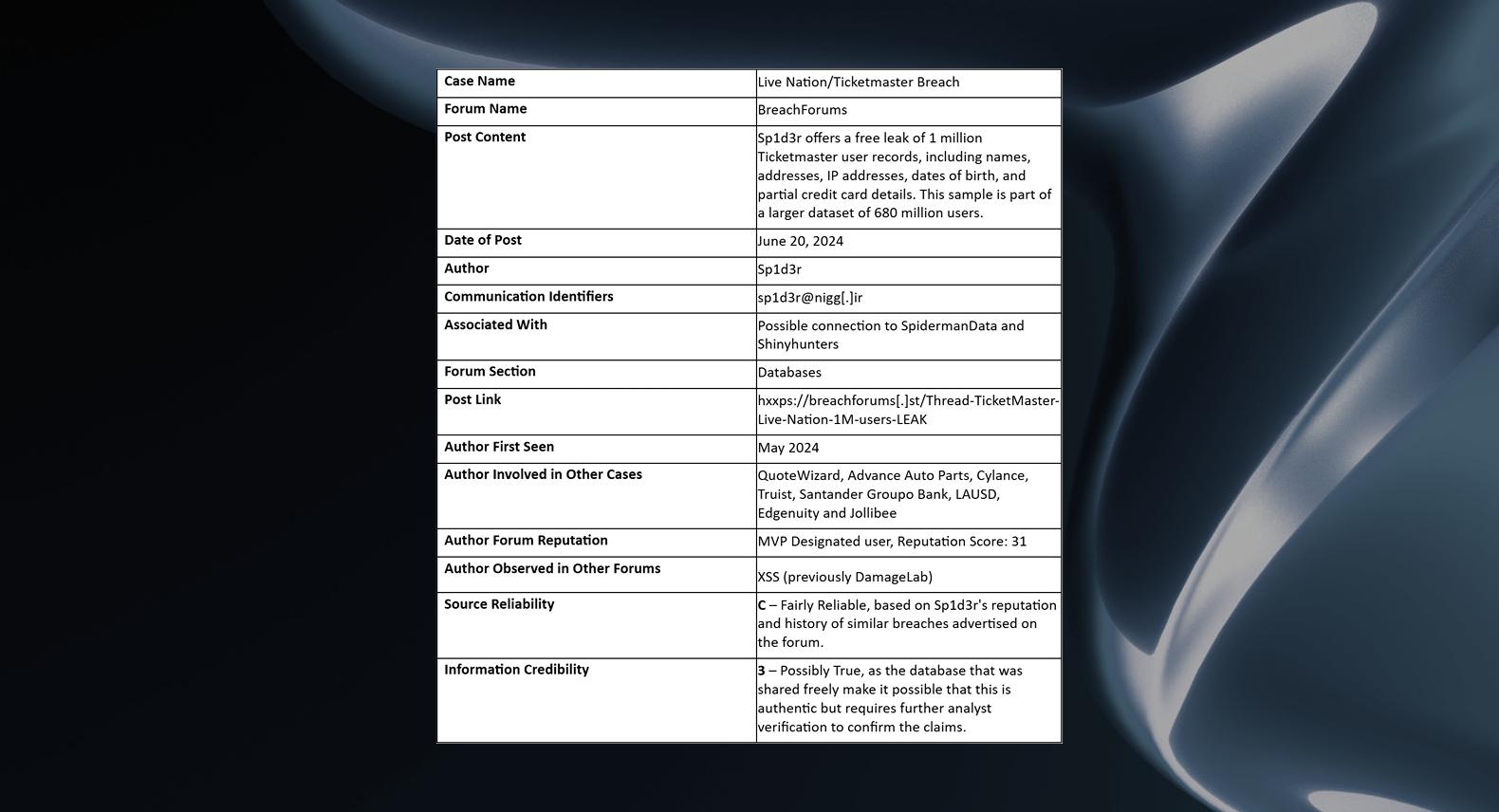
Sp1d3r leaks data of 1 million Ticketmaster users for free
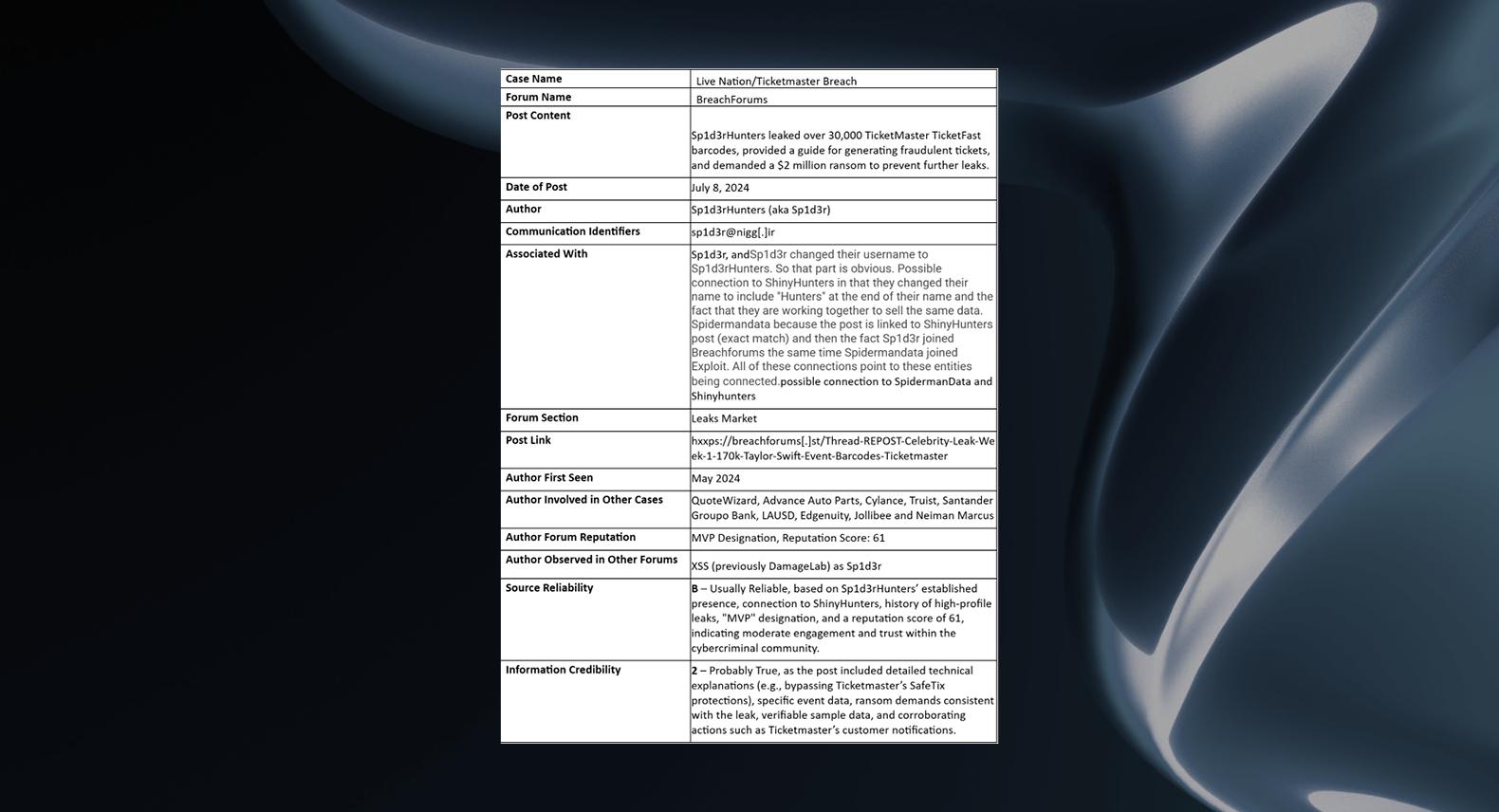
Sp1d3rHunters leaks over 30,000 Ticketmaster TicketFast barcodes

In late 2024, Alexander “Connor” Moucka, known online under multiple aliases such as “Judische” or “Waifu,” was named responsible by the US Department of Justice (DOJ) for targeting customers of Snowflake.
Beginning in late 2023, Moucka and his associates exploited stolen credentials obtained via infostealer malware to infiltrate Snowflake customers’ systems. Over 165 companies were targeted, including major corporations like Ticketmaster, AT&T, and Santander Bank.
Moucka and his associates from “The Com” used underground forums to advertise stolen data for sale and extorted the companies by demanding ransom payments in exchange for not leaking their sensitive information. His actions, which exposed millions of individuals’ personal data, underscored the vulnerabilities of single-factor authentication.
Despite his operational security (OPSEC) attempts, Moucka’s erratic online behavior and occasional slip-ups allowed law enforcement to arrest him in October 2024.
In conclusion, applying the Admiralty System to analyze claims surrounding the Ticketmaster data breach highlights the system’s value for assessing the reliability of sources and credibility of information within the cybercrime underground.
From SpidermanData’s initial offer to ShinyHunters’ corroborating posts and Sp1d3rHunters’ escalating leaks, the system provides a structured approach for cybercrime investigators to sift through noise and evaluate potential threats.
While each post varied in its reliability and credibility ratings, the methodical evaluation we demonstrate here shows how analysts can use structured frameworks to prioritize intelligence and validate cybercriminal claims.
As data breaches and underground activities become more sophisticated, incorporating systems like the Admiralty Code into CTI workflows can help organizations navigate the complexities of digital threat landscapes with greater confidence.
What we haven’t covered so far is how to apply this knowledge when we write our assessment. Stay tuned for a future blog post covering this.

Sean O’Connor is a cybersecurity professional with over 15 years of experience in intelligence, digital forensics, and threat analysis across both the private and public sectors.
Read more about Sean O'Connor
Will has revolutionized cyber threat intelligence by co-founding Curated Intelligence and exposing ransomware operations like Black Basta. His expertise in infiltrating dark web communities has advanced how we dismantle cybercriminal networks.
Read more about Will Thomas
Freddy Murstad is the senior advisor for cyber threat intelligence (CTI) at Nordic Finance CERT (NFCERT) and has a specific focus on strategic reporting, as well as intelligence training of structured analysis techniques (SAT) and applying intelligence methodologies for CTI professionals.
Read more about Freddy Murstad