SEC536: Adversarial AI - Penetration Testing AI Systems
SEC536Offensive Operations, Artificial Intelligence



Apply your credits to renew your certifications
Attend a live, instructor-led class at a location near you or remotely, or train on your time over 4 months
Course material is geared for cyber security professionals with hands-on experience
Apply what you learn with hands-on exercises and labs
Laptop Required
Students are required to bring their own laptop so that they can connect directly to the workshop network we will create, and thus get the most value out of the course. It is the student's responsibility to make sure that the system is properly configured and capable of running both a Windows and Linux VMWare compatible virtual machines at the same time.
Some of the course exercises are based on Windows, while others focus on Linux. VMware Player or VMware Workstation is required for the course. If you plan to use an Intel based Mac, please make sure you bring VMware Fusion, along with a Windows guest virtual machine. All of the VMware products are available at www.vmware.com.
Important Note: You may also be required to disable your anti-virus tools temporarily for some exercises, so make sure you have the anti-virus administrator permissions to do so. Do not plan on just killing your anti-virus service or processes, because most anti-virus tools still function even when their associated services and processes have been terminated. For many enterprise-managed clients, disabling your anti-virus tool may require a different password than the Administrator account password. Please bring that Administrator password for your anti-virus tool.
Enterprise VPN clients may interfere with the network configuration required to participate in the course. If your system has an enterprise VPN client installed, you may need to uninstall it for the course exercises.
Mandatory Laptop Hardware Requirements
If you have additional questions about the laptop specifications, please contact customer service.
SEC573 is designed for security professionals who want to move beyond simply using AI and learn how to build secure, purpose-driven AI agents, including:
The GIAC Python Coder (GPYC) certification validates a practitioner's understanding of core programming concepts, and the ability to write and analyze working code using the Python programming language. GPYC certification holders have demonstrated knowledge of common python libraries, creating custom tools, collecting information about a system or network, interacting with websites and databases, and automating testing.
A basic understanding of any programming or scripting language is highly recommended but not required for this course. SEC573 starts with the fundamentals of Python programming. There is no aspect of programming or Python that must be understood before attending this course. The lab environment is self-paced and this allows students who have had some experience coding to advance more quickly than those who have not. You are provided a Virtual Machine that gives you the ability to complete the labs that are in your course book after the live course or your OnDemand access has finished.
SEC573 fits into the SANS learning path as the course that teaches security professionals how to build AI agents and automation that can be applied across many cybersecurity disciplines.
Some SANS courses introduce Python, AI, or automation because those skills support the primary subject being taught. SEC573 goes deeper by teaching the agent-engineering concepts behind modern AI systems: tool calling, context management, structured output, MCP, agent-to-agent communication, AI-assisted development, and the principle of least privilege applied to agent capabilities.
The skills taught in SEC573 can help you get more from courses such as:
SEC573 is also a natural follow-on to courses that teach investigations, detection, forensics, and response because it shows you how to turn those skills into purpose-built AI agents and automated workflows. These include:
SEC573 is especially valuable for professionals who want to connect their existing cybersecurity expertise with modern AI agent engineering rather than treating AI as a separate specialty.
AI-powered information security automation uses artificial intelligence to build agents that can analyze data, use security tools, make decisions, and carry out multi-step cybersecurity tasks. But giving an AI unrestricted access to a command shell, Python, the web, enterprise data, and every available tool creates unnecessary risk. SEC573 teaches a different approach: use powerful general-purpose AI systems to rapidly build purpose-driven agents with only the tools, data, and capabilities required for their specific mission.
Using AI-assisted development, Python, LangChain, Model Context Protocol (MCP), and agent-to-agent communication, you will learn to create security agents for tasks such as log analysis, packet analysis, incident response, threat hunting, digital forensics, and offensive security. "Vibe coding" makes this development process accessible even to security professionals who are not experienced software developers.
Key benefits include:
SEC573 can help advance your career by giving you practical skills in one of the fastest-growing areas of cybersecurity: building and securing AI agents. As organizations move beyond experimenting with ChatGPT and begin deploying AI into real business and security workflows, they need professionals who understand how these systems work, how to integrate them safely, and how to limit their capabilities appropriately.
Key benefits for your career include:
SEC573 helps position you as the person who can do more than use AI—the person who can design, build, and secure the AI systems your organization will increasingly depend on.
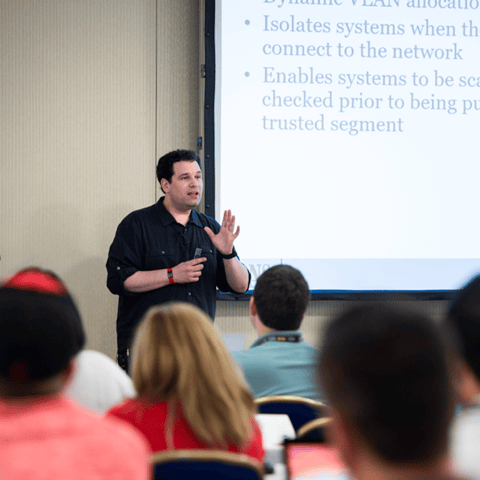
Get feedback from the world’s best cybersecurity experts and instructors
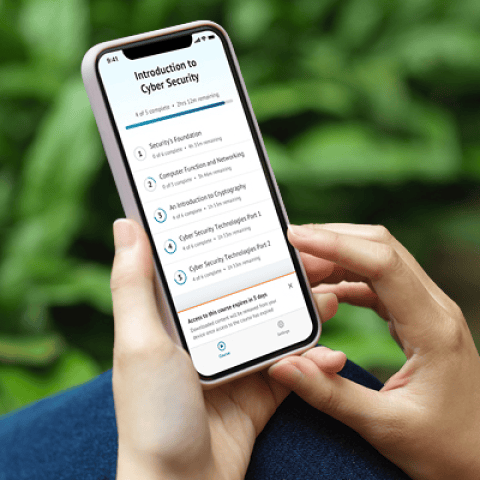
Choose how you want to learn - online, on demand, or at our live in-person training events

Get access to our range of industry-leading courses and resources