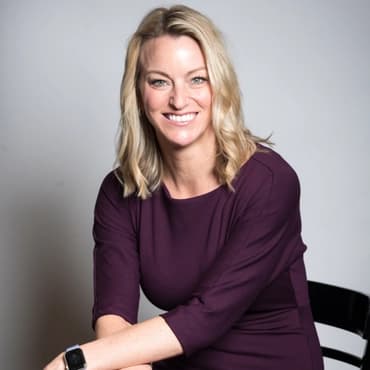
Tomasz
Kojm is the original author of ClamAV, which is the antivirus software
I decided to switch to after Symantec said they were going to charge my credit card
automatically for renewal. Anyway, it is really wonderful to have this chance to
interview Tomasz for the SANS Security Thought Leader series, and we
certainly thank him for his time.
Tomasz, when did you
get interested in security?
I’ve been working in or
researching security for more than
10 years now. As
I became familiar with
Linux, I started experimenting with its security mechanisms. I was
playing with
various exploits and thinking about generic prevention methods. My
first
serious security project was a Linux kernel module for quickly creating
chroot-like environments for selected groups of users.
Whew! Mucking with a kernel ten years ago was
fairly brutal, and how did
you get interested in malware?
Malware has always been an
interesting topic to me and I'd
been fascinated with the great battles between virus writers and
antivirus
vendors back in the days of DOS. I
personally analyzed my first Virus in 2000, named FunLove, that targeted Windows files and was causing
quite a few
problems for some friends running an Internet café. I had a lot of fun with
researching FunLove
and succeeded in creating a dedicated counter measure for this virus.
FunLove eh, wasn't that the virus
that Warner
Brothers shipped with the Powder Puff Girls DVD and had to recall? So,
you took a look at FunLove, got the malware bug. What caused
you to write ClamAV?
In 2001, I discovered a project
called OpenAntiVirus, one
of the first open-source AV solutions. I found it very interesting but
a bit
problematic to use – the entire program was written in Java
(and at the time it
had serious performance problems on older hardware). Further, it lacked a command line scanner and
automated signature updates. I
tried to
address these shortcomings in the ClamAV project, yet still follow the
KISS
principle, so popular in the UNIX world.
So Thomasz, how did things
go in the early days, like before Luca 'NERvOus' Gibelli helped you move
operations to SourceForge?
The response was truly amazing. I was very excited about
the volume and quality
of feedback I received from the open source community just days after
the
initial release. In
a short time I was
receiving dozens of e-mails each day - people sending patches,
suggestions and
lots of kind words and thanks. This
really encouraged me to continue my work on ClamAV making it what I
spent the
majority of my free time on. Some
contributors expressed an interest joining the project, others we
invited, and
two years later we’d assembled ClamAV’s core
development team. Great support
from the open source community allowed us to build a global network
infrastructure for signature distribution. As of today, ClamAV has 130 database mirrors in 44
countries providing
signature updates to more than 1 million unique IP addresses.
Can
you tell
me about the Sourcefire acquisition, do you still remember when they
first made
contact?
Marty Roesch, the creator of Snort
and founder and CTO of
Sourcefire, contacted me at the end of 2006 and offered the opportunity
to work
together. Sourcefire was in the process of becoming a public company
and management was evaluating complementary technologies. After a number of
discussions between the core team of ClamAV and Sourcefire, we agreed
to
combine our efforts. We
believe that
developing ClamAV as a part of Sourcefire would be mutually beneficial,
positioning us to deliver better solutions to ClamAV users and
Sourcefire
customers. The critical point in the decision was that Sourcefire and
the
ClamAV core team shared a similar commitment to open source security. This commitment has been
demonstrated through
their ongoing commitment to and management of the Snort project. Like
Snort,
the ClamAV engine and signature database will continue to be licensed
and
distributed under the GPL. As we integrate ClamAV into
Sourcefire’s commercial
products, the enhancements to ClamAV will be released to the open
source
community. This is
where open source
community will really see the benefits of the acquisition.
What
are your
current goals for ClamAV?
The first ClamAV release under Sourcefire is 0.93 which includes many
improvements to the scanning engine, most notably detection and speed.
The next
major release will be 0.94. In
that
release we’re planning a number of exciting new features such
as logical
signatures, a disassembling engine, a DLP module and better Windows
support.
We're also continuously improving our internal infrastructure, which
handles
important processes like signature checks, database updates and
regression
testing to make everything smoother and faster. Finally, we plan on
continuing to integrateClamAV into Sourcefire's commercial product set
and leveraging Sourcefire's resources to upgrade the ClamAV development
infrastructure and website.
What
scares
you the most about the malware out there?
What I worry about most these days
is that the majority of
malware is being created for criminal purposes. The most common of
these
scenarios are the theft of confidential information or zombies that can
be
later used for malicious purposes.
When
you
examine malware, what kind of an environment do you use?
Our researchers use a set of
virtual machines and
professional debugging and disassembling tools. Virtual machines are
especially
useful in dealing with malware because they allow us great flexibility
in our
test suite and can easily be restored to a point before infection.
Are
you
familiar with Norman’s Sandbox? Do you think large
organizations should have a capability
like that?
In my opinion, automated malware
analysis can be a very
effective tool in the hands of professional researchers. However, I
wouldn't
recommend using automated analyzers as standalone, self-sufficient
solutions. I
believe malware analysis is an art and cannot be fully automated.
I
understand
you are working on some Data Loss Prevention (DLP) technology for
ClamAV, can
you tell me a bit about that?
The DLP module will be able to
detect transmission of
sensitive information such as credit card or social security numbers
inside all
kind of objects that can be decoded by the ClamAV engine. Some examples
are
e-mail messages, archives or document files. The originator and author
of the
DLP code for ClamAV is Sourcefire's CTO Marty Roesch. It’s really exciting when we can bring all of
the open source experience and innovation from both the Snort and
ClamAV
communities together on a project like this.
Most
of the
early DLP solutions have been really expensive, do you think an
organization
can make a go of it using tools like ClamAV, content rules with Snort
and the
Nessus DLP plugin?
The tools you mentioned, especially
ClamAV and Snort, are
complementary and very suitable for things like DLP. ClamAV can protect
file-based services while Snort can inspect network streams.Together Snort and ClamAV
can provide broad
protection against sensitive data leaks.
If
you had one
message to share about information security what would that be?
All organizations and businesses
need to place more
emphasis on computer security education and awareness. A proper education program is the key to
effective security and risk reduction. We’ll never be able to
entirely replace
these underpinnings with tools and software (even though we try *smile*)
Can
you tell
us a bit about yourself? When you are not in front of a computer, what do you like to do?
I spend most of my free time with
my fiancée and our dog,
Bono. A few of my other passions are water turtles, traveling, photography and
interesting
books.
<< Thought Leader Home